Browse and filter our curated collection of prompts
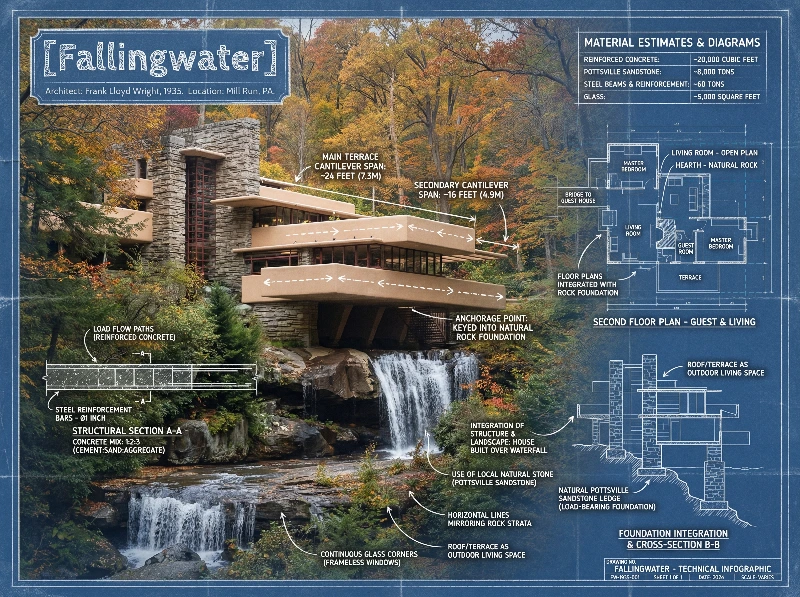
Create an infographic image of [Fallingwater by Frank Lloyd Wright], combining a real photograph of the landmark with blueprint-style technical annotations and diagrams overlaid on the image. Include the title “[Fallingwater]” in a hand-drawn box in the corner. Add white chalk-style sketches showing key structural data, cantilever span measurements, material quantities, internal diagrams of living spaces, load-flow arrows through reinforced concrete slabs, cross-sections of the cantilevers, floor plans integrated with the rock foundation, and notable architectural or engineering features such as the integration of structure, landscape, and natural stone. Style: blueprint aesthetic with white line drawings on the photograph, technical/architectural annotation style, educational infographic feel, with the real environment visible behind the annotations.
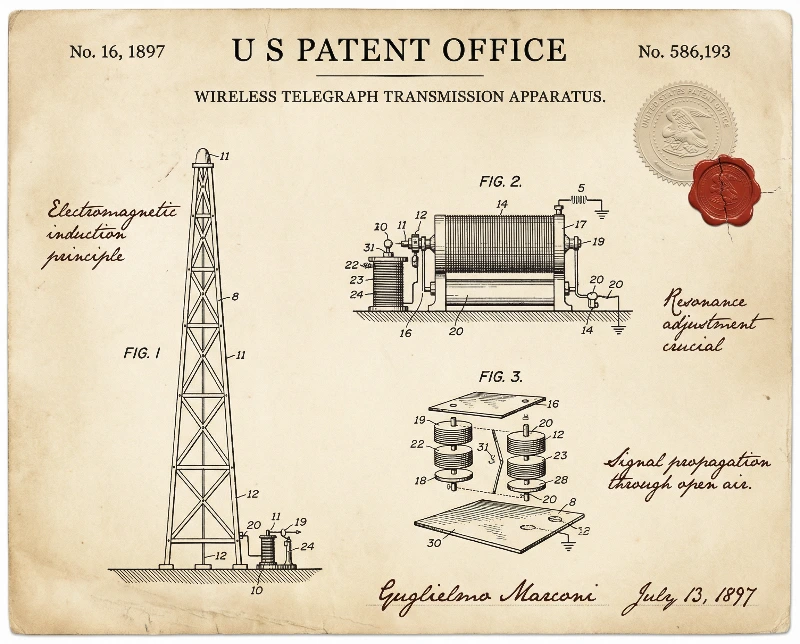
A vintage patent document for a wireless telegraph transmission apparatus, styled after late 1800s United States Patent Office filings. The page features precise technical drawings with numbered callouts (Fig. 1, Fig. 2, Fig. 3) illustrating the antenna mast, coil-and-spark transmitter, and an exploded diagram of the tuning components and grounding system. Handwritten annotations in fountain-pen ink describe electromagnetic induction, resonance adjustment, and signal propagation through open air. The paper is aged ivory with foxing stains and soft fold creases. An official embossed seal and a cracked red wax stamp appear in the upper corner. A hand-signed inventor’s name and the date 1897 appear at the bottom. The entire image feels like a recovered archival document—authoritative, historic, and slightly mysterious.
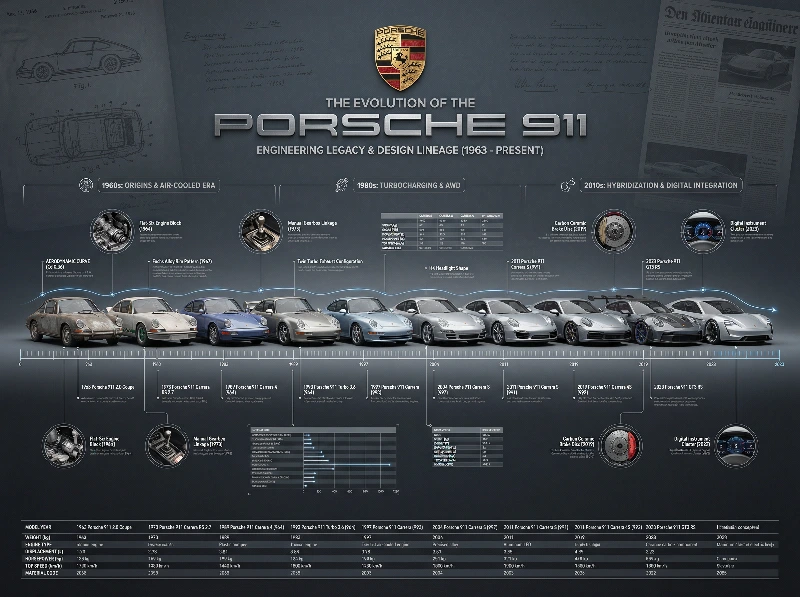
Role & Subject: A massive, encyclopedic 16:9 3D infographic poster titled "THE EVOLUTION OF [The Porsche 911]". The visual style is a high-end fusion of museum-grade product photography and complex technical engineering blueprints. The Hero Lineup (Chronological Core): A complete, linear chronological lineup of 8-12 historical versions of [The Porsche 911], ranging from the very first prototype to the latest futuristic model. They are arranged with precision on a measurement scale/ruler base running horizontally across the center. Rendering: Hyper-realistic 3D, 8k resolution. Emphasis on the evolution of textures: showing the aging of early [vintage steel, chrome patina, and analog dials] vs. the pristine, high-tech finish of modern versions. Brand Atmosphere (The Canvas): Background: A deep, rich [Slate Grey and Racing Silver] textured background. It is heavily layered with low-opacity watermarks of vintage patent drawings, handwritten engineering notes, and newspaper clippings related to the brand's history. Header: A prominent, high-contrast brand logo displayed at the top center, with a bold typography title. The "Hyper-Dense" Information Layer (The PUNCH Style): The layout is overwhelmed with organized information (creating a "Data aesthetics" look): Dense Annotation Network: Hundreds of fine white hairlines connecting specific [aerodynamic curves, rim spoke patterns, headlight shapes, and exhaust configurations] to compact text blocks and data tables floating in the space. Contextual Zones: "Era Modules" floating above the products, representing different historical decades with iconographic markers. Magnifying Inserts: Circular "Zoom-in" lenses scattered in empty spaces, showing extreme macro close-ups of texture details and internal mechanisms. Tech Specs Strip: A structured data bar at the very bottom listing precise specifications (weight, dimensions, year, material code). Technical Specs: Octane render, Unreal Engine 5 aesthetic, editorial layout, information design masterpiece, volumetric lighting, sharp focus, professional color grading.
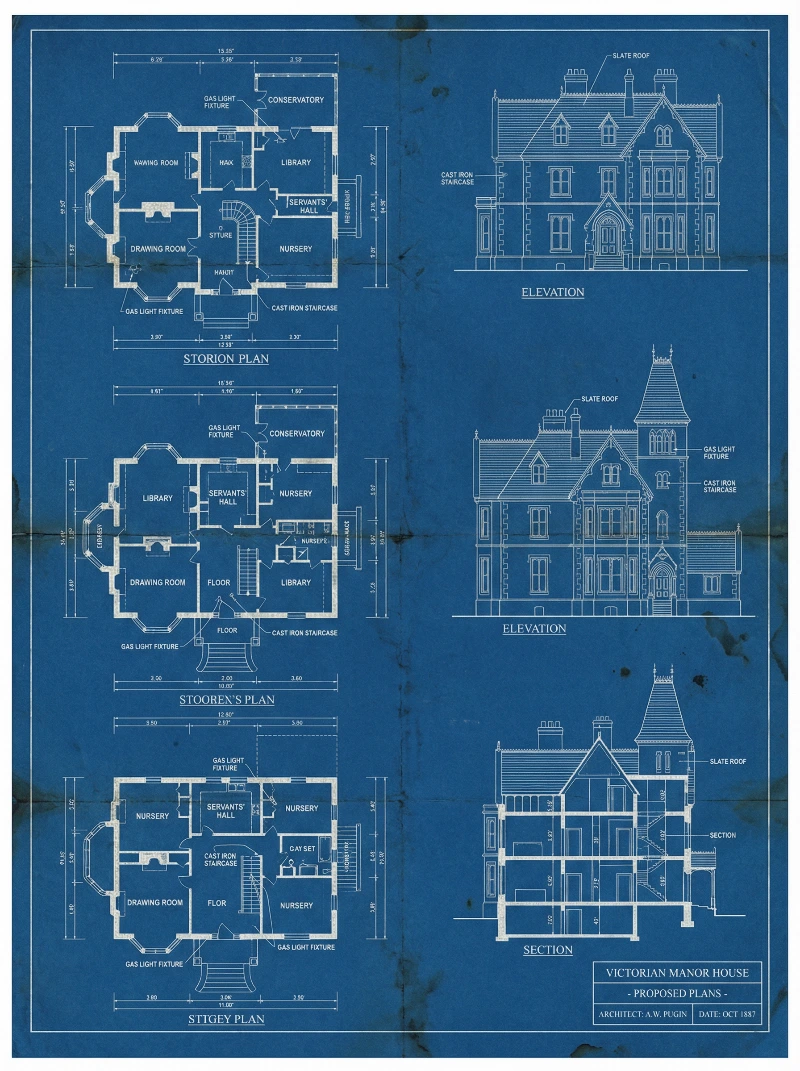
Blueprint of Victorian manor. White lines on blue. Tech measurements, room labels. Technical style.
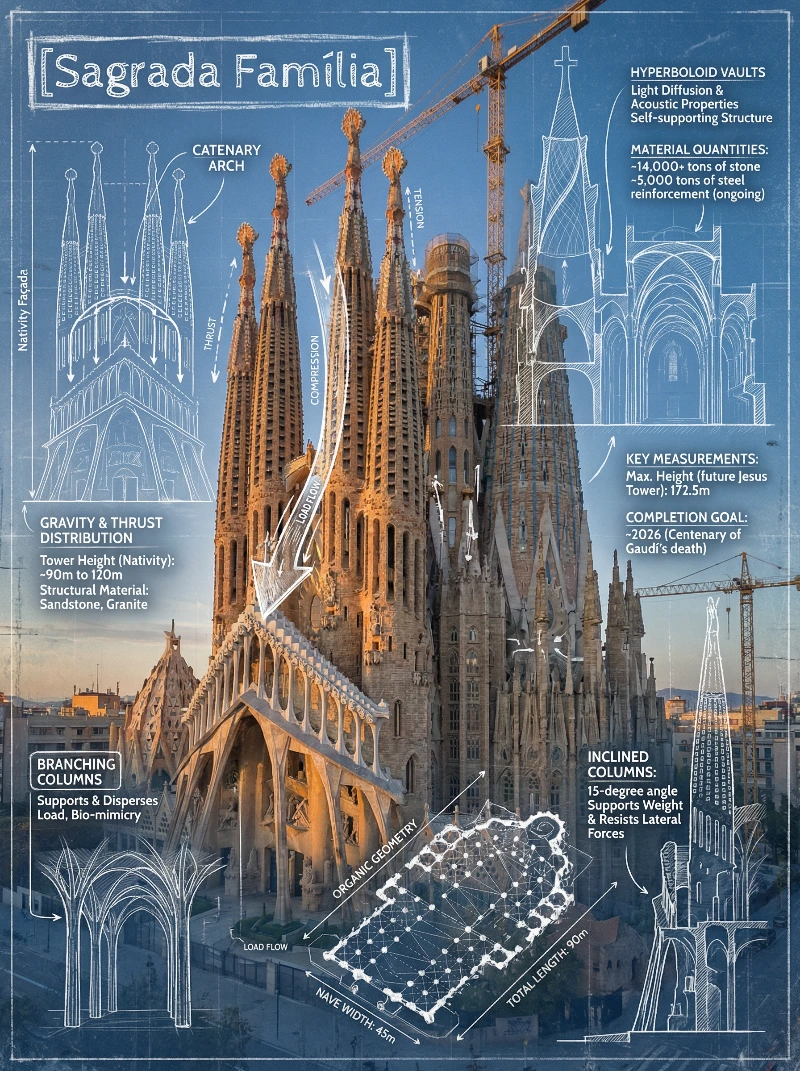
Create an infographic image of [Sagrada Família, Barcelona], combining a real photograph of the landmark with blueprint-style technical annotations and diagrams overlaid on the image. Include the title “[Sagrada Família]” in a hand-drawn box in the corner. Add white chalk-style sketches showing key structural data, important measurements, material quantities, internal diagrams, load-flow arrows illustrating gravity and thrust through catenary arches, cross-sections of the towers, floor plans of the basilica, and notable architectural or engineering features such as hyperboloid vaults, branching columns, and organic geometry. Style: blueprint aesthetic with white line drawings on the photograph, technical/architectural annotation style, educational infographic feel, with the real environment visible behind the annotations.
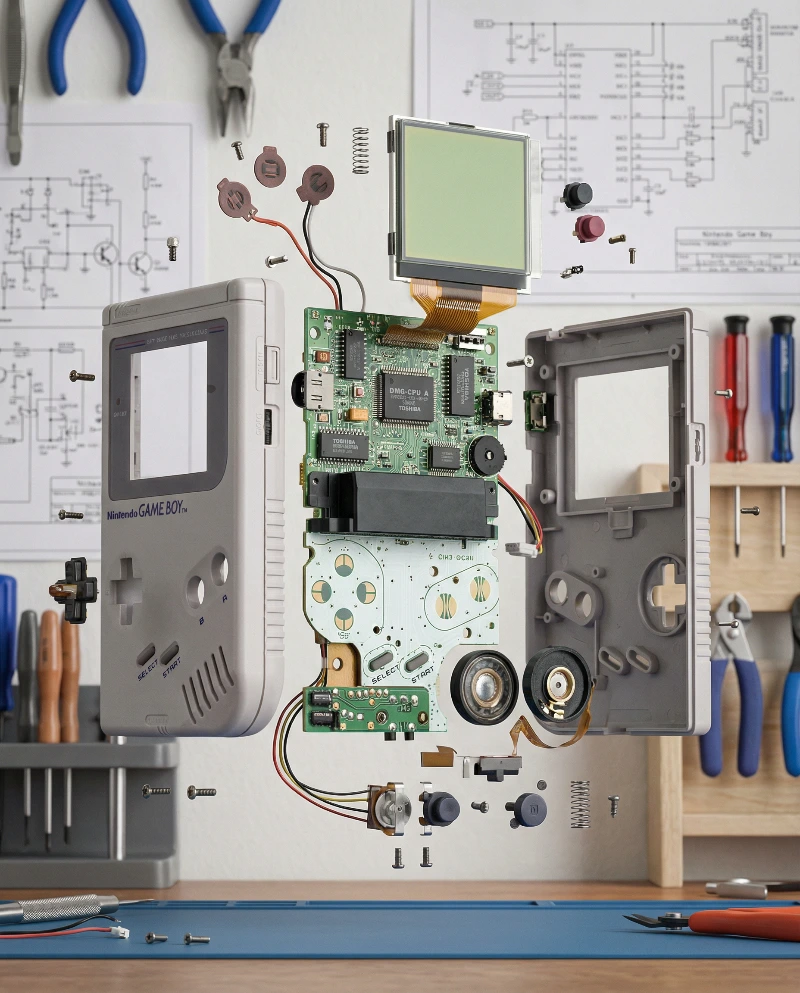
Generate an ultra-detailed, hyperrealistic exploded technical view of Game Boy
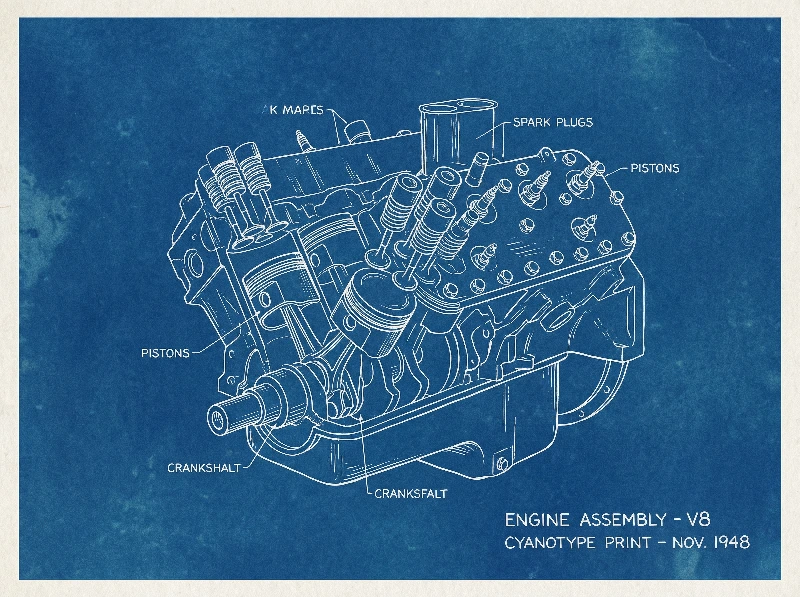
Blueprint car engine. Detailed parts. Cyanotype (White on Blue).
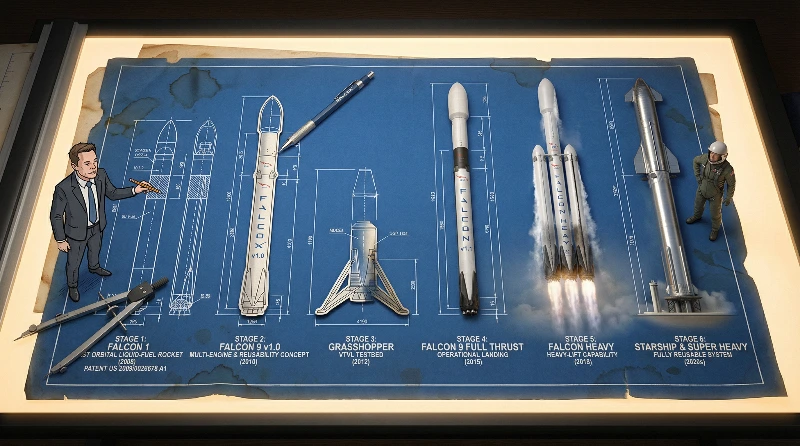
do this for SpaceX rockets: <instruction> Input 1 is an invention that evolved dramatically (airplane, computer, automobile, telephone, etc.). Analyze: 7-9 major evolutionary stages from first concept to current form. Goal: Single large blueprint sheet showing transformation sequence as technical drawing coming to life. Rules: Base: authentic blueprint paper (white lines on blue, aged/coffee-stained edges) Left side: flat 2D technical drawing of original patent Gradual transformation across page: each stage becomes more 3D and "real" Stage 1: pure line drawing Stage 2: drawing beginning to lift off page (paper-craft effect) Stage 3: partial miniature model emerging Stage 4: fully 3D miniature painted model Stage 5: photo-real tiny working version Include: inventor figurine drawn in 2D on left, full 3D miniature on right, showing same transformation Technical annotations, measurements, and evolution dates labeling each stage Drafting tools: compass, protractor, mechanical pencil, and T-square creating the still-flat sections Materials: actual blueprint paper, forced perspective from flat to dimensional Lighting: blueprint table LED backlight for drawn sections, practical lighting for 3D sections Output: ONE image, 16:9 horizontal to show full evolution, technical illustration meets practical effects </instruction>
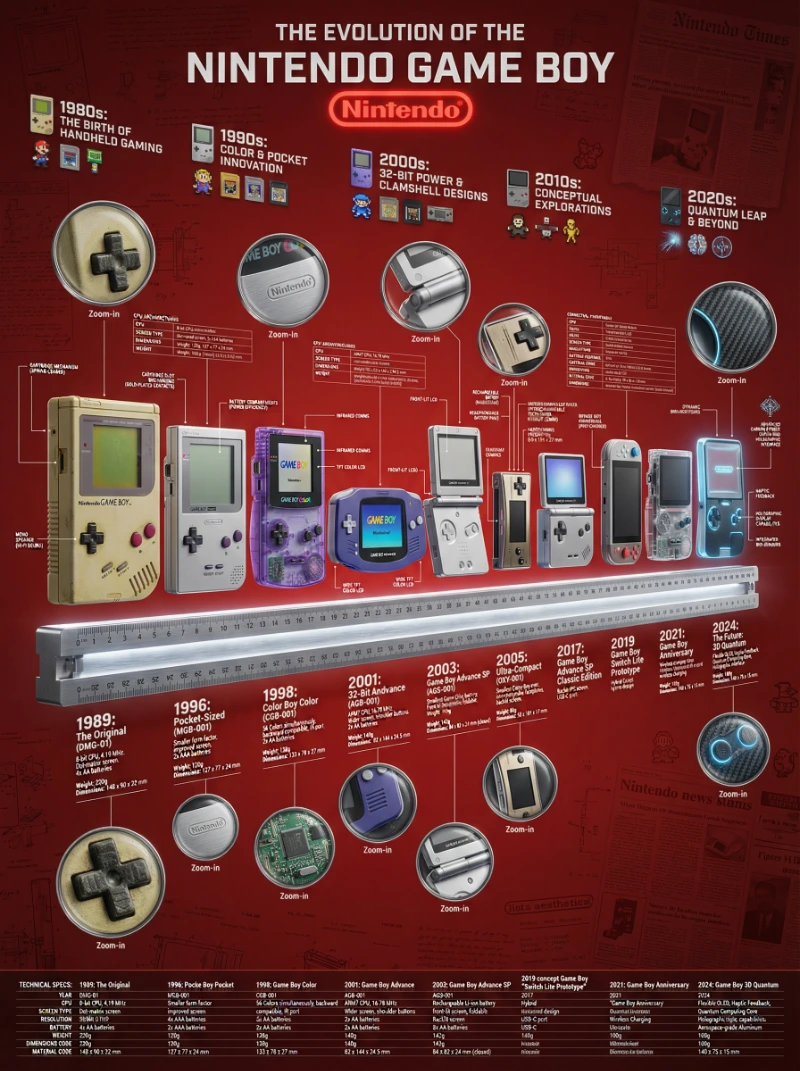
Role & Subject: A massive, encyclopedic 16:9 3D infographic poster titled "THE EVOLUTION OF [The Nintendo Game Boy]". The visual style is a high-end fusion of museum-grade product photography and complex technical engineering blueprints. The Hero Lineup (Chronological Core): A complete, linear chronological lineup of 8-12 historical versions of [The Nintendo Game Boy], ranging from the very first prototype to the latest futuristic model. They are arranged with precision on a measurement scale/ruler base running horizontally across the center. Rendering: Hyper-realistic 3D, 8k resolution. Emphasis on the evolution of textures: showing the aging of early [yellowing beige plastic and dot-matrix screens] vs. the pristine, high-tech finish of modern versions. Brand Atmosphere (The Canvas): Background: A deep, rich [Nintendo Red or Electric Blue] textured background. It is heavily layered with low-opacity watermarks of vintage patent drawings, handwritten engineering notes, and newspaper clippings related to the brand's history. Header: A prominent, high-contrast brand logo displayed at the top center, with a bold typography title. The "Hyper-Dense" Information Layer (The PUNCH Style): The layout is overwhelmed with organized information (creating a "Data aesthetics" look): Dense Annotation Network: Hundreds of fine white hairlines connecting specific [D-pad tactile switches, cartilage slot mechanisms, speaker grills, and battery compartments] to compact text blocks and data tables floating in the space. Contextual Zones: "Era Modules" floating above the products, representing different historical decades with iconographic markers. Magnifying Inserts: Circular "Zoom-in" lenses scattered in empty spaces, showing extreme macro close-ups of texture details and internal mechanisms. Tech Specs Strip: A structured data bar at the very bottom listing precise specifications (weight, dimensions, year, material code). Technical Specs: Octane render, Unreal Engine 5 aesthetic, editorial layout, information design masterpiece, volumetric lighting, sharp focus, professional color grading.
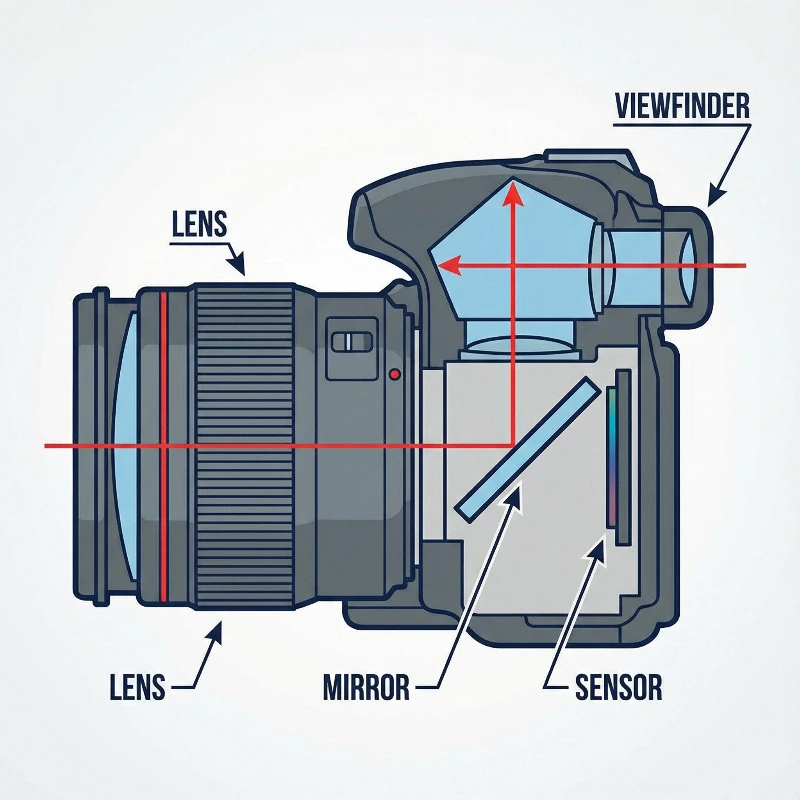
Technical diagram: DSLR cross-section. Label "Lens," "Mirror," "Sensor," "Viewfinder." Vector style.