
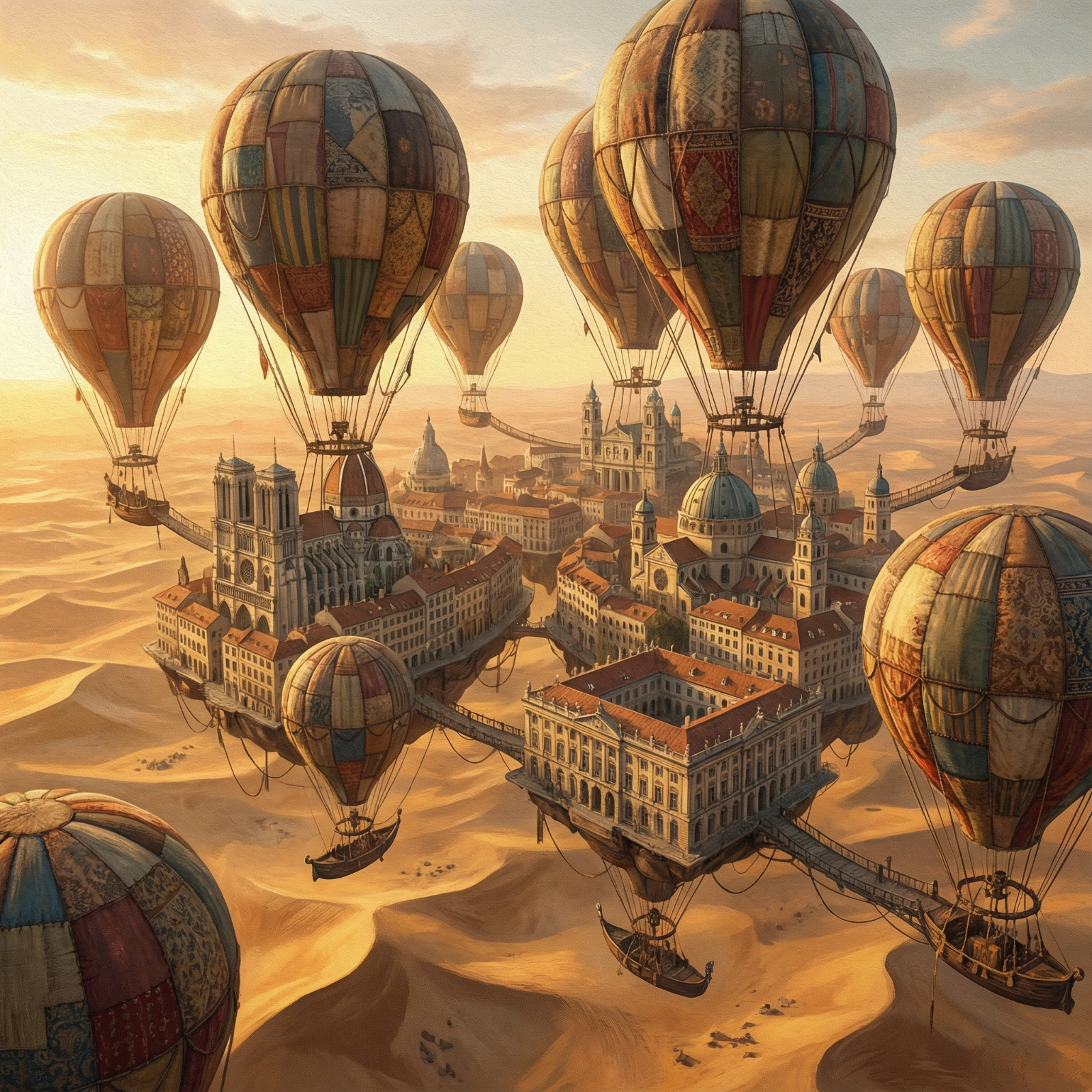
Floating City Balloons at Dusk
Prompt
An entire classical European city converted into interconnected hot air balloons, floating silently over a vast, golden desert, aerial view, warm sunset lighting, highly detailed matte painting.
Aspect Ratio
Model
Nano Banana ProYou might also like
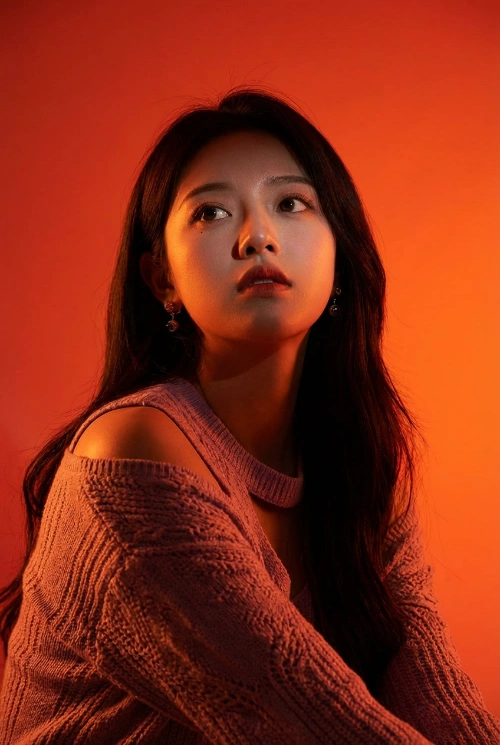
Heroic Dramatic Studio Port
{ "meta": { "title": "Heroic Dramatic Studio Portrait", "role": "World-class photographer specializing in editorial portraits", "aesthetic": "Dramatic, saturated studio lighting with a heroic feel" }, "constraints": { "identity_anchor": { "source": "ATTACHED REFERENCE PHOTO", "strictness": "Critical", "instruction": "Perfectly preserve exact facial features, skin tone, hairstyle, and natural likeness without changes." }, "clothing_anchor": { "source": "EXACTLY AS IN REFERENCE PHOTO", "strictness": "Critical", "instruction": "Style, color, material, and fit must fully correspond to the original without stylization." } }, "subject_details": { "expression": "Serious, tense, focused", "gaze": "Directed away from camera, into space above", "universality": "Lighting and angle applicable regardless of gender" }, "composition": { "background": "Saturated solid orange-red backdrop, smooth intense gradients, no patterns, 'hot' atmosphere", "camera_angle": "Low angle (shot from below upwards) to create dominance", "framing": "Medium close-up, emphasis on face and shoulders" }, "lighting": { "palette": "Dominant bright oranges and deep red shades", "key_light": "Strong directional source, deep dramatic shadows (chiaroscuro), emphasizing facial structure", "backlight": "Powerful expressive rim light or color halo separating subject from background", "mood": "Mysterious, tense, high-contrast" }, "technical_specs": { "style": "Photorealism, high detail", "focus": "Sharp focus on face vs smooth gradient background", "texture_quality": "Preserve natural pores and skin texture" }, "combined_prompt_text": "World-class editorial portrait, dramatic studio lighting, heroic feel. [REFERENCE PHOTO IDENTITY PRESERVED]: Exact facial features, skin tone, hairstyle. [CLOTHING EXACT MATCH]: No changes to fit or material. Expression: serious, tense, focused, looking up and away. Background: Saturated solid orange-red, smooth intense gradients, hot atmosphere. Camera Angle: Low angle shot from below for dominance. Framing: Medium close-up. Lighting: Bright orange and deep red palette, strong directional chiaroscuro key light, powerful rim light separating subject from background. Technical: Photorealistic, high detail, sharp focus on face, natural skin texture and pores." }
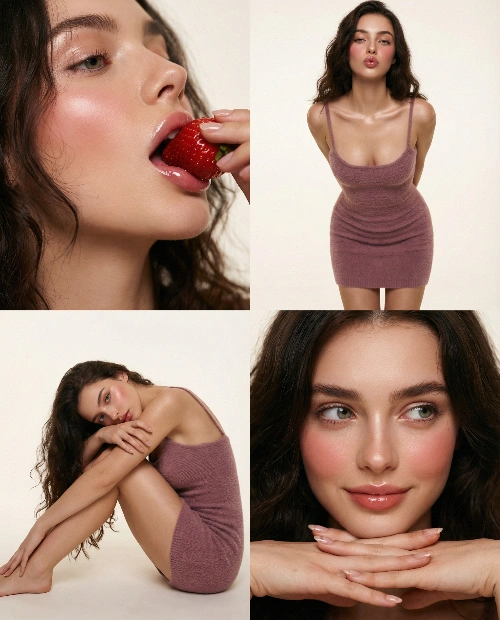
Ultra-Real Beauty Grid
{ "project_specifications": { "format": "2x2 Grid Collage", "aspect_ratio": "4:5", "aesthetic_style": "High-end Beauty Editorial", "rendering_engine_hints": { "realism_level": "Ultra-photorealistic", "texture_quality": "8k", "lighting_simulation": "Ray-traced studio lighting" } }, "global_assets": { "subject_definition": { "hair": { "style": "Long, loosely wavy, voluminous", "texture": "Natural, individual strands defined", "behavior": "Messy but styled, framing face and shoulders" }, "complexion": { "skin_texture": "Porous, hyper-realistic", "finish": "Dewy, glass-skin effect", "makeup": { "cheeks": "Heavy flush/blush", "lips": "High-gloss, plump, natural pink", "eyes": "Clean, defined lashes, natural brows" } }, "wardrobe": { "item": "Mini dress", "fit": "Bodycon / Tight", "fabric": { "material": "Soft textured knit / Boucle", "tactility": "Fuzzy, light-catching fibers", "color": "Soft mauve or neutral taupe" }, "details": "Spaghetti straps, mid-thigh length" } }, "environment_definition": { "studio_setup": { "background": "Seamless paper, soft off-white/beige", "atmosphere": "Clean, warm, intimate" }, "lighting_rig": { "key_light": "Large diffuse softbox (Front-Left)", "fill_light": "Reflector (Right)", "highlights": "Specular highlights on lips, cheekbones, and shoulders" } } }, "panel_architecture": [ { "position": "Top-Left (1)", "shot_type": "Extreme Close-Up (Macro)", "composition": { "angle": "Low angle, looking up slightly", "focus": "Mouth and nose area", "depth_of_field": "Shallow" }, "action": { "primary": "Eating a strawberry", "nuance": "Delicate finger hold, lips slightly parted" }, "visual_anchors": [ "Moisture on strawberry surface", "Gloss reflection on lips", "Baby hairs at temple" ] }, { "position": "Top-Right (2)", "shot_type": "Medium Shot (Thigh-up)", "composition": { "angle": "Eye level", "pose_dynamic": "Leaning forward slightly towards lens" }, "action": { "stance": "Standing straight on", "arms": "Relaxed at sides", "expression": "Direct gaze, alluring pout" }, "visual_anchors": [ "Texture of knit dress", "Collarbone shadows", "Curvature of waist" ] }, { "position": "Bottom-Left (3)", "shot_type": "Full Body (Seated)", "composition": { "angle": "Side profile", "framing": "Subject compacted on floor" }, "action": { "pose": "Knees to chest (fetal position variation)", "interaction": "Cheek resting on knee, arms embracing legs", "hair_flow": "Cascading onto the floor" }, "visual_anchors": [ "Smooth leg definition", "Dress stretching over thigh", "Dreamy gaze" ] }, { "position": "Bottom-Right (4)", "shot_type": "Beauty Portrait (Head & Hands)", "composition": { "angle": "Frontal close-up", "framing": "Chin to hairline" }, "action": { "gesture": "Chin resting on interlaced fingers", "expression": "Soft smile, looking off-camera" }, "visual_anchors": [ "Hand detail and manicure", "Eye clarity", "Flush on cheeks" ] } ] }
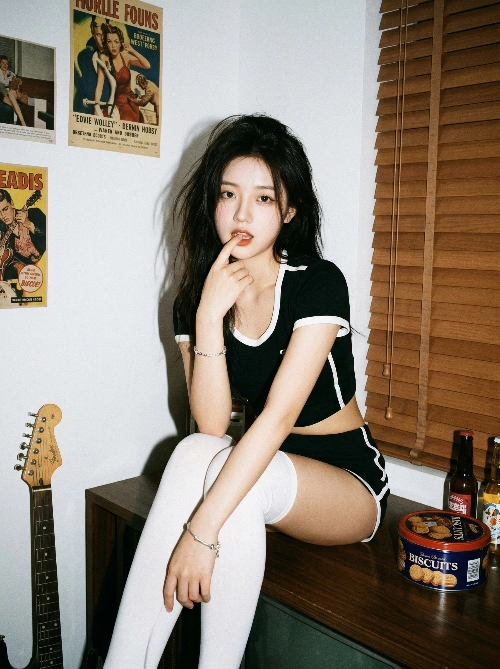
Rebellious 90s Cool Girl Portrait
Using the uploaded real subject as the visual baseline, create a full-body portrait with an independent, rebellious aesthetic and a vintage film texture. Embrace a 1990s point-and-shoot camera style, using direct flash, high-contrast lighting, retro color grading, and casual composition to convey a raw, authentic, and edgy “cool girl” atmosphere. Character Setup (Based on the real uploaded subject) Baseline: Use the real female subject as the foundation, preserving her facial features and body proportions. Hair: Thick, slightly messy long hair (color matching the uploaded subject). Outfit: Sporty black cropped top with white trim, paired with matching black shorts and white over-the-knee socks. Accessories: A silver bracelet worn on the wrist. Pose and Composition Pose: Sitting casually on an elevated dark wooden surface (such as a counter or piano top). The body leans forward slightly, relaxed but with a sharp edge. One hand is raised near the mouth, lightly biting a finger. The gaze is directed straight at the camera, with a sensual yet nonchalant expression. Composition: Full-body shot using a 35mm focal length, slightly low-angle perspective to emphasize leg lines. Medium-distance framing, appearing spontaneous yet visually balanced. Sharp focus on the subject, with the background falling off due to the rapid light decay of direct flash. Scene and Details Background: A white wall decorated with vintage posters taped onto it, along with brown wooden blinds. Foreground and Props: Include visible elements such as the neck of an electric guitar, a tin of cookies, and several bottles to enhance the lived-in, candid atmosphere. Lighting and Color Lighting: Simulate direct on-camera flash with hard lighting. The light should be harsh and frontal, casting sharp, well-defined shadows on the wall behind the subject. High contrast, with no soft lighting or diffusion. Color and Texture: Vintage film aesthetic, emulating Kodak Gold 200 tones. Warm hues from wooden blinds and furniture contrast with the cool white flash. Colors should be deep and slightly muted, with rich blacks and subtle film grain, creating a lo-fi indie visual style. Overall Mood and Style Style: Independent, rebellious “cool girl” aesthetic. Raw, authentic, with a Y2K-inspired retro fashion editorial vibe, resembling a snapshot. Mood: Casual, direct, with a hint of playful defiance. Technical Specifications and Constraints Image Quality: Photorealistic, but intentionally incorporating vintage film imperfections and direct-flash artifacts. Avoid: Soft lighting, studio lighting setups, shallow depth-of-field bokeh effects, polished studio portraits, skin smoothing, 3D-rendered looks, cartoon or illustration styles, distorted hands, missing guitar strings, floating objects, anatomical inaccuracies, stiff posing, excessive post-processing, and HDR effects.
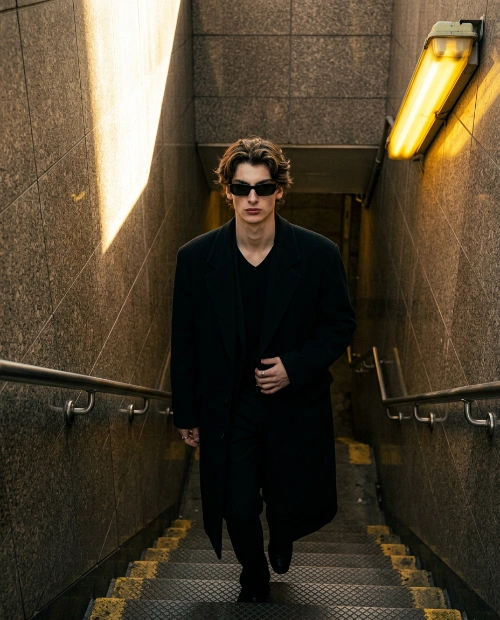
Cinematic Urban Fashion Model
{ "metadata": { "image_type": "photograph", "primary_purpose": "editorial" }, "composition": { "rule_applied": "rule of thirds", "aspect_ratio": "4:5", "layout": "single subject", "focal_points": [ "Subject's face and dark sunglasses", "Yellow fluorescent light fixture leading to the subject" ], "visual_hierarchy": "Eye starts at the subject's face due to contrast with sunglasses, follows the V-neck down the black coat, moves outward along the metallic handrails, and catches the bright sunlight shaft on the left wall and the yellow light on the right.", "balance": "asymmetric" }, "color_profile": { "dominant_colors": [ { "color": "Black", "hex": "#111111", "percentage": "45%", "role": "primary subject" }, { "color": "Warm Gray", "hex": "#7A7269", "percentage": "35%", "role": "background" }, { "color": "Golden Yellow", "hex": "#E5B05C", "percentage": "10%", "role": "accent" } ], "color_palette": "complementary", "temperature": "warm", "saturation": "moderate", "contrast": "high contrast" }, "lighting": { "type": "mixed", "source_count": "multiple sources", "direction": "front", "directionality": "highly directional", "quality": "dramatic", "intensity": "moody", "contrast_ratio": "high contrast (dramatic shadows)", "mood": "mysterious", "shadows": { "type": "harsh defined edges", "density": "deep black", "placement": "under handrails, within stair treads, and engulfing the subject's lower body", "length": "medium" }, "highlights": { "treatment": "blown out", "placement": "on upper left wall from sun shaft, fluorescent light fixture, and reflective handrails" }, "ambient_fill": "present", "light_temperature": "warm (golden)" }, "technical_specs": { "medium": "digital photography", "style": "realistic", "texture": "sharp", "sharpness": "tack sharp", "grain": "digital noise", "depth_of_field": "medium", "perspective": "high angle" }, "artistic_elements": { "genre": "street", "influences": [ "Urban street style fashion photography", "Cinematic cyberpunk/matrix aesthetic" ], "mood": "sophisticated", "atmosphere": "Gritty yet polished urban transit environment with a moody, imposing, and highly stylized fashion presence", "visual_style": "structured" }, "typography": { "present": false, "fonts": [], "placement": "", "integration": "" }, "subject_analysis": { "primary_subject": "Young male model wearing an oversized, structured long black overcoat, black V-neck top, black trousers, and dark rectangular sunglasses, walking down stairs. Hair: Medium length, textured cut (e.g., modern shag/tapered cut). Length: Roughly ear-level/temple-level on the sides, slightly longer and voluminous on top (3-4 inches), with soft layers and natural movement. Texture: Natural wavy texture, showing varied strands, slight frizz, and natural volume (imperfections visible, not 'AI smooth'), styled loosely back from the forehead without a distinct part. Evidence of light matte product application.", "positioning": "center", "scale": "medium", "interaction": "interacting with environment", "facial_expression": { "mouth": "neutral", "smile_intensity": "no smile", "eyes": "direct gaze", "eyebrows": "neutral", "overall_emotion": "serious", "authenticity": "posed" }, "hands_and_gestures": { "left_hand": "resting at waist level, lightly holding the edge of the black overcoat, silver ring visible on finger", "right_hand": "not visible, hidden behind the coat's bulk or swinging backward", "finger_positions": "left hand thumb and index finger slightly curled and gripping fabric, remaining fingers obscured", "finger_interlacing": "none", "hand_tension": "relaxed", "interaction": "holding coat", "naturalness": "deliberately posed" }, "body_positioning": { "posture": "standing", "angle": "facing camera", "weight_distribution": "shifted", "shoulders": "level" } }, "background": { "setting_type": "indoor", "spatial_depth": "medium", "elements_detailed": [ { "item": "Stainless steel handrail", "position": "left", "distance": "foreground", "size": "medium", "condition": "worn", "specific_features": "Tubular metal with distinct mounting brackets and subtle reflections" }, { "item": "Stainless steel handrail", "position": "right", "distance": "midground", "size": "medium", "condition": "worn", "specific_features": "Tubular metal matching the left side, catching edge highlights" }, { "item": "Fluorescent light fixture", "position": "top right", "distance": "background", "size": "medium", "condition": "vintage", "specific_features": "Rectangular housing emitting a strong, warm amber/yellow light" } ], "wall_surface": { "material": "tile", "surface_treatment": "finished", "texture": "perfectly smooth", "finish": "satin", "color": "warm grayish-brown", "color_variation": "patchy", "features": "clean, distinct grid-like grout lines separating large rectangular stone/granite panels, sharp diagonal shaft of warm sunlight hitting the upper left section", "wear_indicators": "industrial" }, "floor_surface": { "material": "concrete", "color": "dark gray with yellow accents", "pattern": "striped" }, "objects_catalog": "Metal diamond-plate stair treads with yellow painted safety edges running horizontally across the bottom and midground, dual tubular stainless steel handrails flanking the stairs, rectangular yellow light fixture mounted to the ceiling angled directly above the stairwell, large rectangular stone tiles covering the walls.", "background_treatment": "sharp" }, "generation_parameters": { "prompts": [ "Editorial street style photography, a handsome young man with medium length, textured modern shag haircut showing natural wavy movement and styled loosely back. He wears dark rectangular sunglasses, a long black oversized wool coat, and an all black outfit, walking down urban subway stairs. The walls are made of large polished brown-gray stone tiles with visible grid grout lines. A dramatic shaft of warm golden sunlight hits the upper left wall. A vintage yellow fluorescent light fixture is on the upper right ceiling. The stairs are concrete with metal edges and yellow safety paint. Stainless steel handrails. Cinematic lighting, deep dramatic black shadows, sharp focus, 85mm lens, high contrast, moody, fashionable underground matrix aesthetic.", "Cinematic fashion portrait, male model in structural black overcoat descending transit stairs, medium length textured hair with soft waves, tinted glasses. High angle shot looking down the steps. Brutalist architecture background, granite wall panels. Mixed lighting featuring harsh geometric sunbeams on the wall contrasting with artificial yellow ambient light. Gritty texture, high dynamic range, hyper-realistic, sophisticated urban mood." ], "keywords": [ "street style", "oversized black coat", "subway stairs", "cinematic lighting", "medium length hair", "textured hair", "modern shag" ], "technical_settings": "85mm lens, f/4.0 aperture for medium depth of field keeping background architectural elements recognizable, 1/250s shutter speed, ISO 400. Metered to preserve the sun shaft highlight while letting shadows fall to deep blacks.", "post_processing": "Color grading to enhance warm golden highlights against neutral/cool shadows, boosted contrast curve, subtle film grain introduced in the deep shadow areas for texture." } }
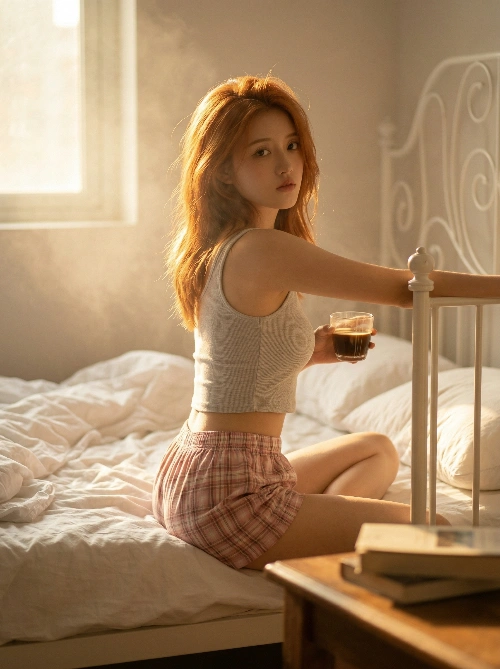
Ginger Morning Intimate
Using the uploaded real female subject as the visual baseline, generate a cinematic, intimate indoor portrait. The scene captures a quiet morning moment on an unmade bed, where strong golden sunlight outlines her silhouette. The overall mood should feel calm, nostalgic, and dreamlike, using dramatic light contrast and delicate everyday details to tell a story of solitary morning reflection. Character Baseline and Styling Baseline: Strictly follow the facial features, structure, and personal aura of the woman in the uploaded image. She should have long, slightly wavy, and slightly tousled ginger-red hair. Expression: Soft and contemplative, gazing over her shoulder directly at the camera, conveying a sense of quiet introspection. Makeup: Natural and minimal, highlighting refined facial features, soft lip tones, and sun-kissed, healthy glowing skin. Physique: Curvy figure with a slender waist and fuller thighs. Clothing: A light gray ribbed cropped tank top paired with fitted high-waisted pink-and-white plaid sleep shorts. Pose, Environment, and Lighting Pose: Sitting sideways on the bed, body turned to the left. The right leg is bent and tucked slightly beneath her. The right arm rests comfortably on a white wrought-iron bed frame. The pose is relaxed with a slight forward lean, while the left hand holds a transparent glass coffee cup near the waist. Environment: An intimate bedroom corner with soft lighting. Beneath her are unmade white sheets and pillows. In the left foreground sits a dark wooden round side table with two stacked thick books. The right background is a dim wall. Lighting (Core Element): Masterful lighting simulates strong, warm golden sunlight streaming in from a window on the left, forming an ethereal rim light that precisely highlights the edges of her hair, shoulders, arms, and legs. High-contrast chiaroscuro creates deep, soft shadows enveloping one side of her face and the background, while the light beam produces a warm, slightly hazy morning glow. Composition, Quality, and Style Composition: Medium shot at eye level, simulating a 50mm lens perspective with shallow depth of field. The foreground side table is slightly blurred, emphasizing the subject. Vertical 9:16 format. Image Quality: Professional editorial photography at 8K ultra-high resolution with rich detail. Must clearly render volumetric light (Tyndall effect), individual strands of hair illuminated by sunlight, realistic skin texture, textile details (ribbed fabric, plaid patterns, cotton sheets), and the clarity of the glass cup. Color Palette: Harmonized tones of golden yellow, warm white, ginger red, soft pink, and light gray, creating a warm nostalgic aesthetic. Atmosphere: Calm, intimate, nostalgic, peaceful, and dreamlike.
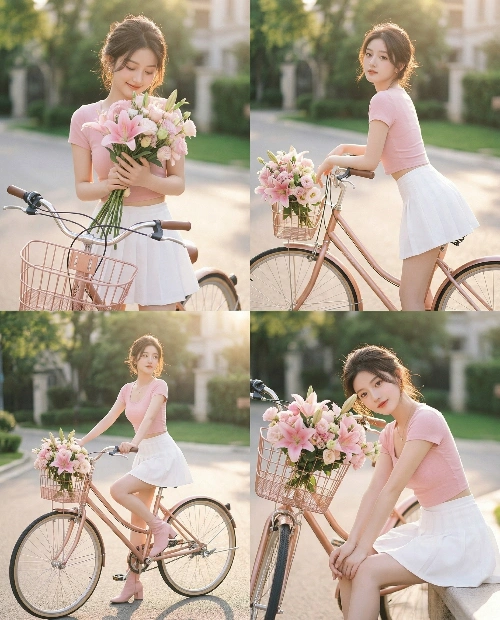
Dreamy Summer Fashion Grid
Using the real female subject you uploaded as the visual baseline, generate a 2x2 ultra-high-definition fashion photography grid. The four panels together should form a cohesive afternoon narrative moment, presenting a soft, romantic, and dreamy summer feminine aesthetic with top-tier outdoor fashion photography realism. Character Baseline and Styling Baseline: Strictly follow the facial features, proportions, and personal aura of the woman in the uploaded image. The character must remain absolutely consistent across all four panels, with no identity drift. Styling: Hairstyle: Soft updo with loose, romantic strands framing the face, maintaining an airy, lightweight feel. Makeup: Light and delicate, with naturally radiant skin and soft pink-nude lip gloss. Outfit: A soft pink fitted cropped top paired with a structured white tennis skirt. Footwear should be feminine shoes or ankle boots. The overall style should be cute, romantic, and slightly sporty with a fashionable edge. Scene, Props, and Lighting Environment: A sunlit upscale suburban street, with elegant houses, greenery, and garden details in the background, creating a nostalgic and romantic atmosphere. Props: A rose gold bicycle with an elegant finish. The front basket contains a warm-toned bouquet featuring pink lilies and pastel-colored flowers. Lighting: Warm natural sunlight with soft haze and subtle glow, creating a romantic, nostalgic “golden summer” ambiance. Framing, Poses, and Emotion Core Emotion: Sweet, dreamy, and gentle, with a shy smile. Shot Breakdown: Top-left (medium shot): Standing beside the bicycle, holding the bouquet gently near her face with both hands, gaze softly lowered. Top-right (medium-wide shot): Lightly leaning on or sitting on the bicycle, turning her upper body for an over-the-shoulder glance, expression soft and calm. Bottom-left (medium-wide shot): Posing elegantly on the bicycle, sunlight catching her hair, bouquet placed in the basket. Bottom-right (medium shot): Leaning against or sitting near the bicycle, bouquet prominently featured, head tilted dreamily, hands relaxed. Composition and Image Quality Composition: 2x2 grid layout with thin spacing between panels. Alternate between medium portrait and medium-wide shots, simulating a 50mm prime lens perspective with shallow depth of field. Focus should be on the face, outfit, bicycle, and bouquet details. Style and Quality: Soft, sunlit, feminine fashion editorial style with subtle film grain. Ultra-high resolution, ensuring realistic skin texture without any plastic appearance. Anatomical structure, hand details, and prop construction must be precise, with accurate and natural colors. Quality Control Ensure: Identity consistency, panel consistency, anatomical accuracy, detailed rendering of face and hands, and complete, correct props. Avoid: Identity drift, inconsistent subjects across panels, extra or missing fingers, distorted limbs, incorrect bicycle structure or color, incorrect clothing colors, plastic-looking skin, distorted bouquet shapes, and any text, watermark, or logo.
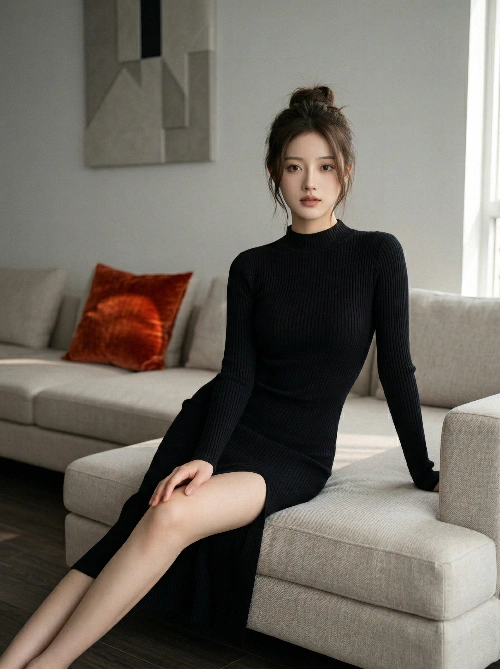
Elegant Home Fashion Portrait
Core Concept Using the uploaded real female subject as the visual reference, generate a magazine-quality fashion indoor portrait. The image should convey a calm, intimate, and luxurious modern atmosphere, capturing the subject’s elegant and relaxed state in a home environment, achieving the realism and artistic expression of high-end editorial photography. Subject Reference and Styling Reference: Strictly follow the facial features, body proportions, and personal aura of the uploaded subject. Emphasize refined facial structure and a slender, elegant figure. Expression: Calm with a subtle sense of focus; soft, confident, and slightly penetrating gaze directed at the camera, creating a delicate and intimate allure. Hairstyle: Long dark brown hair, loosely tied at the back into a slightly messy bun with natural volume, with a few loose strands falling along the sides of the face. Makeup and Accessories: Clean, natural makeup—almost no-makeup look. Accessories should be minimal, such as small earrings or none at all. Outfit and Pose Clothing: A black ribbed knit long-sleeve dress with a high neckline. The dress is form-fitting, contouring the body shape, with a high side slit that subtly reveals the leg depending on the pose. Pose: Seated gracefully on a light beige sectional sofa. The body is slightly angled toward the camera; one leg is bent and placed on the sofa, while the other extends forward, naturally revealing the leg through the slit. One hand rests casually on the bent knee, while the other is relaxed on the sofa cushion. The pose is composed, elegant, with a slight forward-leaning engagement. Environment and Lighting Environment: A modern interior living room. The background wall is gray-white, featuring a warm-toned abstract geometric artwork. The floor is dark wood. The space is clean and minimal, with a single accent color provided by an orange-red cushion on the sofa. Lighting: Soft natural daylight, simulating diffused light entering from a side window. Lighting is even with soft shadows, low to medium contrast. Color temperature is neutral-warm, creating a cozy and inviting atmosphere. Composition and Image Quality Composition: Medium-wide shot capturing the full seated pose on the sofa. The camera is positioned slightly above eye level with a subtle angle. Use the rule of thirds, placing the subject slightly to the right, balanced by the wall art. A slight foreground blur on the right edge (such as a wall or frame edge) can be included. Technical: Simulate a 35mm to 50mm lens perspective, with shallow to medium depth of field—sharp focus on the subject, slightly blurred background. Style and Quality: High-end fashion magazine photography style. Clean, ultra-high resolution image with neutral color grading, slightly warm highlights, and slightly reduced saturation for a refined, understated aesthetic. Avoid harsh shadows, overexposure, cluttered backgrounds, anatomical errors, low resolution, watermarks, or text. Mood and Atmosphere Overall Mood: Minimalist, fashionable, mature, and refined. Atmosphere: Calm, intimate, modern luxury—capturing an effortless sense of sophistication and the quiet charm of everyday living.
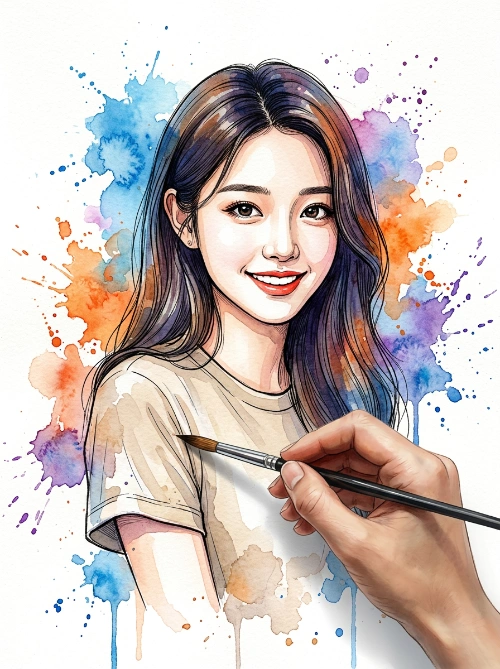
Dynamic Watercolor Portrait
Create a vibrant and artistic watercolor painting of a smiling person, using the uploaded photo as the facial reference without altering their facial features or appearance. The person is wearing a neutral-tone T-shirt. The background is clean white, filled with dynamic and expressive watercolor paint splashes in blue, orange, and purple spreading organically across the scene. In the foreground, a realistic human hand holds a paintbrush as if actively painting the sleeve of the man’s hoodie, creating the illusion that the portrait is being painted at that exact moment. The visual style combines detailed ink line art with loose watercolor textures, including paint drips, fine splatters, soft pigment diffusion, watercolor blooming effects, and natural paper texture. The image features strong contrast, an expressive and dynamic artistic look, a clear hand-painted aesthetic, centered composition, soft lighting, high level of detail, and a modern illustration style.