
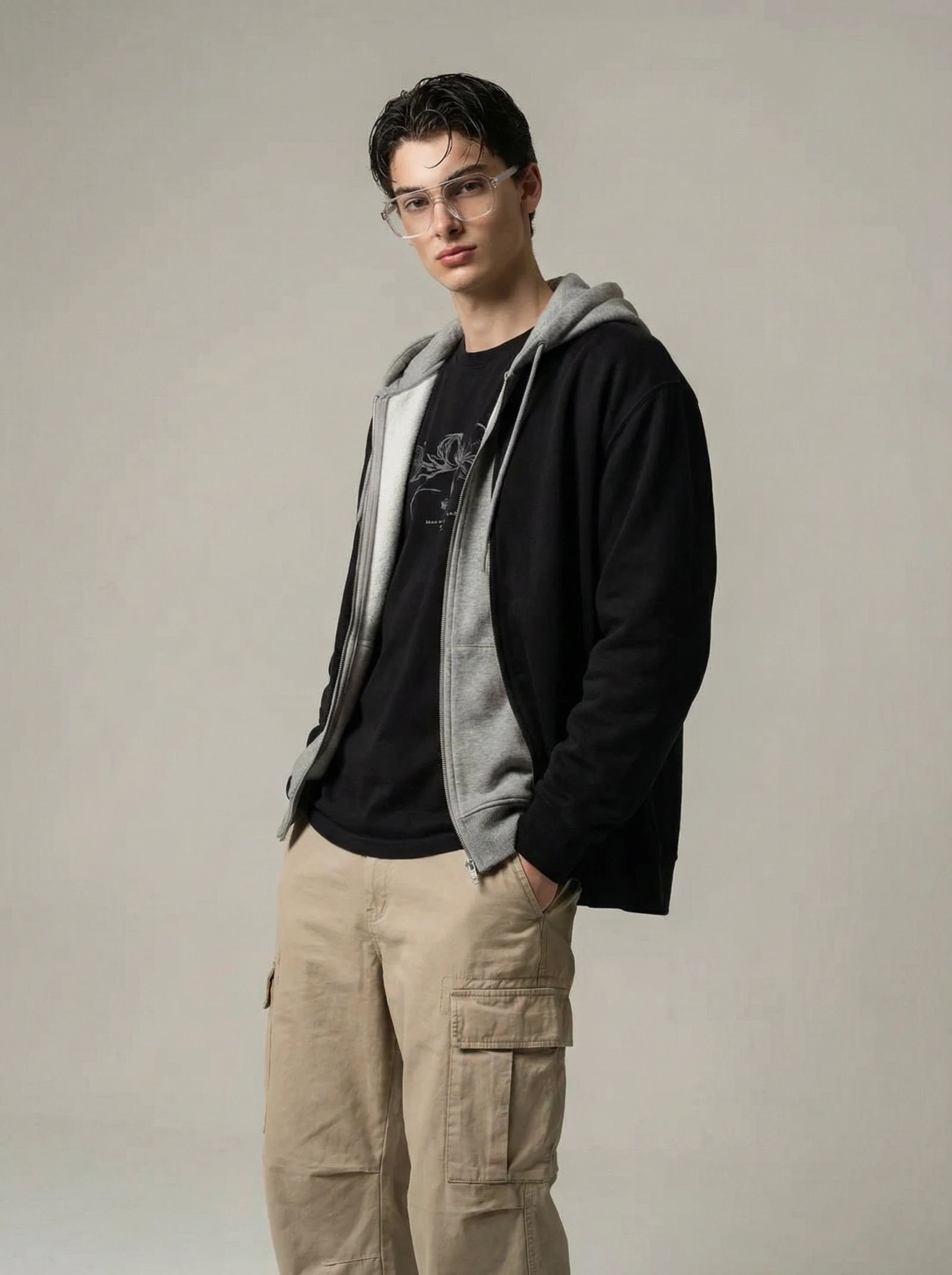
Reference Images:
Gen-Z Streetwear Studio Shoot
Prompt
{ "scene_description": "Modern studio photoshoot of a man, identical to the reference, styled in Gen-Z inspired streetwear with a relaxed, effortless aesthetic. The look feels current, bold, and naturally cool without trying too hard.", "subject_details": { "appearance": "Man identical to the reference image, calm confident expression, slightly nonchalant Gen-Z attitude.", "clothing": "Trendy streetwear outfit — relaxed or oversized silhouette, minimal graphic or plain top, clean layers, modern textures, fashion-forward but casual.", "accessories": "Large transparent-frame glasses with a bold yet minimal street-style design.", "pose": "Casual street-style stance — slight slouch or weight shifted to one side, hands relaxed (in pockets or loosely by the side), natural candid posture." }, "environment": { "background": "Minimal studio backdrop in soft grey or off-white, clean and seamless to keep focus on the styling.", "lighting": "Soft, diffused studio lighting with low contrast; natural falloff, subtle shadows, modern editorial lighting style; slightly moody but clean." }, "camera_settings": { "focus": "Sharp focus on the subject; crisp facial features; shallow depth-of-field for a contemporary fashion portrait.", "composition": "Mid-shot or slightly wider portrait, off-center framing for an editorial streetwear feel.", "quality": "Ultra-high resolution, clean tones, smooth textures, modern fashion magazine quality." }, "mood": "Gen-Z, streetwear, laid-back confidence — minimal studio setup with a cool, fashion-editorial edge." }
Aspect Ratio
Source
@john_my07Model
Nano Banana ProYou might also like
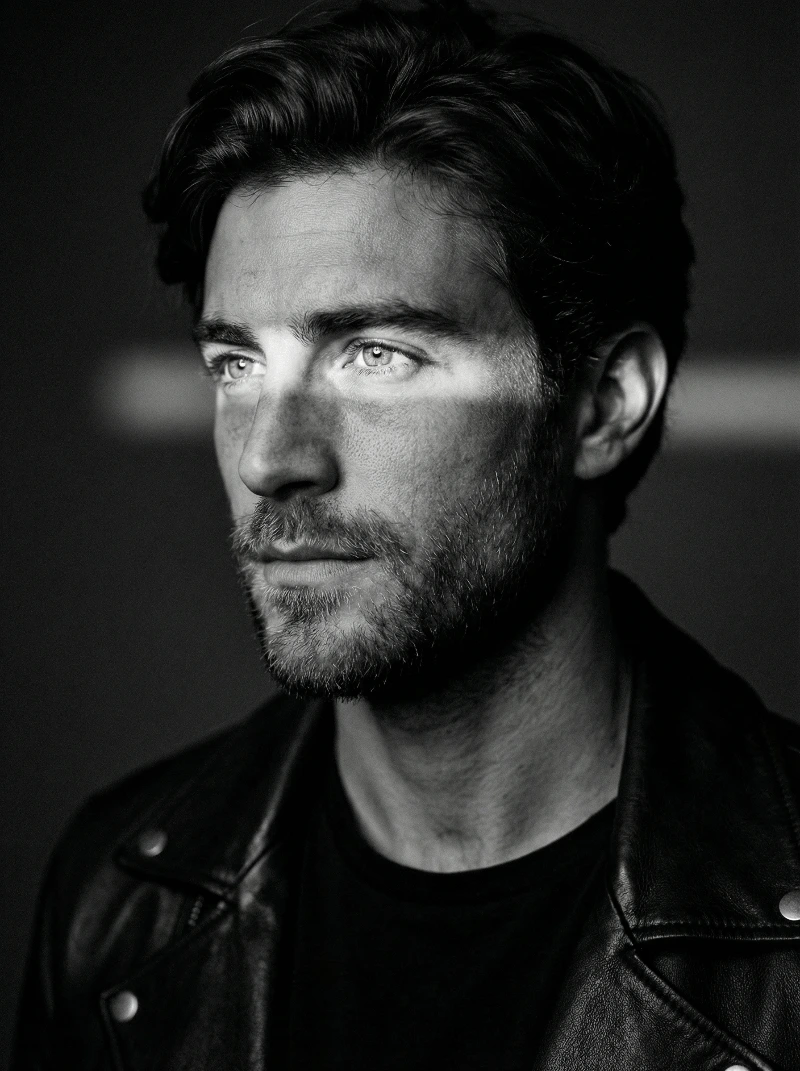
Cinematic Noir B&W Portrait
A hyper-realistic black-and-white cinematic portrait of a male model in a three-quarter profile pose, head slightly turned to the side, with a calm yet intense expression. A narrow horizontal band of soft white light passes cleanly across both eyes, illuminating only the eye area while the rest of the face falls into deep shadow. The light is sharp-edged yet diffused, creating a striking eye highlight and dramatic contrast. Wearing a black leather jacket over a dark crew-neck t-shirt. Dark minimal studio background, low-key lighting, cinematic noir mood. Natural skin texture with visible pores, realistic facial structure, shallow depth of field, subtle film grain, high contrast monochrome tones, professional fashion editorial photography, ultra-HD, 8K resolution, photorealistic, razor-sharp focus. Create a HD photo
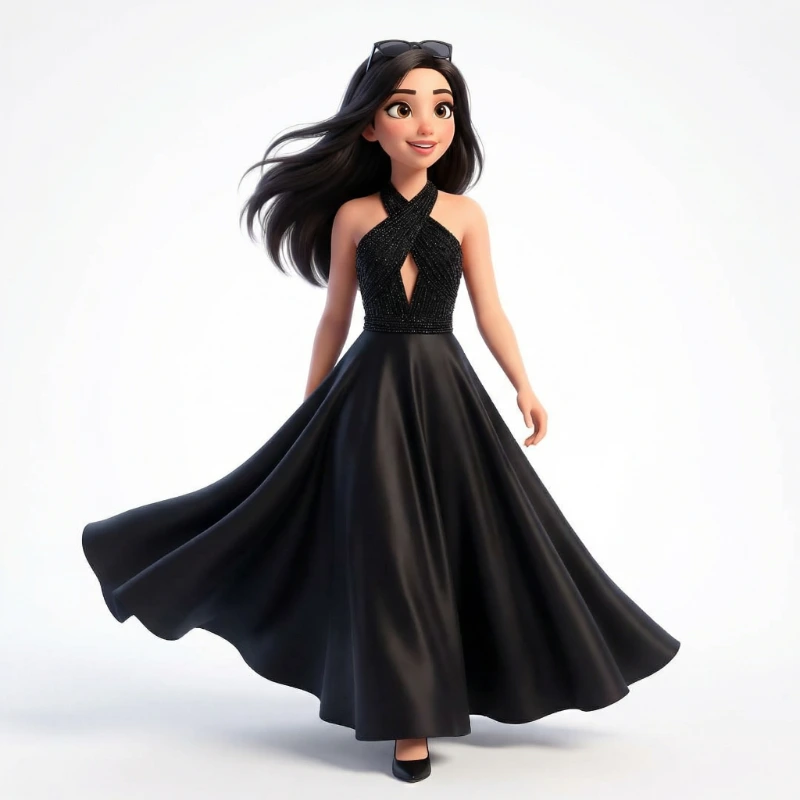
Cheerful Pixar 3D Portrait
Convert the uploaded photo into a cheerful and cute 3D Pixar-style animated portrait. Keep the person’s facial features, hairstyle, and unique expression so the character clearly resembles the real person. Use a smooth and clean cartoon style. Apply soft skin shading, expressive eyes, and a polished animated look while preserving the original identity. Place the character against a plain white studio background with clean, even lighting. Keep the outfit the same as in the reference
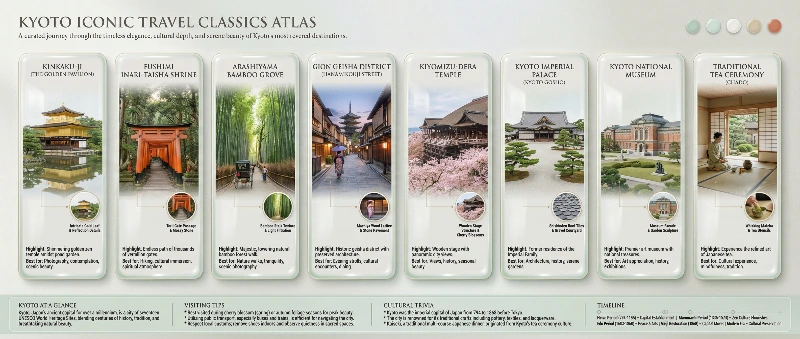
Kyoto Iconic Travel Atlas
Create an ultra-wide infographic poster titled “Kyoto Iconic Travel Classics Atlas”, with a 21:9 horizontal layout in true 8K resolution. The visual language blends ceramic glaze and jade-like softness, expressing calm luxury, precision, and cultural depth. The overall mood is restrained, warm, and translucent—evoking the feeling of a museum-grade exhibition combined with refined cultural branding. All on-image text is in English. Background and overall material tone * Background features a light rice-white to misty off-white gradient, similar to a high-end ceramic exhibition space * Global lighting is gentle and diffused: soft HDRI illumination with subtle rim light, avoiding harsh contrast or strong shadows * Color palette centers on jade white, pale celadon, soft moss green, warm beige, with minimal accents of vermilion or muted gold (no more than 3–4 dominant hues across the entire image) Layout: eight equal-width “ceramic/jade plaques” (strictly eight columns) * The central composition uses a strict eight-column grid, each column designed as a ceramic-style information plaque * Plaque material resembles fine white porcelain glaze: rounded corners, smooth highlights, subtle reflective sheen, clean edges * Borders may include an extremely delicate gold trace or jade-edge effect, applied with restraint * Shadows are soft and shallow, as if the plaques are placed on a curated museum display surface Core visuals: realistic 3D landmarks (PBR) with a serene glazed aesthetic * Each column top features one real, iconic Kyoto landmark (automatically select eight authentic sites, no fictional entries) * Use realistic 3D environment rendering with physically based materials, while maintaining a calm, jade-like visual softness * Materials must follow real-world physical rules: wood, stone, tile, water, foliage, and paper surfaces rendered with accurate PBR properties * Unified color grading: soft highlights, moderate contrast, low saturation, and gentle warmth inspired by ceramic glaze and polished jade * Composition emphasizes depth and quiet grandeur through layered space and subtle scale references (small figures, lanterns, trees) * Water elements (rivers, ponds, moats) should display delicate reflections and smooth tonal transitions * Avoid cartoon styles, low-poly geometry, plastic textures, excessive sharpness, or dramatic cinematic lighting Detail view: glazed “micro dish” or “jade charm” window * Each column includes one small detail window in the lower-right corner, using a single consistent shape across all columns * Option A: a small circular dish resembling a porcelain saucer, showcasing fine details (wood grain, roof tiles, stone steps, garden gravel, water ripples) * Option B: a jade-charm-shaped window with rounded contours, highlighting close-up textures and materials * Surfaces should exhibit soft glaze or jade-like highlights with smooth, rounded edges * A thin, elegant leader line connects the detail window to the main 3D landmark, accompanied by a concise 2–6 word label Text per column (concise, refined, understated) * Landmark name (4–8 English words, refined serif typeface recommended) * Two short informational lines: * Highlight: maximum 8 words * Best for: maximum 6 words * Text color uses ink gray or bluish charcoal; accent colors appear only in small dots or separators Top title area (museum exhibit label style) * Main title: Kyoto Iconic Travel Classics Atlas * Subtitle: one refined positioning sentence, maximum 18 words, calm and poetic in tone * Top-right corner includes five small glazed color dots: pale celadon, jade white, moon white, warm beige, with a subtle vermilion accent Bottom information band (exhibition caption style) * A full-width bottom band divided into four sections by fine lines, resembling museum display captions * Kyoto at a glance: one sentence, maximum 22 words * Visiting tips: three bullet points, each no more than 12 words * Cultural trivia: three items, each no more than 18 words * Timeline: 3–6 key nodes (era or year plus keyword), connected with minimal linear icons using thin, consistent strokes Automatic landmark selection rules * Cover at least five categories: natural scenery, historical temples or shrines, traditional architecture, museums or cultural institutions, classic streets or seasonal night scenes, and intangible cultural experiences (tea ceremony, festivals, crafts) * If necessary, fill gaps with safe, general entries such as “Kyoto National Museum” or “Historic Gion District” * All landmark names must be real and verifiable; if uncertain, use conservative generic naming and never fabricate locations Output constraints * English text only * Strong alignment, minimalist spacing, generous white space * No logos, no branding marks, no watermarks * True 8K ultra-high resolution, suitable for cultural tourism displays and horizontal social media covers
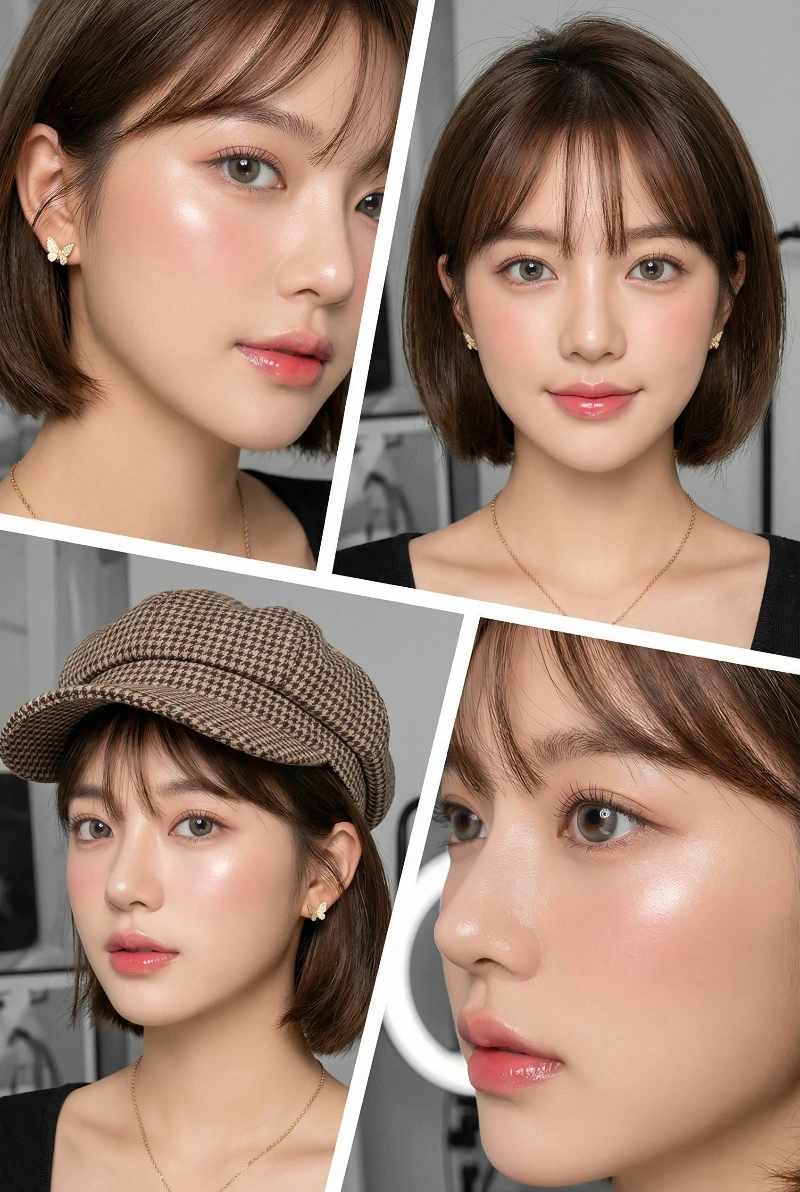
Modern K-Beauty Grid
{ "prompt_type": "beauty_editorial_collage", "layout": { "structure": "4-panel split-screen grid", "dividers": "Thick white diagonal borders", "style": "Modern magazine spread aesthetic" }, "subject": { "demographic": "Young woman", "aesthetic": "Clean girl / K-beauty influence", "features": { "skin": "Flawless, dewy, 'glass skin' texture, high luminosity", "hair": "Short brown bob cut with wispy bangs, smooth texture", "eyes": "Soft grey/hazel contacts" } }, "makeup": { "style": "No-makeup makeup look", "details": [ "Soft rosy blush high on cheeks", "Glossy pink lip tint", "Groomed natural fluffy brows", "Subtle mascara" ] }, "attire_and_accessories": { "headwear": "Brown houndstooth pattern newsboy cap (Baker boy hat)", "jewelry": "Small delicate gold butterfly stud earrings, thin gold chain necklace" }, "panel_composition": { "top_left": "Close-up 3/4 angle, focus on cheek highlight and earring", "top_right": "Direct front-facing portrait, symmetrical composition", "bottom_left": "Portrait with hat, 3/4 turn, looking at camera", "bottom_right": "Extreme close-up side profile, cropping into face" }, "technical_specs": { "resolution": "8K", "lighting": "Soft commercial studio lighting, ring light reflection in eyes", "color_grading": "Desaturated background, warm skin tones, high contrast", "style": "High-end beauty photography, hyper-realistic" } }
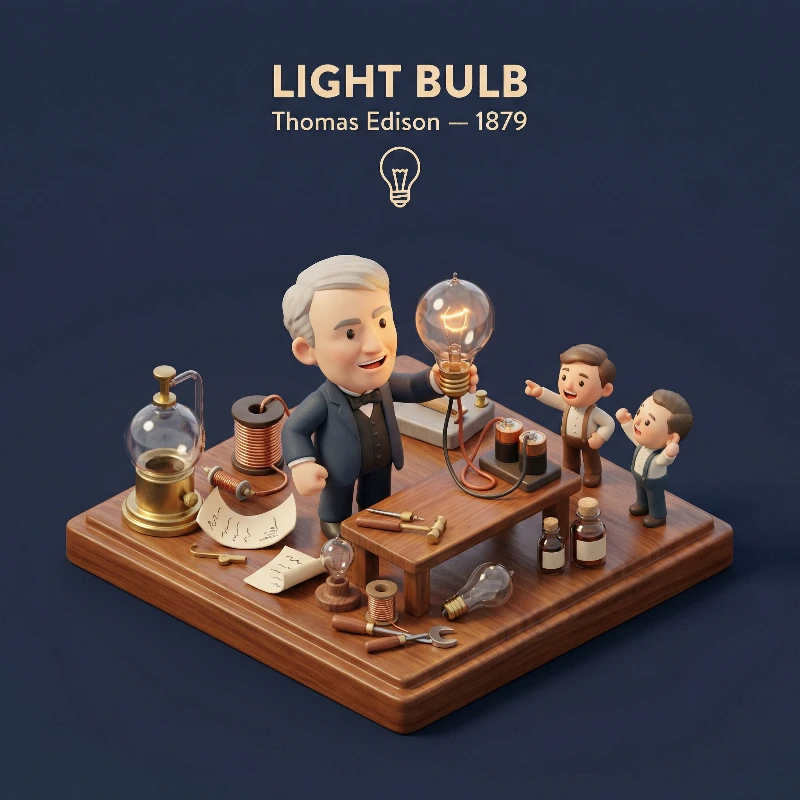
Edison's Light Bulb Invention Diorama
Create a miniature 3D isometric diorama showing the invention of [Light Bulb] at the moment of [Edison successfully testing the first long-lasting carbon filament bulb]. Camera angle around 40° from above. Textures feel soft and polished. Materials follow realistic PBR rules. Lighting feels natural and balanced. The raised base includes tools, workshop elements, notes, and early prototypes. Tiny stylized inventors interact with objects. Faces are visible and recognizable with clean shapes and expressions. Background stays solid [warm dark navy blue]. Top center text shows [Light Bulb] in bold. Second line shows [Thomas Edison — 1879]. A simple line icon of the invention sits below. Text color adapts to background contrast.
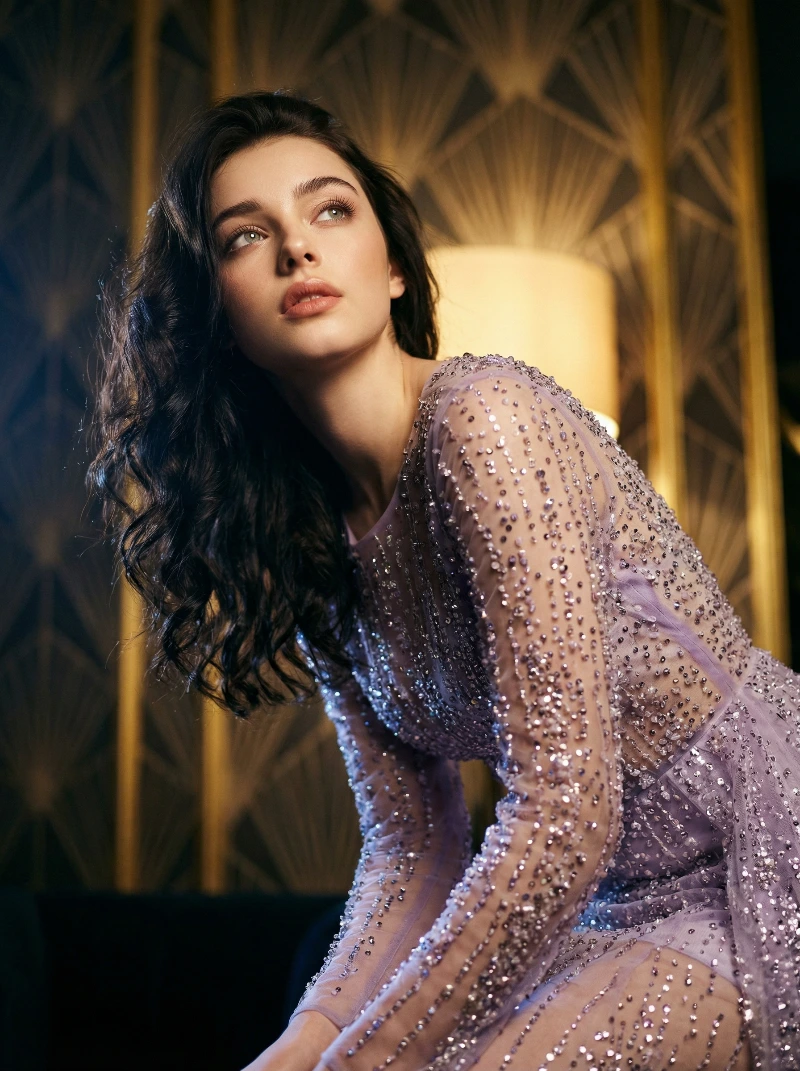
Cinematic Fashion Portrait
{ "scene_configuration": { "version": "2.0", "global_aesthetic": "Cinematic Editorial Fashion", "aspect_ratio": "3:4", "image_quality": "Masterpiece, 8K, Photorealistic, Subsurface Scattering" }, "subject_specification": { "model": "The person I uploaded", "physical_attributes": { "hair": { "color": "Deep espresso dark brown", "texture": "Voluminous, thick waves, high-gloss shine", "styling": "Cascading over left shoulder, Hollywood glamour style" }, "complexion": { "skin_type": "Dewy, luminous, fine pores visible", "features": "Sharp jawline definition, elongated neck, soft sheen on collarbones" }, "expression_and_pose": { "body_pose": "Leaning forward toward the camera, subtle arch in the back", "head_position": "Tilted back at a 15-degree angle, sensual posture", "eye_direction": "Gazing upward into the light source", "mouth": "Slightly parted, soft neutral lip tone" } } }, "wardrobe_details": { "garment_type": "High-fashion Couture Gown", "color_palette": { "primary": "Lavender", "secondary": "Pale Lilac", "accents": "Iridescent Silver" }, "textile_physics": { "bodice": "Sheer organza and silk tulle", "embellishments": "High-density micro-sequins, hand-stitched glass beads, Swarovski crystal accents", "visual_effects": "Refractive light play, shimmering texture, intricate embroidery patterns" }, "structural_details": ["Delicate spaghetti straps", "Form-fitting silhouette", "Translucent layering"] }, "environment_architecture": { "setting": "Luxury Art-Deco Penthouse Interior", "background_elements": { "walls": "Vintage geometric art-deco wallpaper", "colors": ["Muted taupe", "Cream", "Burnt umber", "Gold leaf accents"], "depth": "Extreme bokeh, out-of-focus architectural depth" }, "atmosphere": "Warm, sophisticated, intimate, slightly hazy" }, "technical_direction": { "camera_gear": { "body": "Medium Format Digital (e.g., Hasselblad H6D)", "lens": "85mm Prime G-Master", "aperture": "f/1.2 for razor-thin depth of field" }, "lighting_setup": { "primary_light": "Warm-toned softbox (Key Light) at 45 degrees", "secondary_light": "Cool-toned rim light to define the silhouette and hair", "effects": ["Cinematic shadows", "Chiaroscuro contrast", "Specular highlights on dress beads"] }, "post_processing": { "color_grading": "Analog film aesthetic, slight teal-and-orange bias in shadows", "focus_point": "Eye lashes and iris sharp; dress texture in mid-ground sharp" } } }
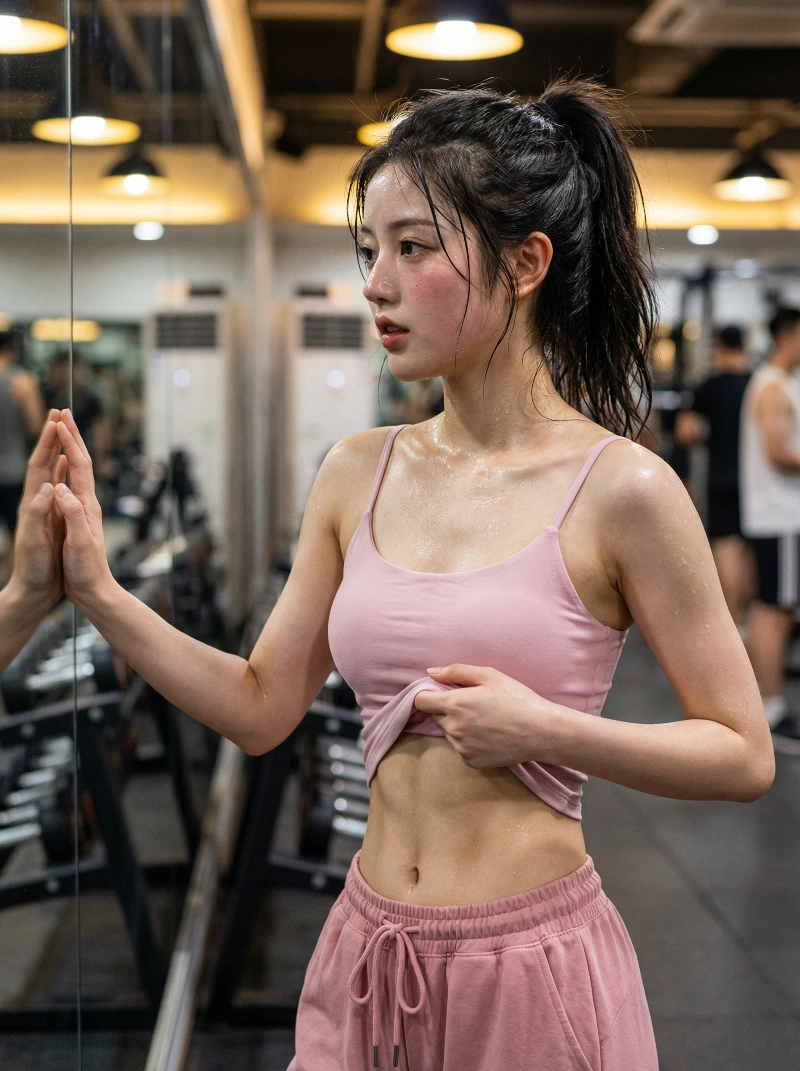
Ultra Realistic Gym Portrait
{ "prompt_configuration": { "type": "Ultra Photorealistic Portrait", "style": "Cinematic Reality", "resolution": "8K" }, "subject": { "demographics": "Female from the reference photo, athletic build, fit physique, pale complexion", "hair": "Dark brown to black hair, pulled back into a messy high ponytail, loose sweaty strands framing the face", "skin_texture": "Hyper-realistic skin details, intense post-workout sheen, glistening with heavy sweat, visible pores, slight flush on cheeks", "facial_expression": "Exhaling slightly, mouth slightly open in a 'phew' expression, focused gaze, tired but accomplished" }, "apparel": { "outfit_style": "Monochromatic pastel pink gym set, athleisure", "top": "Tight cropped pink camisole/tank top with spaghetti straps, rolled up slightly", "bottoms": "Loose-fitting pink sweatpants with visible drawstring and elastic waistband, soft cotton texture", "accessories": "Thin silver necklace" }, "pose_and_action": { "perspective": "Three-quarter side profile view facing left", "action": "Body checking in a gym mirror, left hand pressing against the mirror surface, right hand lifting the hem of the shirt to reveal defined abdominal muscles (six-pack)", "reflection": "Partial reflection of the arm visible in the mirror on the left edge" }, "environment": { "location": "Commercial gym interior", "background_elements": "Blurred gym equipment, weight racks, cable machines, dumbbells, other gym-goers faintly visible in the distance", "flooring": "Black speckled rubber gym flooring" }, "lighting_and_atmosphere": { "lighting_type": "Overhead artificial gym lighting", "quality": "Warm tungsten tones, creating strong specular highlights on the sweaty skin and hair", "mood": "Intense, raw, fitness-focused, candid moment" }, "technical_specifications": { "camera": "DSLR, 85mm portrait lens", "aperture": "f/2.8", "focus": "Sharp focus on subject's face and abs, creamy bokeh background", "render_details": "Unreal Engine 5, Octane Render, ray tracing, subsurface scattering on skin, volumetric lighting" } }
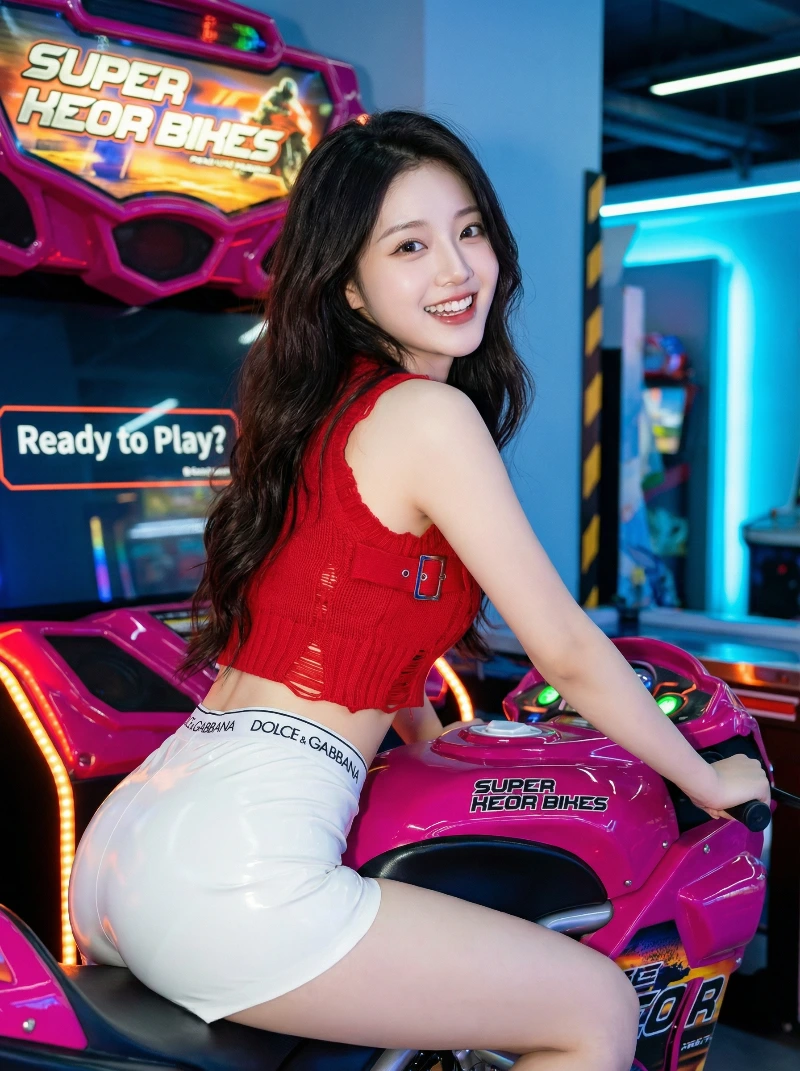
Vibrant Arcade Biker
{ "prompt_structure": { "subject": { "appearance": "Young woman with long, wavy hair and a radiant, joyful expression featuring a wide smile.", "pose": "Seated on a electric fuchsia arcade motorcycle game, leaning slightly forward with hands on the handlebars, body angled in profile while turning head to face the camera making visible clearly her fit curvaceous low back." }, "attire": { "top": "Strapless red knit crop top with deep V neckline featuring distressed/ripped texture and a decorative buckle strap across the chest.", "bottoms": "Matching tight white latex shorts.", "accessories": "Visible white Dolce & Gabbana waistband with black logo text peering above the shorts." }, "environment": { "location": "Indoor amusement arcade.", "foreground": "Bright electric yellow 'SUPER KEOR BIKES' arcade racing cabinet with a realistic motorcycle seat and dashboard.", "background": "Blurry array of other arcade machines, including game screens and a neon sign reading 'Ready to Play?.", "lighting": "Vibrant, high-contrast arcade lighting with dominant orange LED strips outlining the machines and cool electric blue ambient light in the background." }, "style": { "aesthetic": "Energetic, playful, and vibrant.", "color_palette": "Saturated red and pink (outfit), neon orange, electric blue, and deep shadows.", "photography_style": "Medium shot, high-flash or bright environmental lighting, sharp focus on the subject with a shallow depth of field background." } } }