
You might also like
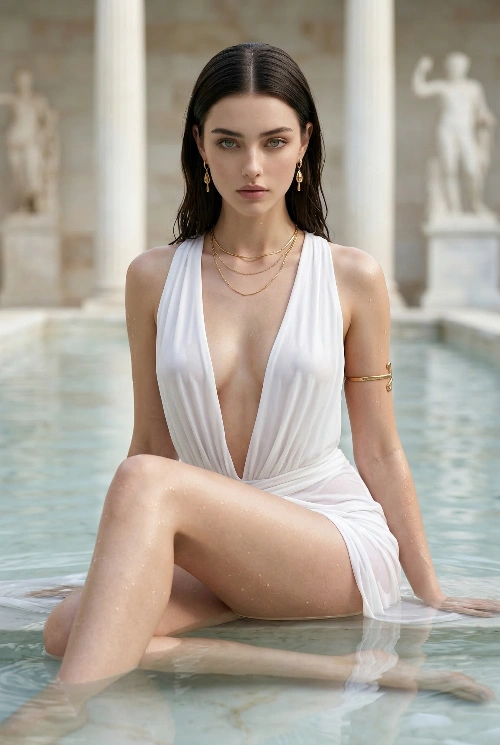
Dominant High-End Fashion Portrait
GLOBAL STYLE & QUALITY Ultra-high-end hyper-realistic fashion photography, cinematic editorial realism, natural optics, physically correct lighting, real skin micro-detail, zero stylization, zero CGI, zero illustration, no anime, no fantasy look, pure photographic dominance FACE Cold, controlled, dominant feminine face Sharp symmetrical features, porcelain skin with subtle warmth Eyes locked directly into the camera with predatory calm No smile, lips relaxed and closed — expression communicates “I am untouchable” Makeup minimal but sculpted: emphasis on eyes and bone structure BODY Elegant yet powerful feminine physique Strong posture despite relaxed pose Torso slightly forward, hips grounded — ownership of space Pose radiates confidence, not invitation Sex appeal comes from authority, not softness SKIN Fair luminous skin with realistic wet sheen Natural highlights from water on thighs, hips, and waist No artificial glow, no plastic smoothness Subtle contrast between dry upper skin and water-kissed lower body HAIR Long straight hair, dark roots transitioning to lighter ends Hair slightly damp near ends Clean parting, controlled flow No wind drama — calm, intentional presence CAMERA & ANGLE Medium-close to mid-body shot Camera positioned slightly below chest level Angle creates power imbalance in favor of subject Lens realism (85mm editorial look), shallow depth of field SETTING Ancient marble pool with pale stone architecture Classical columns and sculptural forms in background Bright daylight with soft diffusion Background clean, majestic, and secondary to subject SCENE SETUP Subject seated in shallow water One leg bent, one leg extended forward Waterline wrapping around thighs and hips Upper body upright, stable, unshaken She does not react to environment — environment submits to her presence OUTFIT (CRITICAL – IMAGE MATCH) White deep-V draped dress / swim-dress hybrid Fabric thin, flowing, soaked at lower half Deep plunging neckline emphasizing chest without exaggeration Dress clings naturally to body due to water weight Gold jewelry: • Elegant drop earrings • Fine layered gold necklaces • Gold arm cuff on upper arm No extra accessories, no modern clutter PROPS (FLATLAY FEEL) None — power is self-contained Jewelry acts as status markers, not decoration EXPRESSION & MOOD Aggressive elegance She is not seductive — she is commanding Mood feels calm, dangerous, superior Viewer feels observed, not invited Sexiness emerges from control and dominance ATMOSPHERE Bright but controlled daylight Soft shadows carve collarbones, shoulders, and thighs Water reflections subtly dancing on skin Clean exposure, no blown highlights FINAL RESULT GOAL A hyper-realistic, aggressively dominant BOLD portrait Feels like a luxury power-myth — goddess without fantasy No softness, no cuteness, no playfulness Pure authority, composure, and sexual confidence Indistinguishable from a high-budget editorial fashion photograph
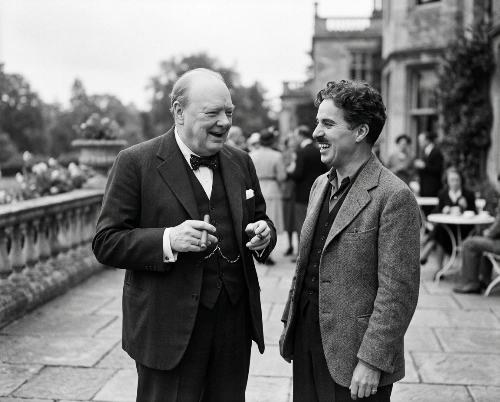
Candid Historic Legends
candid photo of two iconic historical legends
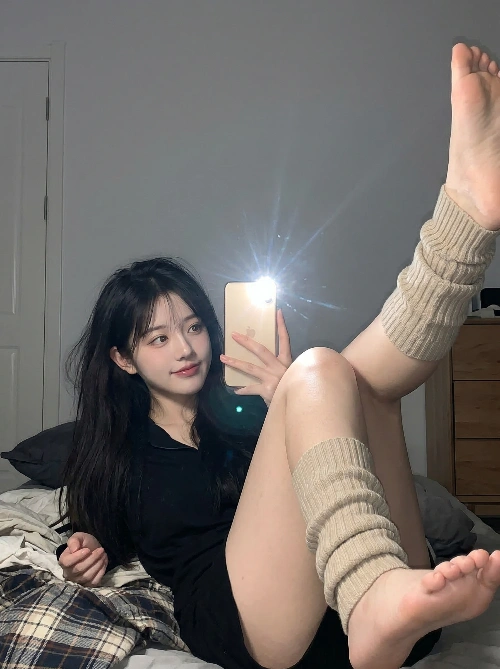
Late-Night Korean Bedroom Selfie
1. Subject Setup 2. Character description: Based on the reference image, a young woman with delicate facial features and a small, softly contoured face. The overall makeup style references Korean actresses. The image should convey the natural and playful feeling of a casual late-night bedroom selfie. 3. Age: Young adult. 4. Expression and Face 5. Eyes: Soft and focused gaze with a hint of a smile, conveying a gentle, calm, and slightly playful temperament. Her gaze is directed toward the phone screen and camera. 6. Mouth: Lips closed with a subtle curved smile, sweet but restrained, relaxed and natural. 7. Overall expression: Approachable and gentle with a slightly teasing quality, understated yet attractive. 8. Facial preservation: Keep the face naturally small and soft, with gentle fullness in the cheeks and a soft jawline. Preserve natural asymmetry and realistic proportions. 9. Makeup characteristics: Korean actress–style makeup. The base is clean and translucent with smooth skin texture. Brows are straight and soft. Eyeliner is light brown. Lashes look natural. Subtle under-eye fullness. Soft blush. Delicate nose highlight. Lip color is a low-saturation rosy gloss. 10. Hairstyle 11. Hair color: Deep black. 12. Hair style: Long hair worn loose with soft layers and light airy bangs covering the forehead. 13. Hair texture: Smooth hair that falls naturally with slight messiness, draping around the cheeks and pillow. 14. Body and Skin 15. Body shape: Slim and compact with a gentle, feminine presence. 16. Waist: Slim, though mostly obscured by the curled posture. 17. Chest: Subtle and mostly hidden by the pose and the phone’s position. 18. Legs: The legs are a major visual element. Due to the close phone perspective, one knee is closer to the camera while both feet are raised upward, creating an asymmetrical and playful arrangement. 19. Visible skin: Face, arms, thighs, knees, calves, and feet. 20. Skin tone: Fair with a soft neutral-to-warm undertone. 21. Skin texture: Smooth with a natural tactile quality. Under flash it appears soft. Avoid plastic smoothing; preserve real skin detail. 22. Lighting effect: Direct flash creates bright highlights on the knees, feet, cheeks, and forehead, while shadows transition naturally into the darker parts of the room. 23. Pose and Composition 24. Base pose: Lying on a bed against the wall, upper body slightly propped up, one hand holding the phone close to the face. 25. Core posture: A relaxed, naturally curled lounging pose. 26. Motion feeling: Both legs lifted high, forming an intentionally unbalanced but playful composition, like a spontaneous private snapshot. 27. Clothing and Accessories 28. Top: A simple black loungewear top or dress, minimalist and fitted. Because of the pose and the legs, most of it is partially obscured. 29. Visual role of clothing: The visual focus remains on the face, legs, and flash-lit skin. 30. Bottom: Not clearly visible; darker in color or hidden by the pose, bedding, and framing. 31. Phone: A light gold phone with the rear flash firing directly toward the camera, producing a visible starburst flare. 32. Other accessories: Beige ribbed knit leg warmers, loosely gathered around the calves and ankles. 33. Shooting Method 34. Overall style: Authentic casual smartphone photography, similar to everyday social media images, with the atmosphere of a spontaneous bedroom selfie. 35. Camera angle: Low angle close to the bed surface using a wide-angle phone perspective. 36. Image type: Vertical composition, full-body relaxed selfie. The bedding occupies much of the foreground and the leg perspective appears exaggerated. 37. Aspect ratio: Tall vertical format. 38. Image quality: Clear smartphone imaging with slight natural noise, realistic flash bloom, and clean skin without heavy retouching. 39. Lighting: The primary light source is the phone’s direct front flash, producing hard frontal lighting. The room itself is dark and shadows fade quickly. 40. Focus: Phone-style deep depth of field, with most of the subject clearly readable. 41. Background Environment 42. Setting: A quiet bedroom corner at night. 43. Wall color: Clean, low-saturation gray wall. 44. Background elements: A plaid blanket and slightly messy bedding in the foreground, a dark pillow behind the subject, a white door frame on the left, and a wooden drawer cabinet on the right. 45. Atmosphere: Private, quiet, with subtle traces of everyday life. Avoid overly tidy arrangements. 46. Background lighting: The environment is dim and largely overwhelmed by the phone flash. 47. Overall Mood 48. Key qualities: Soft, playful, understated, and unforced. 49. Emotional tone: A sense of late-night intimacy with a faint smile. 50. Aesthetic direction: Korean celebrity-style beauty combined with the realism of a casual bedroom snapshot. 51. Realism requirement: Preserve imperfect framing, messy bedding, wide-angle distortion, and the harshness of flash so the image feels like a genuine capture rather than a staged shoot. 52. Atmosphere: As if the room has grown quiet and a moment is casually captured before sleep, with only the phone flash breaking the darkness. 53. Visual narrative: Not a studio shot and not a deliberate performance, but a brief and attractive moment captured on the bed, where comfort, youth, and natural charm accidentally create a cinematic feeling. 54. Visual feeling: It should appear casual enough to feel real, yet beautiful enough to maintain a sense of distance and allure.
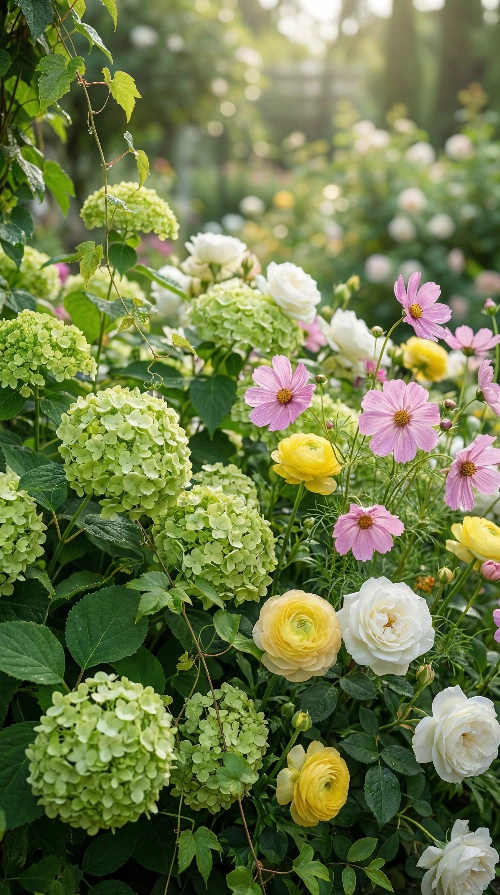
Vibrant Green Flower Bloom
{ "prompt": "Create a stunning wallpaper featuring lush green flowers in full bloom, with vibrant colors and delicate petals, set against a soft, blurred background", "style": "realistic", "resolution": "4K", "colors": ["green", "white", "yellow", "pink"], "elements": ["flowers", "leaves", "vines"] }
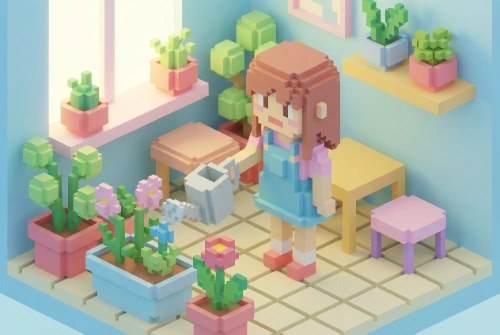
Voxel Girl Watering Plants
A voxel-style 3D render of [a girl watering plants], composed of small colored cubes, sharp pixel edges, stylized lighting, pastel tones, displayed in a playful isometric room with minimal furniture, game asset aesthetic. --ar 3:2 --v 7
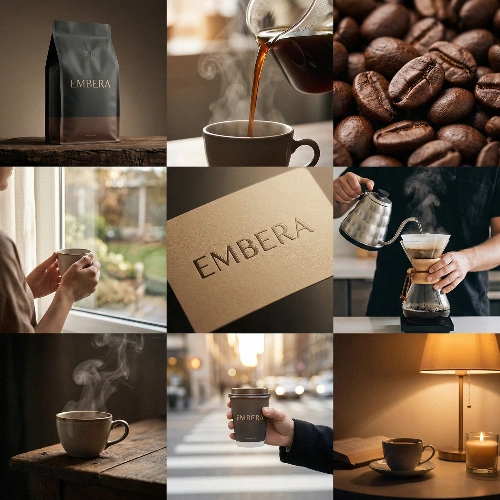
EMBERA Artisan Coffee Grid
{ "Objective": "Create a visually rich 3×3 grid coffee advertisement for EMBERA artisan coffee, blending product beauty, sensory moments, and lifestyle rituals to communicate quality, warmth, and craft.", "Canvas": { "Aspect_Ratio": "1:1", "Grid_Structure": "3×3 equal panels", "Orientation": "Square", "Use_Case": [ "Instagram grid campaigns", "Coffee brand storytelling", "Website visual sections", "Digital and print coffee advertising" ] }, "Panels": [ { "Panel_Number": 1, "Title": "Hero Coffee Package", "Description": "Studio hero shot of EMBERA coffee bag or canister.", "Visual_Details": { "Lighting": "Soft directional light", "Background": "Dark wood or stone surface", "Mood": ["Premium", "Crafted", "Bold"] } }, { "Panel_Number": 2, "Title": "Fresh Brew Pour", "Description": "Coffee being poured into a ceramic cup.", "Visual_Details": { "Focus": "Liquid flow and steam", "Mood": ["Warm", "Inviting"] } }, { "Panel_Number": 3, "Title": "Roasted Bean Detail", "Description": "Macro close-up of roasted coffee beans.", "Visual_Details": { "Texture": "Rich, tactile", "Mood": ["Depth", "Quality"] } }, { "Panel_Number": 4, "Title": "Morning Ritual", "Description": "Person enjoying coffee by a window or table.", "Visual_Details": { "Lighting": "Natural morning light", "Mood": ["Calm", "Routine", "Comfort"] } }, { "Panel_Number": 5, "Title": "Brand Identity Focus", "Description": "Close-up of coffee packaging label or logo.", "Visual_Details": { "Focus": "Typography, material texture", "Mood": ["Identity", "Confidence"] } }, { "Panel_Number": 6, "Title": "Coffee Preparation", "Description": "Hands preparing coffee using a pour-over or espresso machine.", "Visual_Details": { "Mood": ["Craft", "Intentional", "Skill"] } }, { "Panel_Number": 7, "Title": "Cup & Steam Mood", "Description": "Coffee cup with visible steam rising.", "Visual_Details": { "Lighting": "Low-key, atmospheric", "Mood": ["Warmth", "Comfort"] } }, { "Panel_Number": 8, "Title": "Lifestyle On-the-Go", "Description": "Coffee cup held while walking or commuting.", "Visual_Details": { "Motion": "Subtle movement", "Mood": ["Energy", "Modern lifestyle"] } }, { "Panel_Number": 9, "Title": "Evening Coffee Atmosphere", "Description": "Moody shot of coffee setup under warm low light.", "Visual_Details": { "Lighting": "Candlelight or warm lamp glow", "Mood": ["Relaxed", "Sophisticated"] } } ], "Branding": { "Product_Name": "EMBERA", "Brand_Personality": "Warm, artisanal, modern", "Color_Palette": ["Espresso Brown", "Warm Beige", "Charcoal Black"], "Typography": "Modern serif or refined sans-serif" }, "Visual_Style": { "Style_Keywords": [ "Premium coffee advertising", "Editorial food photography", "High realism", "Warm tones", "Minimal clutter" ] }, "Camera_And_Lighting": { "Photography_Type": "Commercial and editorial hybrid photography", "Shot_Types": [ "Hero product shot", "Macro detail", "Lifestyle scene" ], "Lighting_Style": "Natural light mixed with soft studio lighting", "Exposure": "Balanced with rich shadows", "Shadows": "Soft to moody depending on panel" }, "Mood_Keywords": [ "Warm", "Crafted", "Inviting", "Modern", "Comforting", "Premium" ], "Negative_Prompt": [ "Flat lighting", "Watery coffee appearance", "Cheap packaging", "Overexposed highlights", "Cluttered scenes", "Unreadable branding", "CGI or cartoon style", "Oversaturated colors", "Watermarks", "Text overlays" ] }
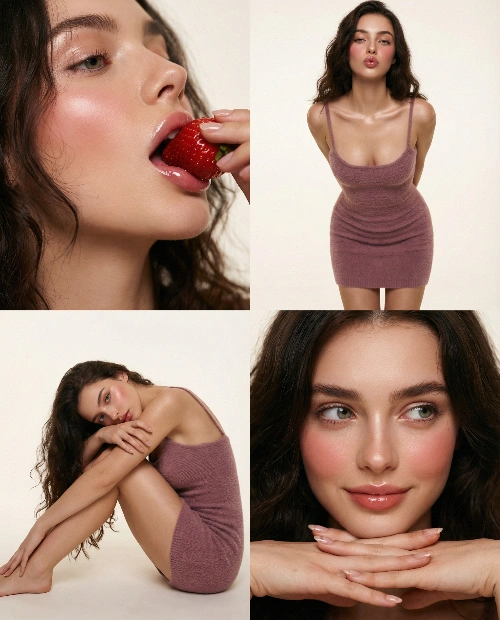
Ultra-Real Beauty Grid
{ "project_specifications": { "format": "2x2 Grid Collage", "aspect_ratio": "4:5", "aesthetic_style": "High-end Beauty Editorial", "rendering_engine_hints": { "realism_level": "Ultra-photorealistic", "texture_quality": "8k", "lighting_simulation": "Ray-traced studio lighting" } }, "global_assets": { "subject_definition": { "hair": { "style": "Long, loosely wavy, voluminous", "texture": "Natural, individual strands defined", "behavior": "Messy but styled, framing face and shoulders" }, "complexion": { "skin_texture": "Porous, hyper-realistic", "finish": "Dewy, glass-skin effect", "makeup": { "cheeks": "Heavy flush/blush", "lips": "High-gloss, plump, natural pink", "eyes": "Clean, defined lashes, natural brows" } }, "wardrobe": { "item": "Mini dress", "fit": "Bodycon / Tight", "fabric": { "material": "Soft textured knit / Boucle", "tactility": "Fuzzy, light-catching fibers", "color": "Soft mauve or neutral taupe" }, "details": "Spaghetti straps, mid-thigh length" } }, "environment_definition": { "studio_setup": { "background": "Seamless paper, soft off-white/beige", "atmosphere": "Clean, warm, intimate" }, "lighting_rig": { "key_light": "Large diffuse softbox (Front-Left)", "fill_light": "Reflector (Right)", "highlights": "Specular highlights on lips, cheekbones, and shoulders" } } }, "panel_architecture": [ { "position": "Top-Left (1)", "shot_type": "Extreme Close-Up (Macro)", "composition": { "angle": "Low angle, looking up slightly", "focus": "Mouth and nose area", "depth_of_field": "Shallow" }, "action": { "primary": "Eating a strawberry", "nuance": "Delicate finger hold, lips slightly parted" }, "visual_anchors": [ "Moisture on strawberry surface", "Gloss reflection on lips", "Baby hairs at temple" ] }, { "position": "Top-Right (2)", "shot_type": "Medium Shot (Thigh-up)", "composition": { "angle": "Eye level", "pose_dynamic": "Leaning forward slightly towards lens" }, "action": { "stance": "Standing straight on", "arms": "Relaxed at sides", "expression": "Direct gaze, alluring pout" }, "visual_anchors": [ "Texture of knit dress", "Collarbone shadows", "Curvature of waist" ] }, { "position": "Bottom-Left (3)", "shot_type": "Full Body (Seated)", "composition": { "angle": "Side profile", "framing": "Subject compacted on floor" }, "action": { "pose": "Knees to chest (fetal position variation)", "interaction": "Cheek resting on knee, arms embracing legs", "hair_flow": "Cascading onto the floor" }, "visual_anchors": [ "Smooth leg definition", "Dress stretching over thigh", "Dreamy gaze" ] }, { "position": "Bottom-Right (4)", "shot_type": "Beauty Portrait (Head & Hands)", "composition": { "angle": "Frontal close-up", "framing": "Chin to hairline" }, "action": { "gesture": "Chin resting on interlaced fingers", "expression": "Soft smile, looking off-camera" }, "visual_anchors": [ "Hand detail and manicure", "Eye clarity", "Flush on cheeks" ] } ] }
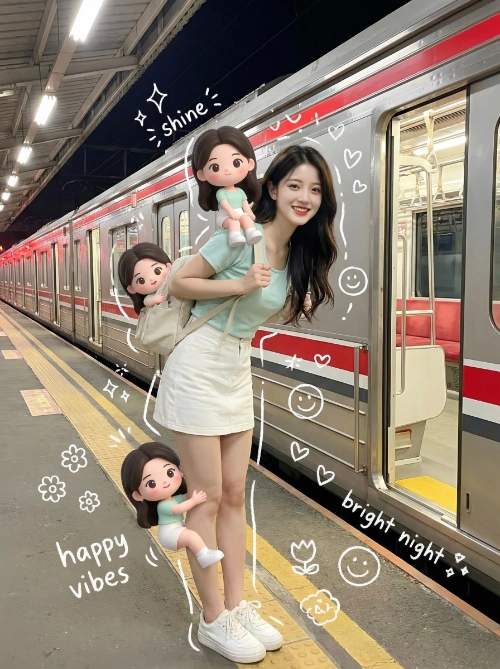
Cheerful Night Train Chibis
A high-quality mixed-media portrait of a bright and cheerful young woman with fresh, lively energy (using my uploaded person photo) standing on a train station platform at night. The subject has a friendly smile and bright eyes, posing with a lively, energetic expression, slightly leaning forward in a natural, upbeat stance, one hand playfully holding the strap of her light-colored backpack. She is wearing a stylish pastel casual outfit (soft mint or sky-blue top, clean white mini skirt made of structured fabric, white sneakers, and small cute accessories). Full body visible from head to toe Feet fully in frame, no cropping at legs or shoes Centered composition with safe margin around the subject Camera positioned far enough to capture the entire body Natural leg proportions, no distortion The background features a realistic 'KRL Jabodetabek' Commuter Line train side view with its signature red striping, with the train doors wide open, bathed in bright, cinematic station lighting and city night ambiance. Surrounding the realistic main subject are several cute, 3D-style 'Chibi' versions of herself, wearing the same outfit and same face. These chibis are interacting playfully: one is sitting on the subject's shoulder, one is climbing her leg, and another is peeking out from the backpack. Overlay the image with vibrant, hand-drawn doodle effects: soft white outlines around the subject, playful sparkles, doodle hearts, tiny flowers, smiley icons, and floating white handwritten phrases like "shine", "bright night", and "happy vibes". The style seamlessly blends hyper-realistic photography with colorful, soft cartoon illustrations. Keeping face and all body shape unchanged.