
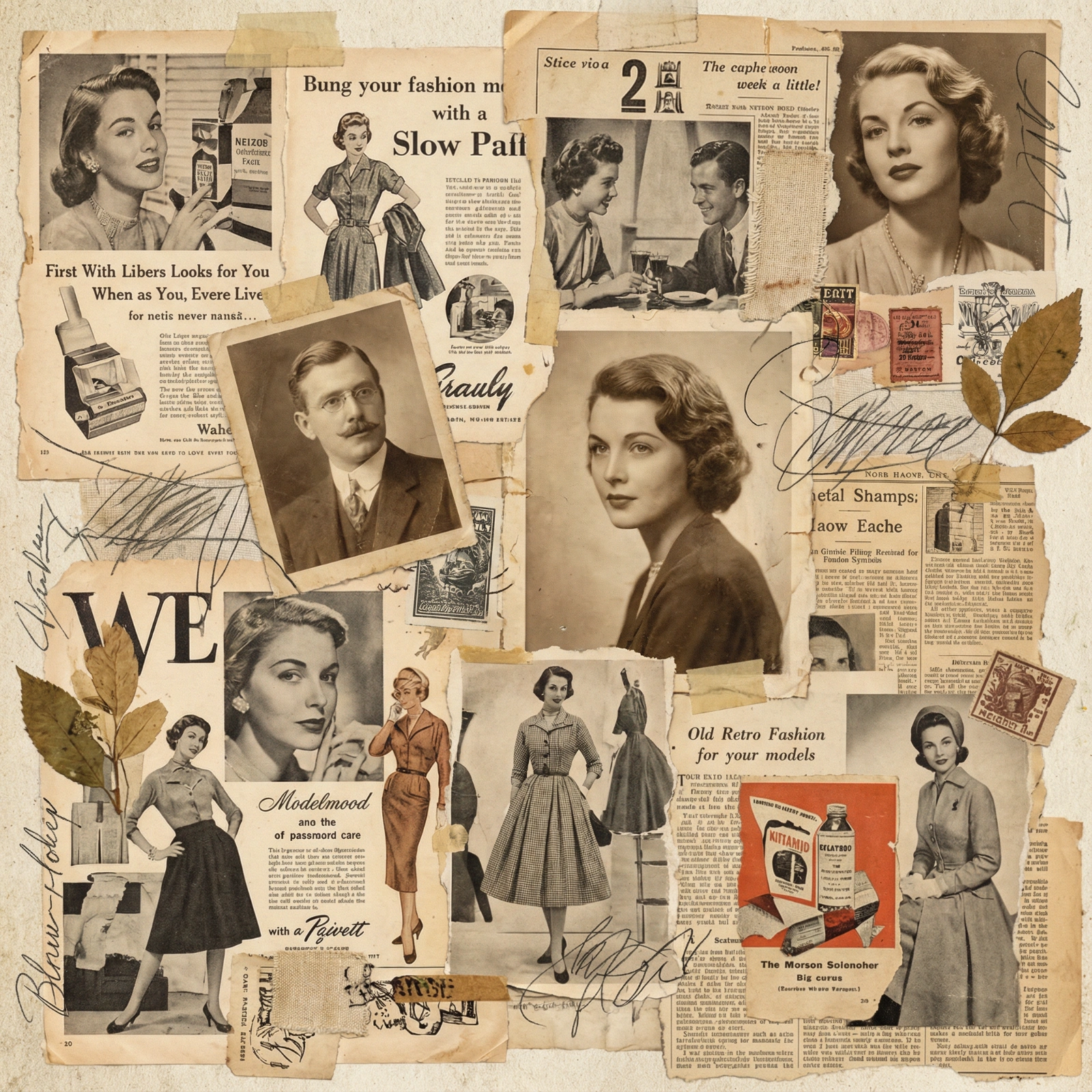
Vintage Collage Mix
Prompt
"Collage" art. Vintage magazine cutouts. Mixed media.
Aspect Ratio
Model
Nano Banana ProYou might also like
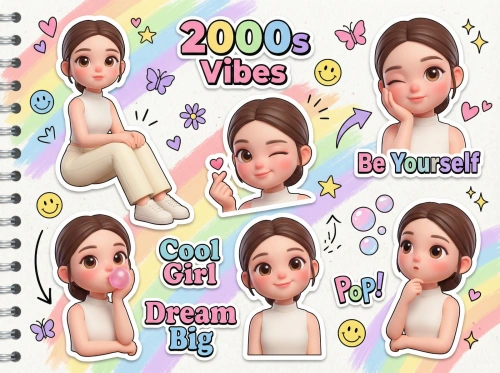
2000s Scrapbook Girl Collage
A cute 2000s scrapbook-style sticker collage featuring the same stylized girl character repeated in multiple poses and expressions. The girl has big glossy expressive eyes, soft doll-like 3D facial features, fair skin with rosy cheeks, and brown hair tied back neatly. She is wearing a sleeveless white high-neck top and cream-colored pants. Create multiple sticker cutouts of her: sitting calmly, winking with a finger-heart gesture, resting her face on her hand, blowing pink bubble gum, smiling sweetly, and looking curious. Each cutout has thick white sticker-style outlines. Background is textured notebook paper with pastel rainbow paint strokes. Add playful Y2K doodles like hearts, stars, butterflies, smiley faces, arrows, sparkles, bubbles, and hand-drawn accents. Include bold, colorful sticker typography with phrases like “2000s Vibes,” “Be Yourself,” “Cool Girl,” “Dream Big,” and “Pop!”. Fun nostalgic aesthetic, vibrant yet soft pastel colors, clean scrapbook layout, soft lighting, ultra-detailed, ultra-HD, Instagram aesthetic, cute and trendy.
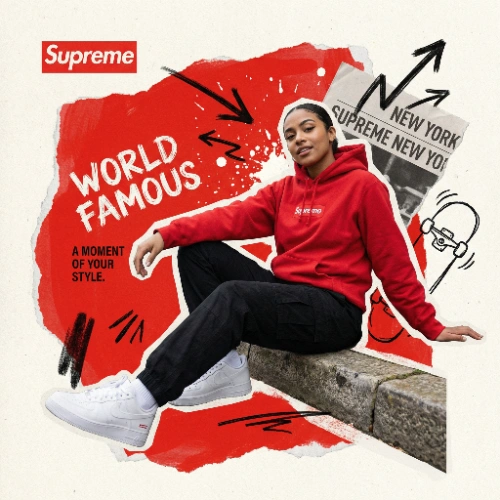
Supreme Dynamic Collage Style
BRAND NAME is Supreme --- [BRAND NAME]. Act as a Social Media Art Director and Digital Collage Artist specializing in bold, youth-oriented brand content for Instagram and digital campaigns. PHASE 1: CONCEPTUAL FRAMEWORK Create a dynamic digital collage that merges fashion photography with graphic design chaos. This is controlled rebellion – a composition that feels spontaneous and energetic while maintaining brand coherence. The aesthetic is anti-polished: torn edges, layered textures, hand-drawn elements, and bold color blocking that screams confidence and movement. PHASE 2: MODEL & PHOTOGRAPHY - Subject: One model (diverse casting, age 18-30) in a dynamic, confident pose - Pose Energy: 80% attitude, 20% natural – sitting, jumping, mid-motion, or power stance (avoid static standing) - Outfit: Street style/athleisure that aligns with [BRAND NAME] aesthetic – casual but styled - Hero Product: Feature 1 signature [BRAND NAME] product prominently (sneakers, bag, apparel) – this is the visual anchor - Photography Style: Editorial fashion cutout – model extracted from background with clean edges - Camera Angle: Slight low angle to empower subject (hero perspective) - Crop: Full body or 3/4 body showing hero product clearly - Background Removal: Model cut out cleanly for layering over collage elements PHASE 3: COLOR BLOCKING FOUNDATION - Primary Color Blob: Large organic shape (40-60% of composition) in bold, saturated brand color behind/around model - Shape Style: Irregular, hand-painted aesthetic – think Photoshop brush strokes or torn paper texture (NOT perfect geometric shapes) - Color Selection (Autonomous): Choose 1 hero color from [BRAND NAME] palette: - Texture: Visible brush strokes, grain, or subtle noise (15-25% opacity) – avoid flat digital fills - Placement: Blob positioned to frame model without obscuring key product details PHASE 4: GRAPHIC ELEMENTS LAYER Add 3-5 abstract graphic elements scattered across composition: - Element Types: - Color Palette: Use 2-3 accent colors total (main blob color + 1-2 contrasting tones from brand palette) - Placement: Asymmetric scatter – top-left and bottom-right zones primarily (avoid center crowding) - Scale: Mix small (5% of canvas) and medium (15% of canvas) elements – nothing overpowering - Aesthetic: Analog/handmade feel – imperfect circles, rough edges, visible texture PHASE 5: TYPOGRAPHY INTEGRATION - Brand Logo: Clean [BRAND NAME] logo placed in upper-left or upper-right quadrant (10-15% of width) - Slogan/Tagline: If [BRAND NAME] has an iconic slogan, integrate it using: - Supporting Copy: Optional 1-line descriptor (e.g., "A MOMENT OF YOUR STYLE") in smaller uppercase sans-serif - Type Treatment: Mix of aligned and slightly rotated text (2-5° angles) for dynamic energy - Hierarchy: Logo largest → Slogan medium → Copy smallest PHASE 6: TEXTURE & BACKGROUND - Base Layer: Off-white or light gray textured background (NOT pure white) - Texture Options (Autonomous selection): - Color: RGB 245-250 (near-white with warmth) – maintains brightness while adding depth - Treatment: Texture should be felt, not seen – enhances tactility without competing with foreground PHASE 7: COMPOSITION RULES - Layout: Asymmetric balance – model off-center, graphic elements counter-balance - Breathing Room: 15-20% negative space (textured background visible) to prevent claustrophobia - Layering Order: Background texture → Color blob → Graphic elements → Model (cutout) → Typography top layer - Focal Point: Model + hero product = primary focus (60% visual weight), graphics support (40%) - Movement: Diagonal lines and angled elements create directional flow (top-left to bottom-right or vice versa) PHASE 8: BRAND INTELLIGENCE (AUTONOMOUS) Autonomously adapt composition based on [BRAND NAME] personality: - Streetwear/Sportswear (Nike, Adidas, Supreme): - Luxury Streetwear (Balenciaga, Off-White, Gucci): - Beauty/Lifestyle (Glossier, Fenty, Skims): - Tech/Modern (Apple, Tesla, Beats): PHASE 9: SOCIAL MEDIA FOOTER (OPTIONAL) - Bottom Strip: Clean white or light gray bar at bottom 8-10% of frame - Content: Social media handles (Instagram, Facebook, Twitter) in small sans-serif - Layout: Three-column grid with platform icons or text handles - Aesthetic: Minimal and professional – contrast with chaotic collage above TECHNICAL SPECS: - Aspect Ratio: 4:5 (Instagram feed) or 1:1 (square social post) - Resolution: 2400x3000px minimum (high-quality for zoom and detail) - Color Mode: sRGB, vibrant saturation (Instagram-optimized) - File Aesthetic: Digital collage that mimics analog craft (Photoshop + hand-drawn hybrid) - Model Photography: 85mm lens, f/2.8, shallow depth of field on original shoot (before cutout) - Style Reference: Nike social campaigns, Spotify wrapped graphics, Gen Z Instagram aesthetics, Hypebeast x streetwear collabs - Mood: Confident, energetic, youthful, authentic chaos, anti-corporate polish
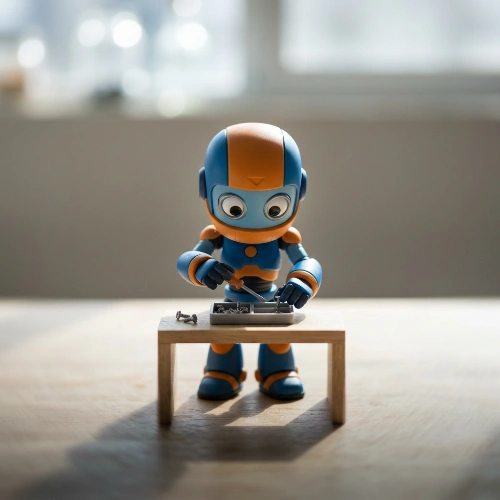
Candid High-Angle Slice
A high-angle tilt-shift cinematic image of the character captured naturally doing an everyday activity. The moment must feel candid and unstaged, like a quiet slice of life observed from above. Likeness Preservation Maintain exact proportions, eye shape, spacing, stylization, and material identity from the reference. Do not humanize. Do not reinterpret anatomy. Do not exaggerate realism. Camera & Perspective High-angle, slightly offset bird’s-eye view. Subtle isometric feeling. Equivalent to a 35mm lens adapted for tilt-shift photography. The character fills approximately 60–65% of the frame vertically. Breathing room above the head. Visible ground plane beneath. No extreme distortion. Focus Discipline (CRITICAL) Extremely shallow depth of field. Only the face and upper torso must be razor sharp. Hands interacting with an object may also be sharp. Lower legs and shoes must be slightly softened. Ground surface must progressively soften toward the bottom edge. Top and bottom edges must show strong optical tilt-shift blur. The focus band must be narrow and centered horizontally. No full-body sharpness. Pose Behavior The character must be naturally engaged in a daily action. Movement must feel subtle and believable. No staged hero poses. No exaggerated symmetry. Silhouette must remain clean and readable. Props or minimal furniture may be included only if necessary to support the action. Keep them simple and secondary. Lighting Control Bright natural daylight with firm directional key light. Light must carve the form clearly. Defined shadow under feet or object. Crisp shadow edge on ground. Subtle rim light separating character from background. No flat studio wash. No overly diffused light. Background Discipline Abstract minimal environment. Soft tonal gradient. Slight atmospheric depth. No detailed storytelling clutter. No heavy furniture unless essential to action. Background must support the character, not compete. Background Directional Structure (CRITICAL) Upper third of frame must contain soft luminous bokeh shapes or circular light blobs, gently out of focus, slightly brighter than mid-ground. Mid-ground remains neutral and unobtrusive. Lower ground plane must have subtle diagonal orientation, with a light-to-dark gradient guiding the eye upward toward the character’s head. Ground texture may contain faint linear perspective cues, but remain soft and minimal. The tonal gradient must travel from slightly darker bottom edge toward brighter mid-upper region behind the head. No flat monotone background. Color & Material Character slightly higher saturation than background. Background slightly muted. Clean premium collectible finish. Subtle surface sheen. No gritty realism. No artificial wear. Emotion Calm presence. Quiet confidence. A simple daily act elevated through composition and light. Not dramatic. Not heroic. Intimate but cinematic. Negative Lock No full-body sharpness No flat background No cluttered environment No stiff symmetrical pose No soft diffused lighting No dramatic battle energy No exaggerated realism
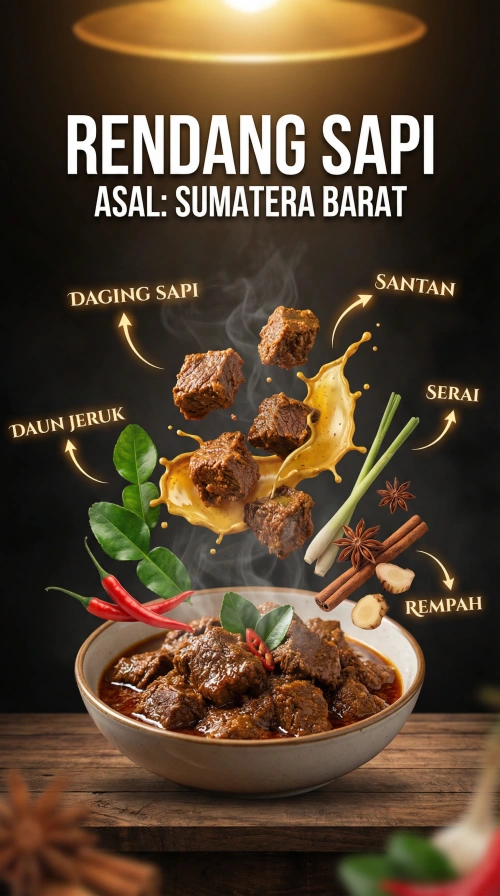
Ultra-Real Indonesian Food Infographic
{ "image_prompt": { "type": "Ultra-realistic Indonesian traditional food infographic poster", "layout_and_composition": { "orientation": "Vertical composition", "style": "Modern culinary infographic design, editorial layout", "background": "Dramatic but clean background" }, "typography_elements": { "headline": { "position": "Top", "style": "Bold text showing dish name and origin (ASAL)" }, "labels": { "style": "Clean Indonesian typography", "connectors": "Curved label arrows pointing to ingredients" } }, "visual_content": { "main_action": "Cinematic floating ingredients suspended in mid-air", "details": [ "Glossy curry splash", "Fresh herbs", "Spices", "Steam rising from the bowl" ], "textures": "Hyper-detailed, glossy, appetizing" }, "lighting_and_atmosphere": { "lighting_style": "Rich golden lighting, studio lighting", "mood": "Professional, appetizing, high-end" }, "technical_specs": { "quality": "8K ultra-realistic, DSLR quality", "focus": "Shallow depth of field", "style": "Professional food photography" } } }
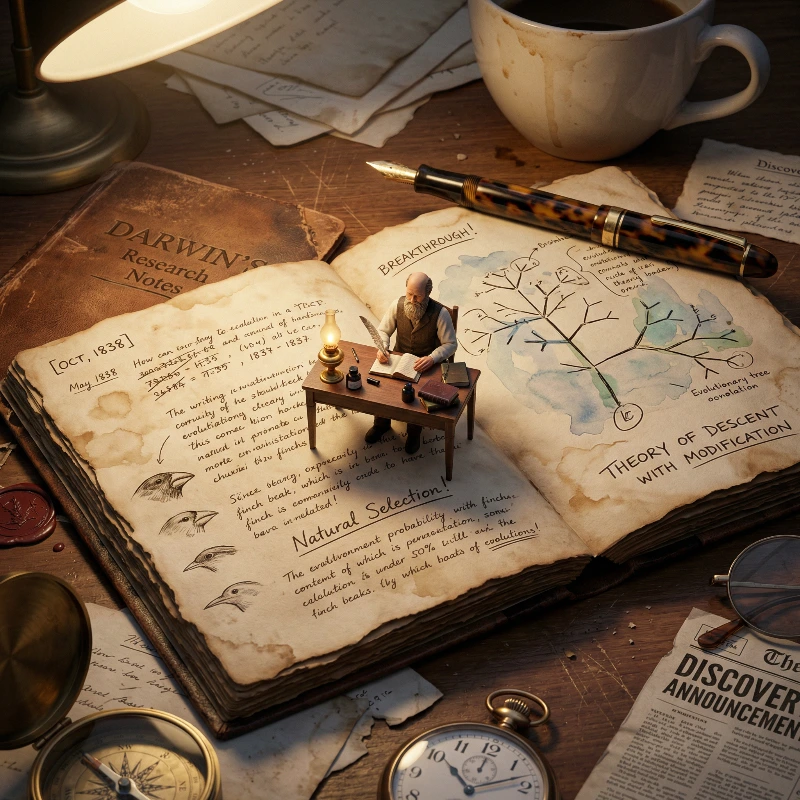
Darwin's Macro Research Realm
do this for Darwin: An extreme macro photograph centered on an antique leather-bound journal lying open on a wooden surface, with the pages serving as a physical landscape for a living miniature scene. JOURNAL DETAILS: - Aged leather cover partially visible, with embossed title: "[SCIENTIST NAME]'s Research Notes" - Thick, textured paper with deckled edges - Visible binding stitching and spine - Water stains, coffee rings, ink blots showing authentic use - Pages filled with dense handwritten notes in period-appropriate script WRITTEN CONTENT (both pages visible): - LEFT PAGE: Dense equations, calculations, crossed-out attempts, marginal corrections * [SPECIFIC FORMULAS] relevant to theory * Dated entries: "[MONTH, YEAR]" * Small sketches in margins * Underlined passages, exclamation marks showing breakthrough moments - RIGHT PAGE: Larger diagram or illustration central to discovery * [TECHNICAL DRAWING] - apparatus, experiment setup, theoretical model * Annotations and dimension labels * Color highlights (if period-appropriate) in specific inks * "BREAKTHROUGH!" or "IT WORKS!" notation MINIATURE FIGURE PLACEMENT: - 1:12 scale figurine of [SCIENTIST] sitting at tiny wooden desk/table - Desk positioned ON TOP OF the journal pages (creating surreal scale) - Figure actively writing with miniature quill/pen - Small oil lamp providing practical light source on tiny desk - Additional miniature props: ink bottle, blotter, reference books at tiny scale SURROUNDING MACRO OBJECTS (giant relative to figure): - Oversized fountain pen lying across top of journal - Massive coffee cup with visible staining on rim, positioned at corner - Giant brass compass or drawing tool - Pocket watch showing time relevant to discovery moment - Spectacles partially folded - Period newspaper fragment with [DISCOVERY ANNOUNCEMENT] headline ENVIRONMENTAL ATMOSPHERE: - Scattered loose papers beneath journal - Wooden desk surface showing grain, scratches, ink stains - Dust particles visible in light beams - Other period-appropriate desk items at edges: wax seal, stamps, letters DEPTH AND FOCUS: - Sharp focus on miniature figure and central journal text - Gentle falloff to slight blur on giant surrounding objects - Bokeh effect on background items - Implies macro lens photography (100mm+) LIGHTING SCHEME: - Primary: Warm overhead light (desk lamp implied) from upper left at 45-degree angle - Secondary: Practical light from miniature oil lamp creating tiny glow - Shadows falling naturally across journal pages creating text legibility - Rim lighting on metallic objects (compass, pen, watch) - Golden hour quality suggesting late night study session TEMPORAL INDICATORS: - Clock showing late hour (11:45 PM, etc.) - Calendar page showing [SIGNIFICANT DATE] - Multiple coffee cups suggesting hours of work - Candle burned down significantly PERSPECTIVE: 45-degree elevated macro view, as if viewer is standing and looking down at desk COMPOSITION: Figure and central journal pages at geometric center, diagonal lines created by pen and papers ASPECT RATIO: 4:5 STYLE: Fine art macro photography, dramatic chiaroscuro lighting, Vermeer-esque quality, editorial magazine spread
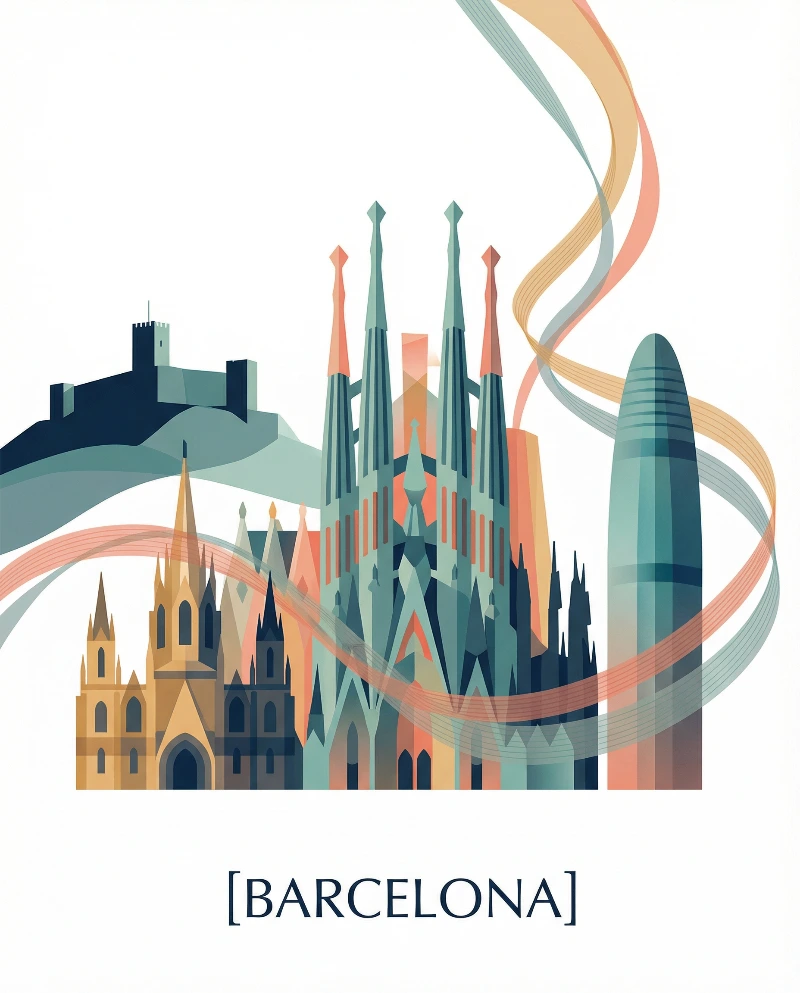
Minimalist Barcelona Skyline
Style & Subject: A high-end minimalist vector illustration of [Barcelona] skyline, featuring the distinct silhouettes of [Sagrada Família, Torre Glòries, Montjuïc Castle, Barcelona Cathedral]. The architectural forms are deconstructed into sharp geometric facets and clean vertical layers, emphasizing a sense of rational order and modern rhythmic beauty. Artistic Elements: Integrate flowing, translucent abstract ribbon-like curves in the background that weave gracefully through the skyscrapers. These curves should be thin and elegant, providing a dynamic contrast to the solid, static buildings. No messy details; focus on pure form and "breathing" negative space. Color Palette: A sophisticated, curated palette of muted teals, soft corals, warm ochre, and deep midnight blue. Use subtle tonal gradients and overlapping translucent layers to create depth and volume without using realistic shadows or 3D textures. Typography & Layout: Centered at the very bottom of the canvas, place the text "[Barcelona]", elegant uppercase sans-serif font. The text must be situated in a clean, generous white margin at the bottom 15% of the image, completely isolated from the architectural graphics. --ar 4:5
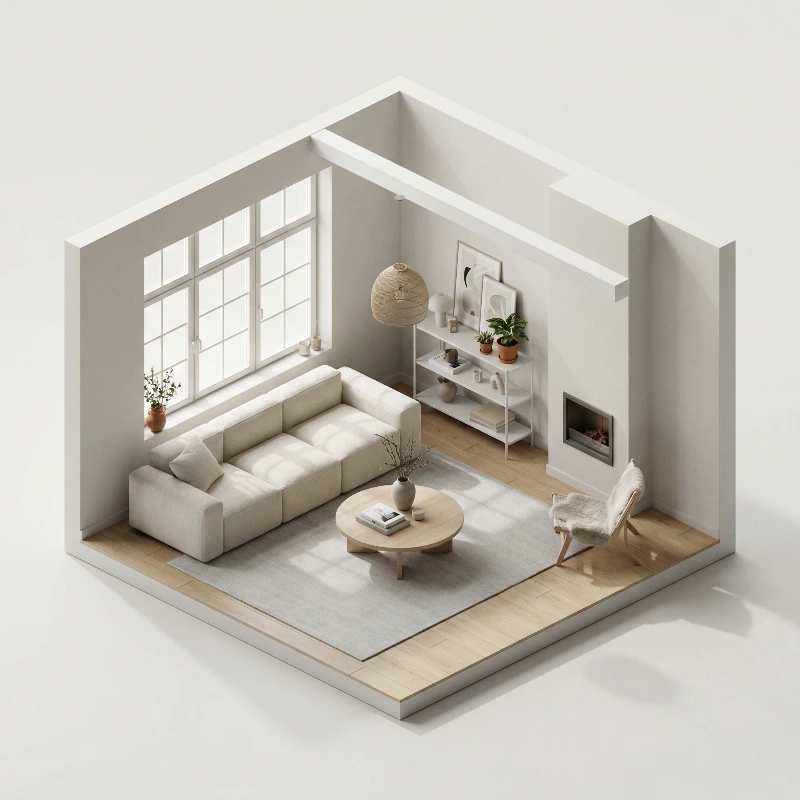
Scandi Urban Living Diorama
Create a highly detailed isometric 3D interior diorama of a (Scandinavian minimal) (urban apartment living room) Design the space with coherent architecture, furniture, lighting, materials, and decoration that naturally match the chosen concept. Use realistic textures, soft natural daylight, gentle shadows, and a calm minimal white background. Perspective: isometric cutaway diorama. Ultra high detail, premium interior visualization, soft global illumination.
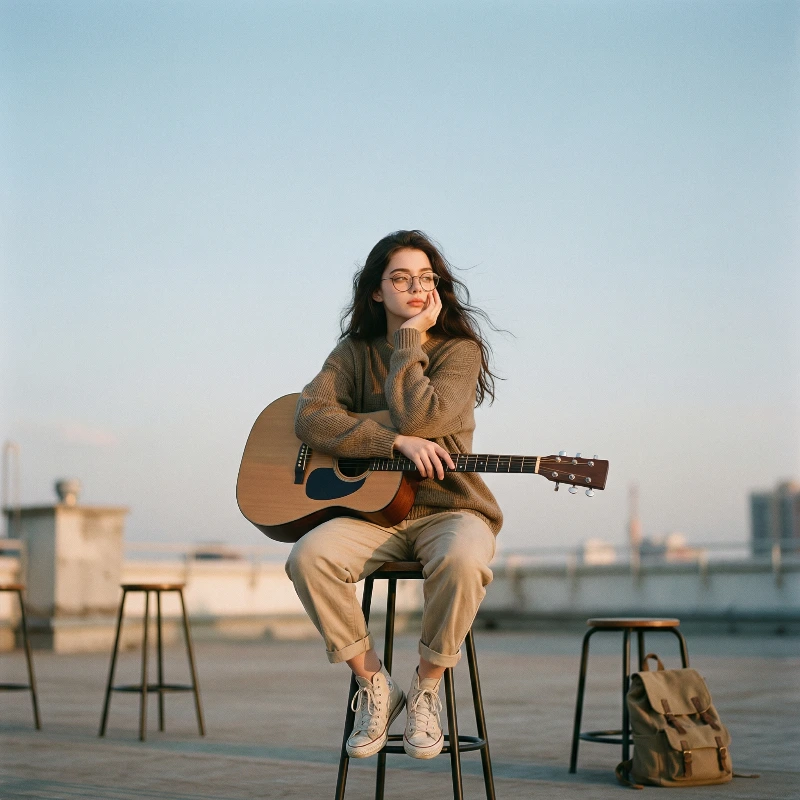
Rooftop Indie Introspection
An indie singer-songwriter album cover featuring a young woman sitting alone on a tall black stool on an open rooftop, holding an acoustic guitar across her lap. She looks slightly away from the camera with a calm, thoughtful expression, one hand gently touching her face, capturing a quiet moment of introspection. She wears an oversized earth-tone sweater, relaxed beige trousers, and worn white canvas sneakers, giving a soft, cozy, authentic indie aesthetic. Her long dark hair flows naturally, slightly tousled by the breeze. Round eyeglasses add an artistic, songwriter vibe. The background is a wide, open sky in soft pastel blue tones with distant city elements subtly blurred. Minimal props such as empty stools and a backpack suggest a casual rehearsal or creative escape. Lighting is natural and soft, inspired by golden hour, with warm highlights, gentle shadows, and realistic skin tones. Color grading is muted and film-like with warm neutrals, soft contrast, and subtle grain. Camera style: cinematic lifestyle photography, shallow depth of field, centered composition with negative space for album title text. Aspect ratio: square (1:1) for album cover. Mood: intimate, nostalgic, poetic, indie folk. Style: minimalist, analog film look, authentic, emotionally warm.