If you've ever spent too long scrolling through "satisfying" videos of people organizing their desk drawers or looked at a toolkit where every wrench is perfectly aligned by size, you've experienced the magic of knolling. It's more than just tidying up—it's a clinical, beautiful way of seeing the world in pieces.
In the world of AI image generation, "knolling" has become a secret handshake for designers and prompt engineers. It’s the magic word that tells the model: "Stop trying to be artistic and start being organized."
What Exactly is Knolling?
Originally a term from the furniture industry (named after Knoll furniture’s aesthetic of right angles), knolling is the process of arranging related objects in parallel or 90-degree angles as a way to organize them. It’s the "flat lay" taken to its logical, OCD-pleasing extreme.
When you use the term in a prompt, you're giving the AI a very specific spatial instruction. You're moving away from the chaos of a "messy desk" and toward the structured beauty of a "component breakdown."
1. The Narrative Power of Objects
The beauty of a knolling shot isn't just in the alignment—it's in the story the objects tell. Because every item is laid bare, it forces you (and the AI) to think about character and setting through gear.
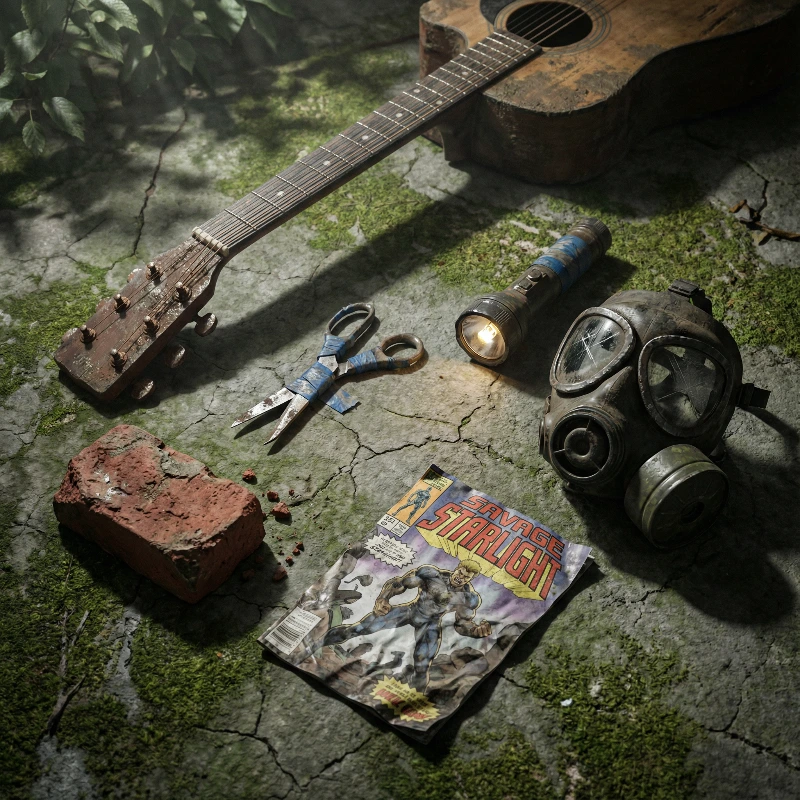
TLOU Gritty Still Life
This composition doesn't just show objects; it tells a story of survival. The weathered guitar neck next to a crude shiv and a gas mask immediately evokes the post-apocalyptic world of The Last of Us.
"A gritty, hyper-realistic knolling composition inspired by The Last of Us. Surface: A cracked concrete floor with moss growing in the crevices. Items: A weathered acoustic guitar neck, a shiv crudely made from scissors and blue tape, a red brick, a flickering flashlight, a gas mask with scratched lenses, and a crumpled comic book. Details: Every object looks heavily used, dirty, and improvised. Lighting: Overcast natural light filtering through foliage, desaturated color palette (greens, greys, browns). Render Style: Unreal Engine 5, 8k resolution, texture-heavy."
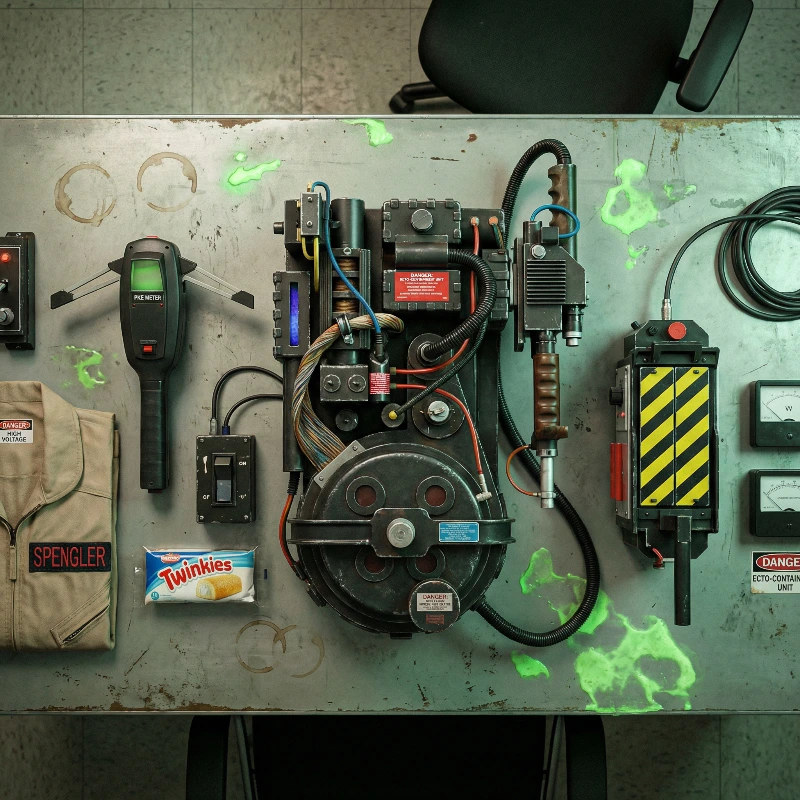
Retro Ghostbusters Gear
If you grew up in the 80s, this layout is pure nostalgia. It demonstrates how knolling can be used to showcase complex "tech" items—cables, buttons, and hazard stripes—without them becoming a cluttered mess.
"A retro-tech knolling layout of Ghostbusters equipment. Surface: A metal firehouse desk with coffee rings. Items: A Proton Pack particle thrower (partially disassembled), PKE Meter with moving arms, a Ghost Trap with yellow and black hazard stripes, a beige flight suit with 'Spengler' nametag, and a Twinkie. Style: 1984 industrial design, tactile buttons, coiled cables, warning labels. Lighting: Neon green slime residue glowing faintly, mixed with harsh fluorescent office lighting."
2. Inventory Management as Art
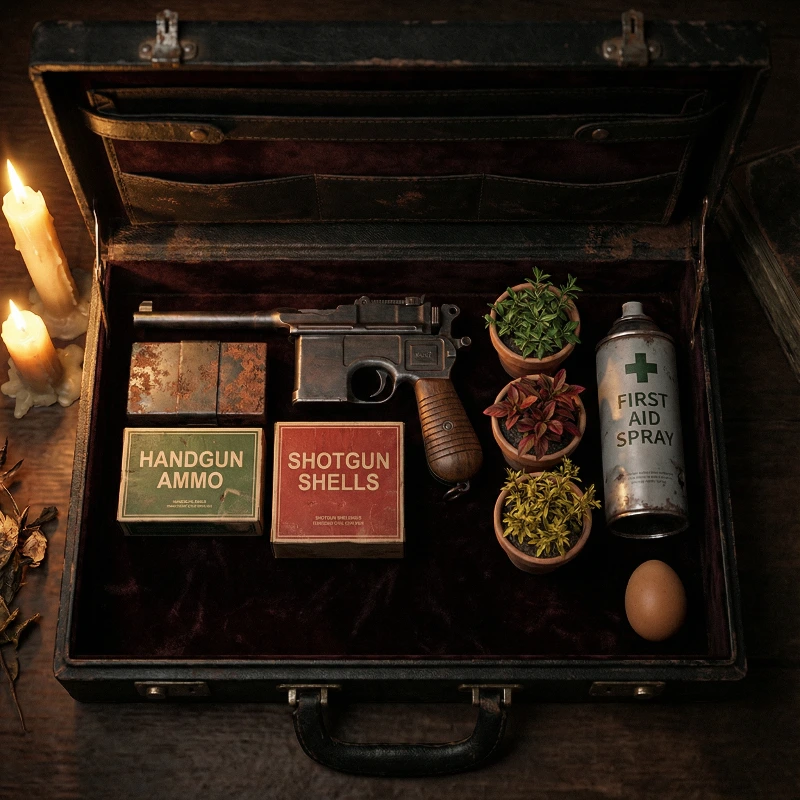
Fans of survival horror games like Resident Evil will recognize knolling instantly. It feels like looking at your inventory screen, where every bullet and herb has its place.
Resident Evil Knolling Case
This prompt takes that gaming nostalgia and turns it into a high-end photography shot. Note how the "strictly aligned to an invisible grid" instruction helps the AI lock in that top-down perspective.
"A photorealistic top-down knolling photography shot inspired by Resident Evil 4 inventory screen. Surface: A worn, blood-stained velvet interior of a black attache case. Items: A vintage Mauser pistol (Red9), boxes of green and red ammo, a First Aid Spray can, a mixture of green/red/yellow herbs in pots, and a brown chicken egg. Arrangement: Strictly aligned to an invisible grid, packed tightly with no wasted space. Lighting: Dim, moody candlelight flickering from the side, casting long, dramatic shadows. Texture: Rusted metal, organic leaf textures, cold steel, distressed leather. Camera: 50mm lens, sharp focus edge-to-edge."
3. Beyond Realism: Fantasy and Branding
Knolling isn't just for gritty realism. It works exceptionally well for showcasing magical item sets or professional brand identities. It’s the ultimate "mockup" tool.
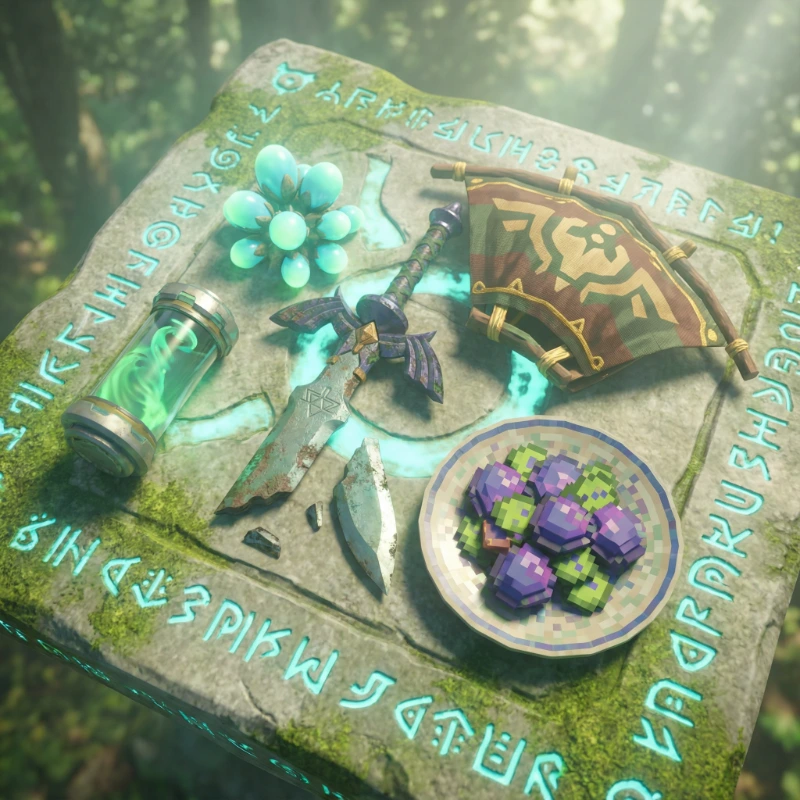
Zelda 3D Knolling Fantasy
By combining the Ghibli-esque softness with realistic material rendering, this prompt creates a vibrant showcase of the Hero's gear.
"A bright, semi-realistic 3D knolling arrangement inspired by The Legend of Zelda: Tears of the Kingdom. Surface: An ancient stone tablet with glowing green Zonai carvings. Items: The decayed Master Sword, several glowing Brightbloom seeds, a Zonai battery canister (green liquid), a paraglider with distinct fabric pattern, and a plate of 'Dubious Food' (pixelated mosaic effect). Style: A blend of Ghibli-esque softness and realistic material rendering (Nintendo style). Colors: Vibrant turquoise, gold, and grassy greens. Lighting: Bright, ethereal daylight, soft bloom effect."
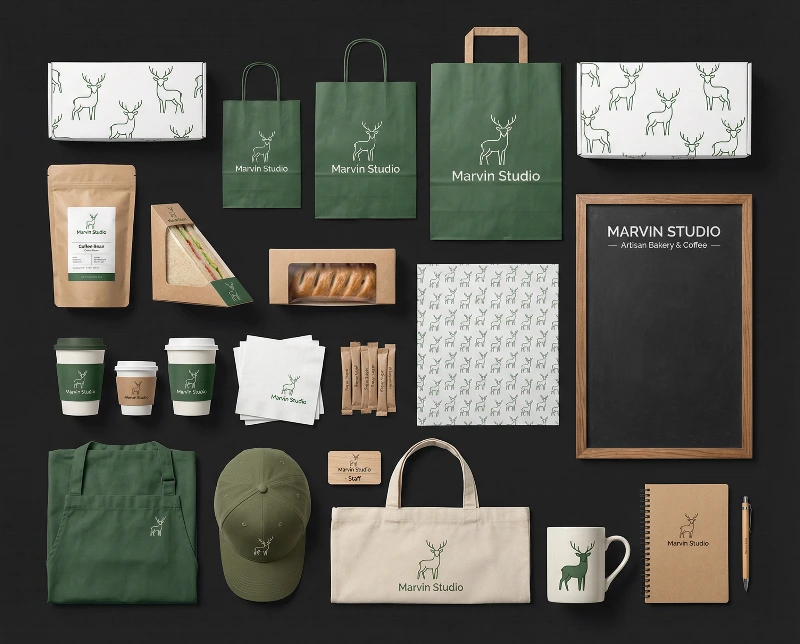
Nordic Bakery Brand Mockup
For designers, knolling is a godsend for identity mockups. Instead of one lonely business card, you get the whole ecosystem: bags, boxes, menus, and even the staff uniform.
"A massive, ultra-detailed brand ecosystem flat lay. Industry: Artisan Bakery & Coffee. Visual Theme: Nordic Forest, Minimalist, Warm. Items: packaging (bags, boxes, pouches), dining essentials (cups, napkins, menu), staff uniform (apron, cap), merchandise. Composition: Dense Knolling. Background: Solid dark charcoal (#1A1A1A). Perspective: 90-degree Top-down (Orthographic)."
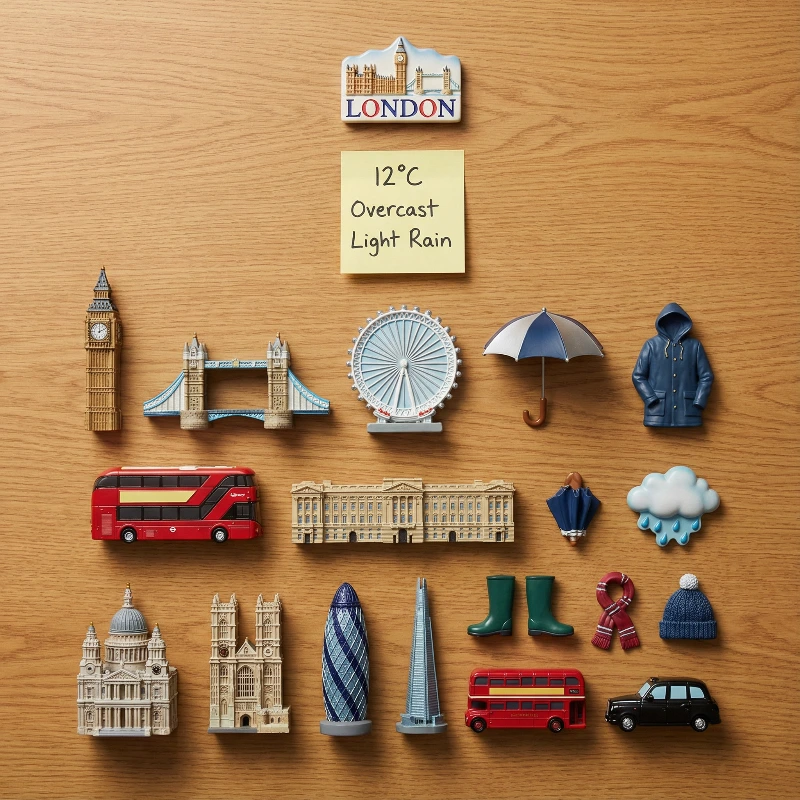
3D London Magnet Knolling
Knolling can also be whimsical. This example uses the concept of 3D magnets and "souvenirs" to create a travel-themed grid. It’s a perfect example of how to use a "grid-based" instruction to keep varied shapes in line.
"Present a clear, directly top-down photograph of London landmarks as 3D magnets, arranged neatly in parallel lines and right angles, knolling. The objects are realistic miniatures. At the top-center, place the city name as a souvenir magnet, and a handwritten post-it note for the temperature and weather conditions. Incorporate items necessary for today's weather into the knolling. No repeats."
4. Why AI Loves Knolling
AI models like Nano Banana Pro excel at knolling because it provides a clear spatial framework. Traditional landscapes or portraits can sometimes lead to "hallucinations" (objects melting into each other). But with knolling:
- Separation: Each object is treated as a distinct entity.
- Top-Down Logic: Using "90-degree" or "Orthographic" reduces the complexity of 3D perspective, allowing the AI to focus on textures.
- Grid Alignment: It taps into the model’s understanding of layout planning.
5. How to Write Your Own Knolling Prompts
Ready to organize your own masterpiece? Use this template:
- Surface: What are the items sitting on? (e.g., "weathered oak," "brushed aluminum," "velvet").
- Items: Be specific. Don't just say "tools"—say "a rusty hammer, a spool of copper wire, and a vintage compass."
- Alignment: Use terms like "parallel lines," "right angles," "90-degree layout," or "grid-based."
- Camera: "Top-down," "Flat lay," or "Orthographic perspective."
| Keyword | Why it Works |
|---|---|
| Orthographic | Removes 3D perspective distortion for a flatter look. |
| Component Breakdown | Tells the AI to focus on individual parts. |
| Exploded View | Good for technical or mechanical knolling. |
| Flat Lay | The lifestyle photography version of knolling. |
Mastering the Chaos
Knolling is more than just a style; it's a way to bring clarity to the infinite possibilities of AI art. Whether you're building a character's backstory through their gear or presenting a sleek brand identity, the simple act of "lining things up" can turn a good image into a professional-grade asset.
Next time you're stuck on a prompt, try taking everything apart and laying it out on the table. You might find that the best way to see the big picture is to look at all the small pieces.
Explore more organized inspiration in our Still Life collection at Banana Prompts.