Browse and filter our curated collection of prompts
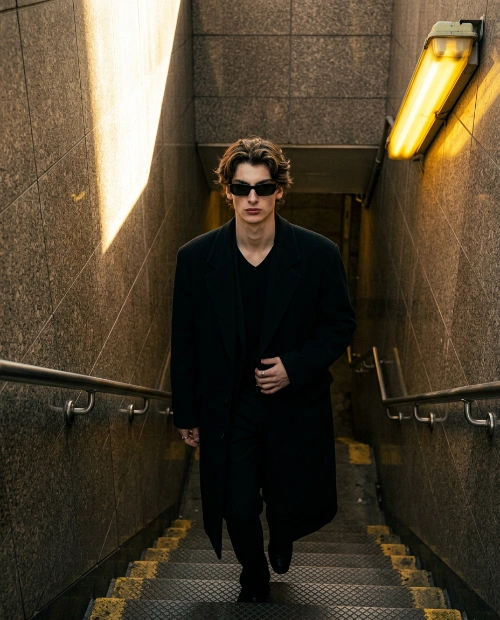
{ "metadata": { "image_type": "photograph", "primary_purpose": "editorial" }, "composition": { "rule_applied": "rule of thirds", "aspect_ratio": "4:5", "layout": "single subject", "focal_points": [ "Subject's face and dark sunglasses", "Yellow fluorescent light fixture leading to the subject" ], "visual_hierarchy": "Eye starts at the subject's face due to contrast with sunglasses, follows the V-neck down the black coat, moves outward along the metallic handrails, and catches the bright sunlight shaft on the left wall and the yellow light on the right.", "balance": "asymmetric" }, "color_profile": { "dominant_colors": [ { "color": "Black", "hex": "#111111", "percentage": "45%", "role": "primary subject" }, { "color": "Warm Gray", "hex": "#7A7269", "percentage": "35%", "role": "background" }, { "color": "Golden Yellow", "hex": "#E5B05C", "percentage": "10%", "role": "accent" } ], "color_palette": "complementary", "temperature": "warm", "saturation": "moderate", "contrast": "high contrast" }, "lighting": { "type": "mixed", "source_count": "multiple sources", "direction": "front", "directionality": "highly directional", "quality": "dramatic", "intensity": "moody", "contrast_ratio": "high contrast (dramatic shadows)", "mood": "mysterious", "shadows": { "type": "harsh defined edges", "density": "deep black", "placement": "under handrails, within stair treads, and engulfing the subject's lower body", "length": "medium" }, "highlights": { "treatment": "blown out", "placement": "on upper left wall from sun shaft, fluorescent light fixture, and reflective handrails" }, "ambient_fill": "present", "light_temperature": "warm (golden)" }, "technical_specs": { "medium": "digital photography", "style": "realistic", "texture": "sharp", "sharpness": "tack sharp", "grain": "digital noise", "depth_of_field": "medium", "perspective": "high angle" }, "artistic_elements": { "genre": "street", "influences": [ "Urban street style fashion photography", "Cinematic cyberpunk/matrix aesthetic" ], "mood": "sophisticated", "atmosphere": "Gritty yet polished urban transit environment with a moody, imposing, and highly stylized fashion presence", "visual_style": "structured" }, "typography": { "present": false, "fonts": [], "placement": "", "integration": "" }, "subject_analysis": { "primary_subject": "Young male model wearing an oversized, structured long black overcoat, black V-neck top, black trousers, and dark rectangular sunglasses, walking down stairs. Hair: Medium length, textured cut (e.g., modern shag/tapered cut). Length: Roughly ear-level/temple-level on the sides, slightly longer and voluminous on top (3-4 inches), with soft layers and natural movement. Texture: Natural wavy texture, showing varied strands, slight frizz, and natural volume (imperfections visible, not 'AI smooth'), styled loosely back from the forehead without a distinct part. Evidence of light matte product application.", "positioning": "center", "scale": "medium", "interaction": "interacting with environment", "facial_expression": { "mouth": "neutral", "smile_intensity": "no smile", "eyes": "direct gaze", "eyebrows": "neutral", "overall_emotion": "serious", "authenticity": "posed" }, "hands_and_gestures": { "left_hand": "resting at waist level, lightly holding the edge of the black overcoat, silver ring visible on finger", "right_hand": "not visible, hidden behind the coat's bulk or swinging backward", "finger_positions": "left hand thumb and index finger slightly curled and gripping fabric, remaining fingers obscured", "finger_interlacing": "none", "hand_tension": "relaxed", "interaction": "holding coat", "naturalness": "deliberately posed" }, "body_positioning": { "posture": "standing", "angle": "facing camera", "weight_distribution": "shifted", "shoulders": "level" } }, "background": { "setting_type": "indoor", "spatial_depth": "medium", "elements_detailed": [ { "item": "Stainless steel handrail", "position": "left", "distance": "foreground", "size": "medium", "condition": "worn", "specific_features": "Tubular metal with distinct mounting brackets and subtle reflections" }, { "item": "Stainless steel handrail", "position": "right", "distance": "midground", "size": "medium", "condition": "worn", "specific_features": "Tubular metal matching the left side, catching edge highlights" }, { "item": "Fluorescent light fixture", "position": "top right", "distance": "background", "size": "medium", "condition": "vintage", "specific_features": "Rectangular housing emitting a strong, warm amber/yellow light" } ], "wall_surface": { "material": "tile", "surface_treatment": "finished", "texture": "perfectly smooth", "finish": "satin", "color": "warm grayish-brown", "color_variation": "patchy", "features": "clean, distinct grid-like grout lines separating large rectangular stone/granite panels, sharp diagonal shaft of warm sunlight hitting the upper left section", "wear_indicators": "industrial" }, "floor_surface": { "material": "concrete", "color": "dark gray with yellow accents", "pattern": "striped" }, "objects_catalog": "Metal diamond-plate stair treads with yellow painted safety edges running horizontally across the bottom and midground, dual tubular stainless steel handrails flanking the stairs, rectangular yellow light fixture mounted to the ceiling angled directly above the stairwell, large rectangular stone tiles covering the walls.", "background_treatment": "sharp" }, "generation_parameters": { "prompts": [ "Editorial street style photography, a handsome young man with medium length, textured modern shag haircut showing natural wavy movement and styled loosely back. He wears dark rectangular sunglasses, a long black oversized wool coat, and an all black outfit, walking down urban subway stairs. The walls are made of large polished brown-gray stone tiles with visible grid grout lines. A dramatic shaft of warm golden sunlight hits the upper left wall. A vintage yellow fluorescent light fixture is on the upper right ceiling. The stairs are concrete with metal edges and yellow safety paint. Stainless steel handrails. Cinematic lighting, deep dramatic black shadows, sharp focus, 85mm lens, high contrast, moody, fashionable underground matrix aesthetic.", "Cinematic fashion portrait, male model in structural black overcoat descending transit stairs, medium length textured hair with soft waves, tinted glasses. High angle shot looking down the steps. Brutalist architecture background, granite wall panels. Mixed lighting featuring harsh geometric sunbeams on the wall contrasting with artificial yellow ambient light. Gritty texture, high dynamic range, hyper-realistic, sophisticated urban mood." ], "keywords": [ "street style", "oversized black coat", "subway stairs", "cinematic lighting", "medium length hair", "textured hair", "modern shag" ], "technical_settings": "85mm lens, f/4.0 aperture for medium depth of field keeping background architectural elements recognizable, 1/250s shutter speed, ISO 400. Metered to preserve the sun shaft highlight while letting shadows fall to deep blacks.", "post_processing": "Color grading to enhance warm golden highlights against neutral/cool shadows, boosted contrast curve, subtle film grain introduced in the deep shadow areas for texture." } }
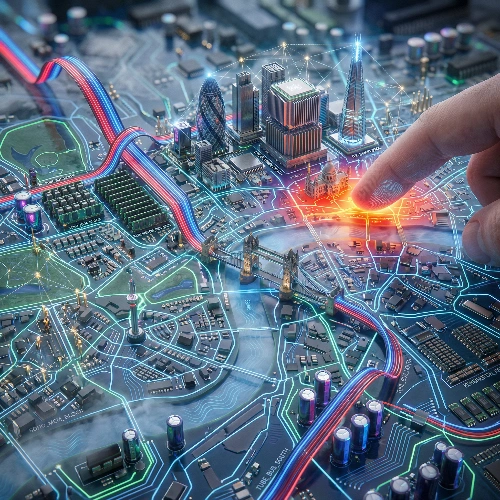
Do this for London: Input Variable: [INSERT CITY NAME] (e.g., Tokyo, Chicago, Rio de Janeiro) System Instruction: Generate a hyper-detailed "Smart City Circuit Board" macro shot. The Concept: The city is a living motherboard. Every urban element is translated into a piece of computer hardware. 1. Urban Translation Analyze the City: Identify the geography (Hills, Water, Grid) and landmarks. Landmarks (The Processors): The iconic buildings act as the "CPUs" or "GPUs." They are the tallest, most intricate metal components. Neighborhoods (The Memory): Residential areas are dense grids of RAM Sticks or Resistor Arrays . Power Grid (The Capacitors): Industrial zones or power plants are represented by cylindrical Capacitors . 2. The Micro-Infrastructure Layer The Transit (The Bus): Train lines and subways are represented by Ribbon Cables arching over the board or buried under the surface layer. The Connectivity (Wi-Fi): Do not just show streets. Show Gold Pins sticking up from rooftops representing antennas. Faint holographic lines connect them (The Network). The Weather (Cooling): If the city is foggy/cloudy (e.g., SF/London), use Dry Ice Fog drifting over the board (simulating Liquid Nitrogen cooling). 3. The Interaction The Hand: A giant finger touches a specific district. The "Boot Up": The touch creates a Heat Map effect. The area under the finger glows Hot Orange/Red, fading to Cool Blue further away. This simulates "System Load" or population density. 4. Visual Syntax: Texturing: The "Water" areas shouldn't just be empty. They should look like Exposed Fiberglass Substrate with faint wave patterns etched into the resin. Labeling: Tiny white silk-screened text on the board identifies neighborhoods (e.g., "SOHO_V1.0", "SHINJUKU_PORT_A"). 5. Lighting & Atmosphere: Glow: Every street trace has a faint bioluminescent pulse. Reflectivity: High gloss. The city looks wet or polished. Output: ONE image, 1:1 Aspect Ratio, Macro Tech Photography, 8k Resolution.
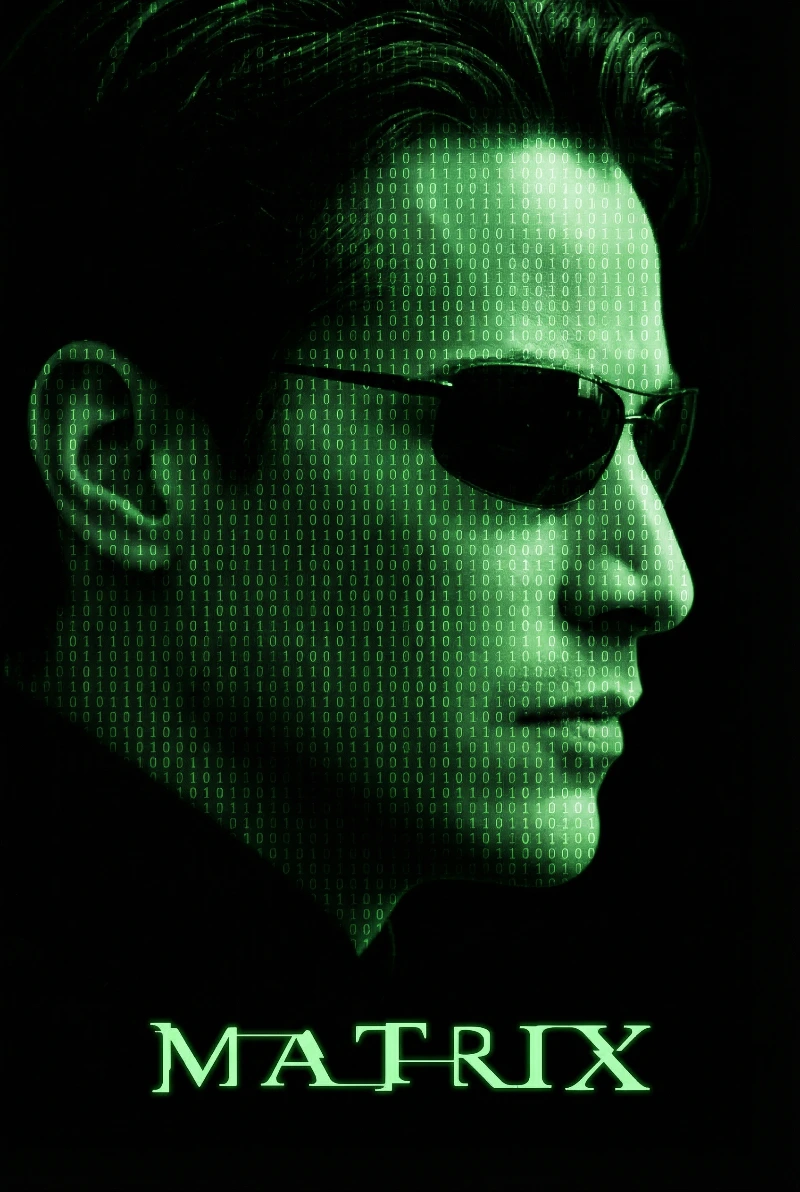
A minimalist movie poster for The Matrix. The central focus is a side profile close-up of Neo, meticulously constructed entirely from cascading green digital 0s and 1s. The glowing green digits vary in brightness to define his facial features and iconic black sunglasses. The background is a void-like deep black. At the bottom, the title "Matrix" is written in its signature futuristic green font. Cinematic lighting, sharp digital rain effect, high-resolution graphic design, professional editorial layout. Negative Prompt: (realistic skin, colorful, human features, 3D render, photograph, messy, blurry, low resolution, white background, orange, red, multiple people, bad typography, misspelled title).
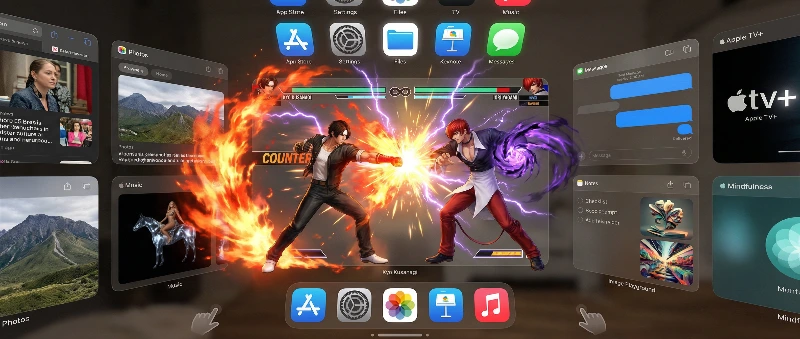
Highly detailed photorealistic screenshot of Apple Vision Pro visionOS 26 operating interface from user's first-person immersive view, spatial computing home screen, CENTER FOCUS: TWO LARGE 3D VOLUMETRIC HOLOGRAPHIC KING OF FIGHTERS CHARACTERS in INTENSE COMBAT ACTION, Kyo Kusanagi throwing fiery crimson flames punch toward Iori Yagami blocking with purple energy, explosive impact moment with MASSIVE FIRE EFFECTS orange red flames bursting, PURPLE LIGHTNING dark energy, bright yellow white IMPACT SPARK EXPLOSION between them, energy shockwaves radiating, dramatic motion blur showing speed, life-sized 3D fighters jumping OUT OF SCREEN with strong depth, naked-eye 3D stereoscopic effect protruding forward, volumetric flames casting dynamic colored lighting onto windows, LEFT SIDE windows: Safari browser window with multiple tabs and news content on upper left, Photos app window showing mountain landscape on middle left, Music app window with Beyoncé Renaissance album artwork on lower left, RIGHT SIDE windows: Messages window with blue chat bubbles on upper right, Notes window with checklist on middle right, Image Playground window showing generated images in Animation/Sketch/Illustration styles with prompt field on lower right, ADDITIONAL windows: Apple TV+ preview window, Mindfulness app with glowing breathing orb, small floating windows balanced on both sides, UPPER AREA: curved grid of volumetric glowing app icons (App Store, Settings, Files, Keynote, Messages icons) arranged symmetrically, LOWER AREA: another row of app icons (App Store, Settings, Photos, Keynote, Music icons) centered below, semi-transparent KOF game UI with health bars and COUNTER text behind 3D fighters, hand gesture pointers visible at bottom corners, semi-transparent frosted glass material on all windows, 3D fire effects and fighters casting volumetric shadows and colored reflections on surrounding windows symmetrically, strong spatial depth with balanced composition, ultra-sharp micro-OLED display, vibrant Apple minimalist UI, dramatic cinematic lighting with fire glow illuminating entire scene symmetrically, wide immersive 21:9 format, photorealistic spatial computing with LEFT and RIGHT sides equally populated with app windows
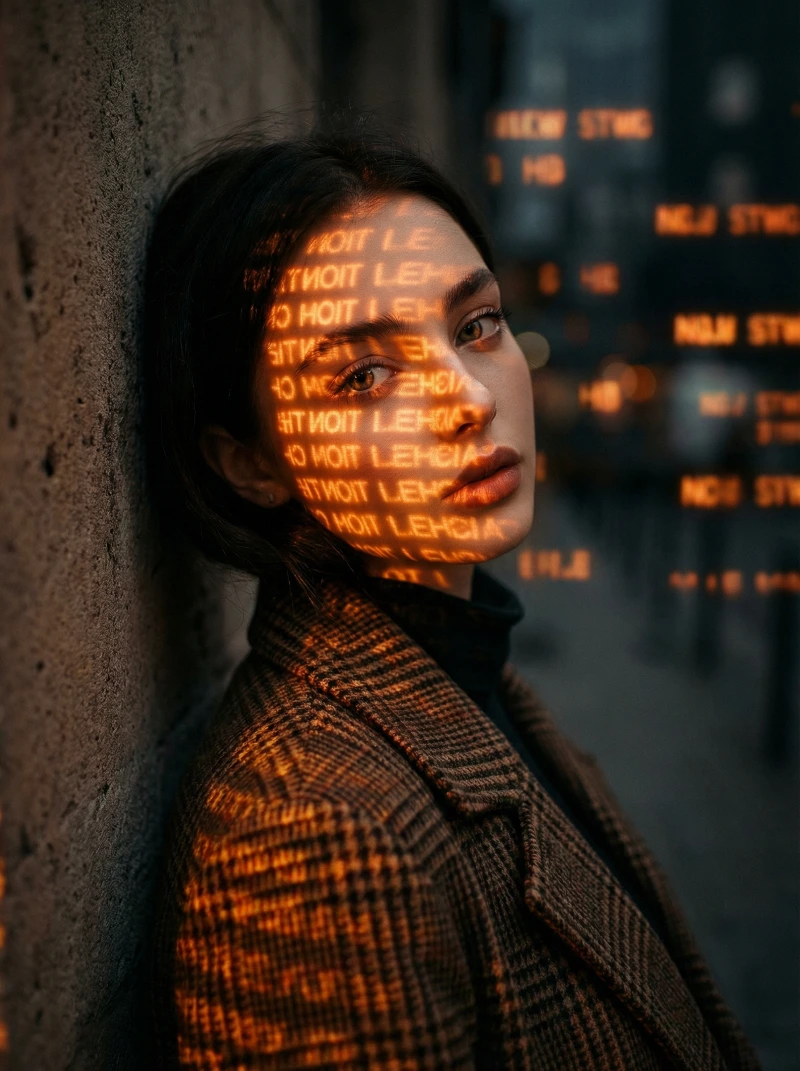
A a cinematic low-key portrait of a women with dark hair, leaning slightly against a textured wall, looking directly at the camera with a calm, intense expression. Warm orange light is projected across her face and body in the form of repeating glowing text patterns, creating a futuristic light-mapping effect. The background is dark and softly blurred, with the same orange text light scattered around. High contrast lighting, moody atmosphere, shallow depth of field, soft shadows, cinematic photography, ultra-realistic, 4K, sharp focus on the eyes, professional portrait photography, dramatic lighting, warm color grading, dark aesthetic.
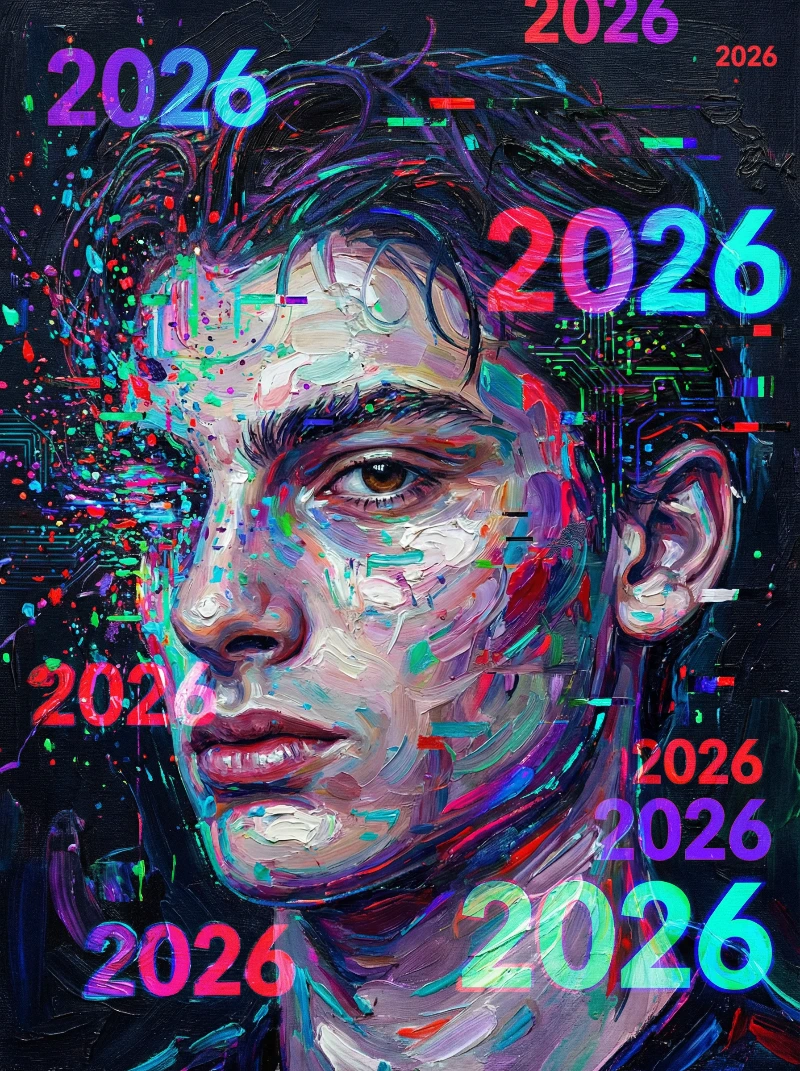
Artistic portrait of a digital deity, face partially dissolving into vibrant data particles and glitch effects. The digits "2026" are scattered across the composition in bold, distorted typography. Kinetic energy, explosive colors, cyberpunk oil painting style, thick brushstrokes mixed with digital artifacts. Sharp focus on one soulful eye, chaotic yet harmonious composition, masterpiece.
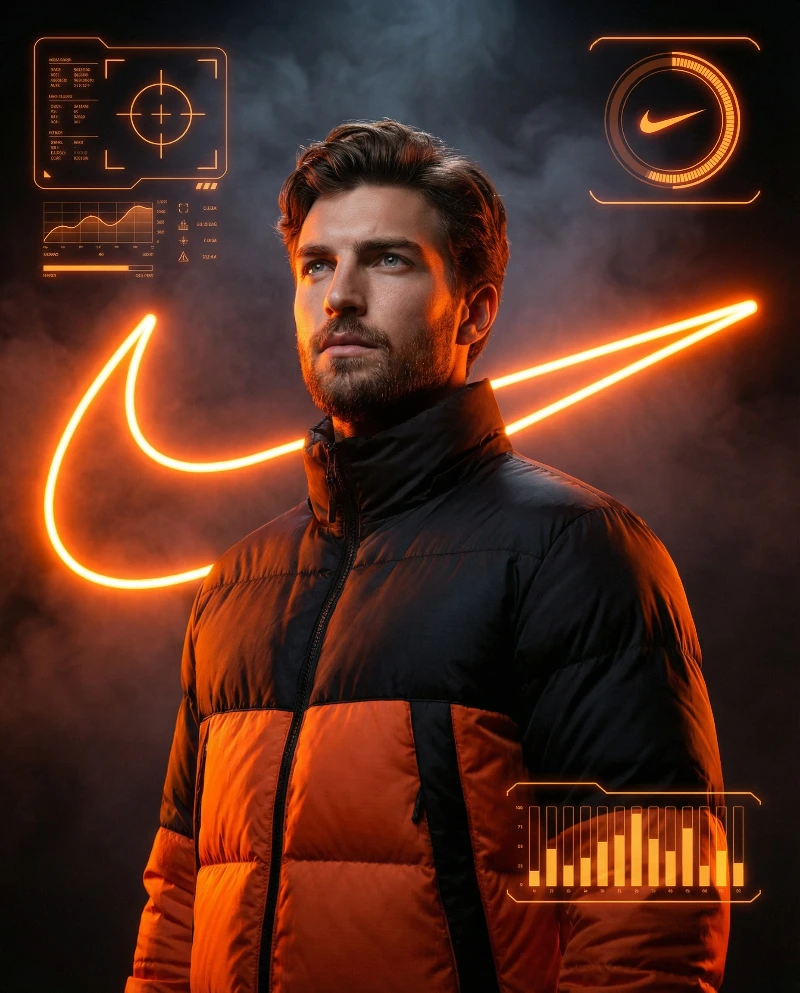
A photorealistic, high-detail portrait of a young man with a trimmed beard and a determined expression, looking up and slightly to the left. He is wearing a black and orange puffer jacket/down jacket with the zipper pulled up. Background/Aesthetic: Dark, moody, and futuristic studio setting. The main visual feature is a massive, glowing neon-orange outline of the Nike swoosh logo centered behind the subject. The lighting is dramatic, with a strong orange key light hitting the man's face, neck, and the top of his shoulders, creating high contrast. Visual Elements: Floating, futuristic HUD (Heads-Up Display) elements in neon orange are overlaid on the dark background around the subject. These include: Data readouts, graphs, and target crosshairs in the top-left corner. A minimal progress bar/loading graphic around the small swoosh in the top-right corner. A bar graph/data visualization in the bottom-right corner. Style/Technique: Cinematic, high-contrast lighting, volumetric lighting, hyper-detailed, photorealistic, shot on an 8K camera (like a Sony a7R V or Arri), deep depth of field, inspired by cyberpunk or sports advertising. Negative Prompts (To ensure quality and focus): low resolution, blurry, text, watermark, cartoon, bad anatomy, deformed hands, extra fingers, noisy, oversaturated
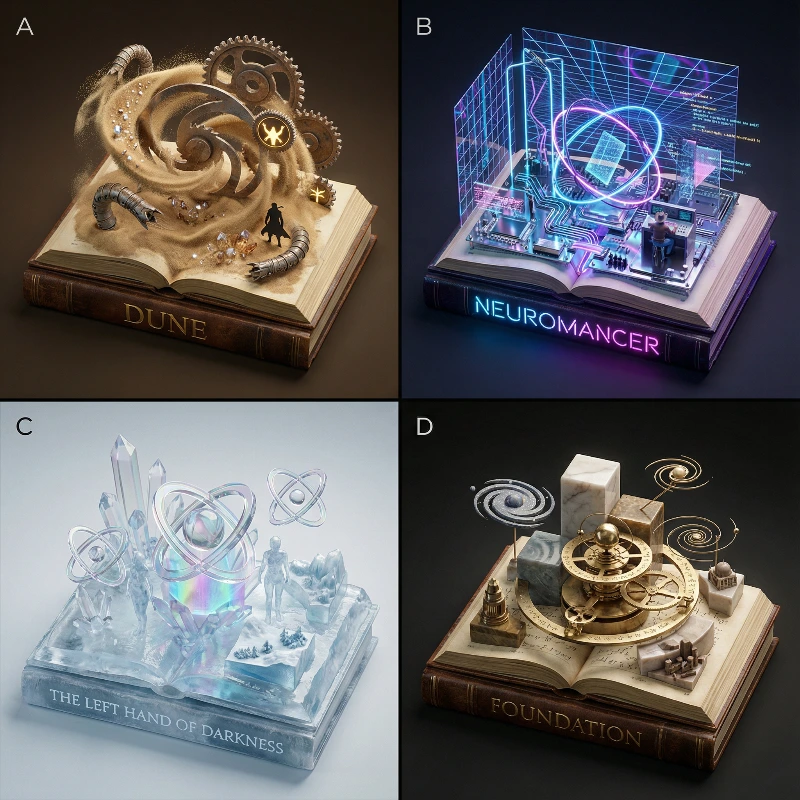
2×2 grid of iconic sci-fi literature, clean high-end studio lighting, sharp micro-detail, consistent camera angle, shallow depth of field. Panel A: [Dune] represented as a kinetic sculpture made from desert sand, spice crystals, and wind-carved metal, emerging from an open book. Miniature sandworms coil through the pages, with Paul Atreides silhouettes and Arrakis symbols integrated into the motion. Panel B: [Neuromancer] represented as a kinetic sculpture built from neon wires, chrome circuitry, and holographic data streams inside an open book. Cyberspace grids, floating code, and console-cowboy figures pulse with electric motion. Panel C: [The Left Hand of Darkness] represented as a kinetic sculpture crafted from ice, translucent crystal, and shifting light, rising from an open book. Androgynous figures, frozen landscapes, and orbital motifs subtly rotate and interlock. Panel D: [Foundation] represented as a kinetic sculpture made from polished stone, brass orreries, and mathematical glyphs inside an open book. Galactic structures, psychohistory curves, and collapsing empires move in precise, clockwork rhythms. Book titles displayed neatly underneath each panel.
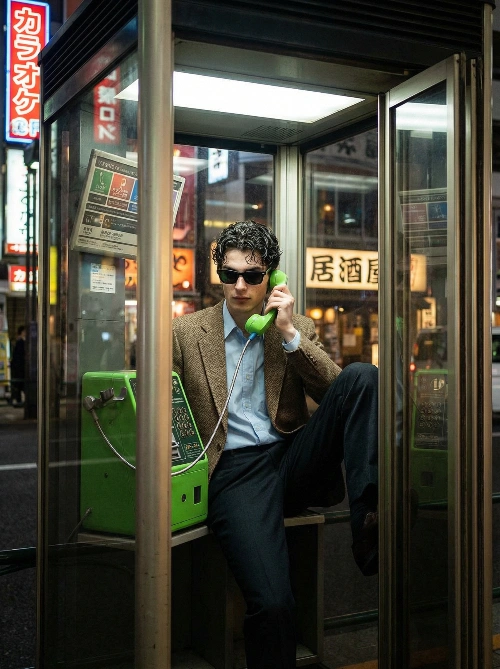
A person with dark, curly hair and sunglasses is seated inside a classic glass phone booth at night. They are wearing a light-colored collared shirt, a textured blazer, and dark pants, with one leg casually propped up. They are holding a bright green payphone receiver to their ear. The phone booth is illuminated from within, highlighting the details of the phone and the person. In the background, out of focus, are vibrant, neon-lit city buildings with Japanese characters, suggesting an urban night scene. Use the provided image as face reference
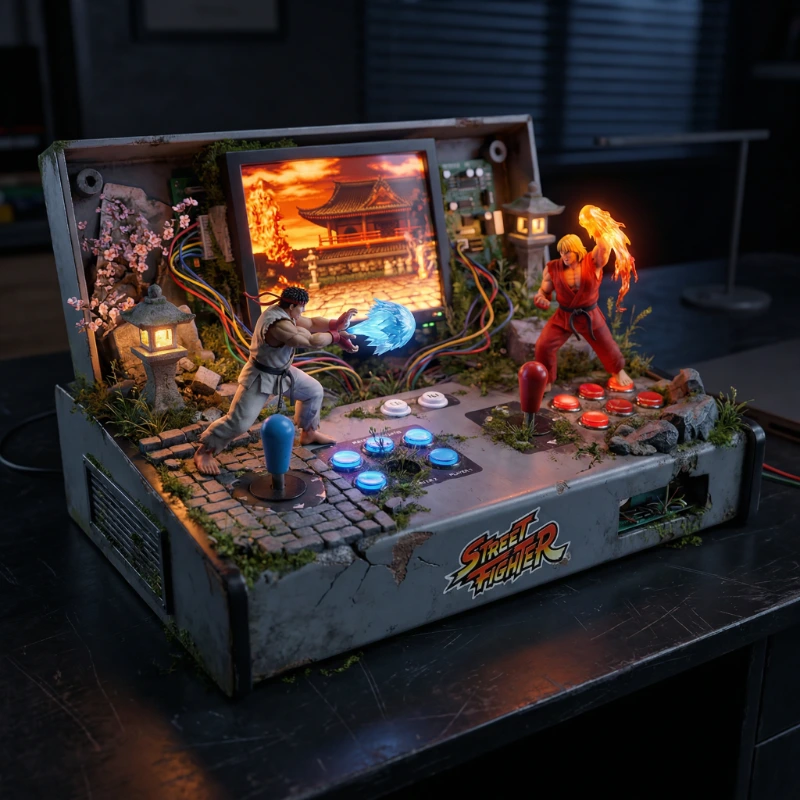
Input A: Street Fighter --- Input A is a Video Game Title (e.g., The Legend of Zelda, Halo, Street Fighter, Elden Ring). Deconstruct the game to generate 3 Integrated Assets : Container : Identify the defining hardware for that title. (e.g., Zelda -> Gold NES Cartridge or Switch. Halo -> Original Xbox. Street Fighter -> Arcade Cabinet Control Deck). Biome : Identify the primary environment of the game. (e.g., Zelda -> Hyrule Grass/Ruins. Halo -> Alien Metal/Ring Surface. Elden Ring -> Golden Erdtree Leaves/Ash). The Cast (The Figures): Identify the Protagonist and a key Enemy/NPC. 2. Dynamic Container Goal: "Hardware Diorama" Photography. Object: The "Container" (Step 1) sits on a dark desk. Transformation: The hardware is NOT pristine. It is partially Disassembled or Weathered . Effect: The "Biome" (Step 1) is physically growing out of the vents, cartridge slots, or screen bezels of the hardware. (e.g., Moss growing on an Xbox, Sand spilling from a Game Boy). 3. Diorama (The Conflict): The Figures: High-detail 1:18 Scale 3D Figures of the "Cast" stand on top of the modified hardware. The Interaction: They are engaged in combat or exploration using the console's geometry as terrain. (e.g., Link climbing the D-pad like a cliff. Master Chief taking cover behind a memory card slot). The Screen: If the hardware has a screen (Handheld/Arcade), it displays a glowing, pixelated backdrop that merges with the 3D foreground elements. 4. Visual Syntax (The Glitch): Wiring: Exposed colored wires or circuit boards protrude from the hardware, weaving through the environmental elements (vines/rocks), connecting the digital world to the physical one. Labels: A worn sticker or label on the device displays the Game Title in its original font. 5. Lighting & Atmosphere: Lighting: Diegetic Mood Lighting. The scene is lit by the glow of the screen or internal LEDs (matching the game's color palette: Green for Xbox, Gold for Zelda). Scale: Shallow depth of field to emphasize the miniature scale of the figures against the "giant" controller buttons. Output: ONE image, 1:1 Aspect Ratio, 3D Render, "Custom Mod" aesthetic, High Narrative Detail. </instruction>
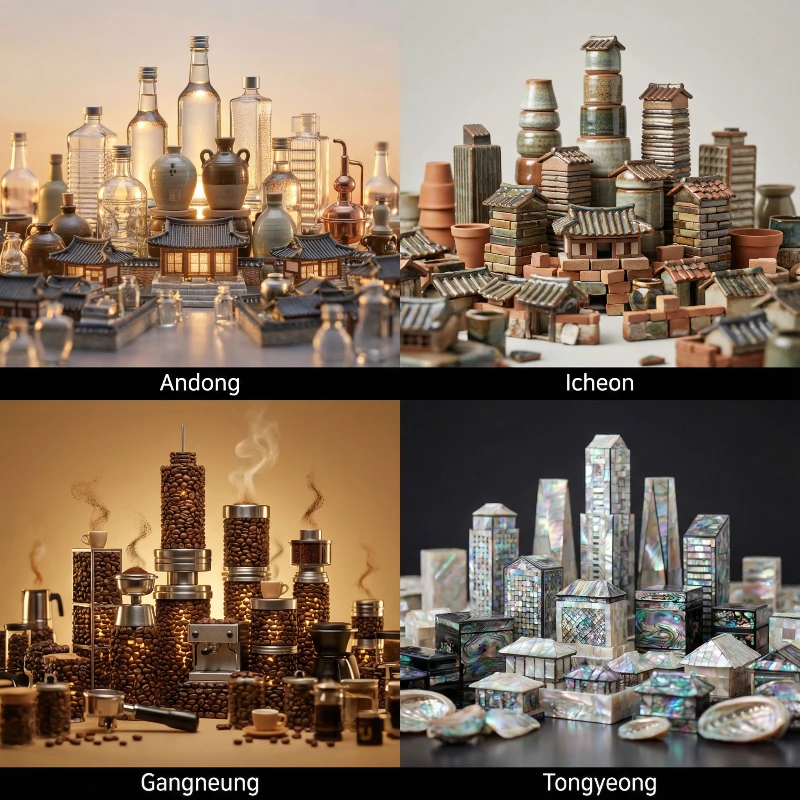
Do this for South Korea: <instructions> Input = Country Act as a world class visual artist and geography expert. For every country, find 4 less known cities and the one product that is very popular there. Do research to get this step right. Function Draw ($ City, $ Material) Anchor: [Location] :: [Material Concept]::4 Morphology: Miniature architectural cityscape of [Location], entire skyline constructed via the assemblage of [Material Concept] components, skyscrapers and structures formed from the constituent parts of [Material Concept], thematic structural engineering, hyper-detailed diorama::3 Material Physics: Physical properties of [Material Concept] applied to architecture, [Material Concept] textures replacing concrete and glass, innate material logic of [Material Concept], high-fidelity surface details::3 Illumination: Lighting exhibiting the surface properties of [Material Concept], ambient occlusion, volumetric atmosphere matching the material theme::2 Render Stack: Tilt-shift photography, macro lens, f/2.8, 8k, scale model aesthetic, detailed texture mapping, Unreal Engine 5 render::1 Negative: [Human presence, massive scale, blurry, low resolution, bad geometry, distortions, flat 2D, text, watermark]:: -1 Output: 2x2 grid, for each panel execute Draw Function for one of the cities plus the associated popular product. Name of the city underneath </instructions>
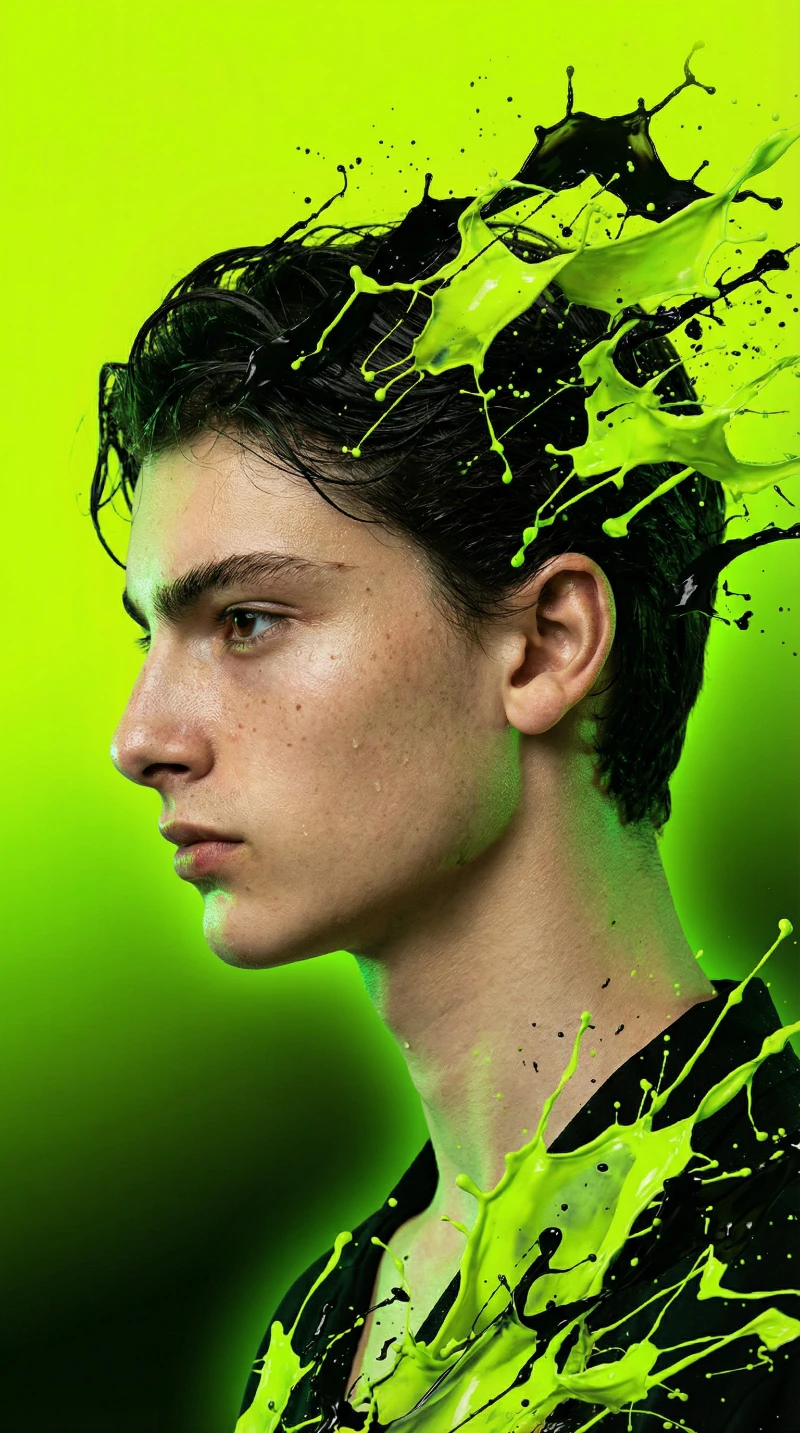
Convert this image into a bold, modern editorial portrait with a neon-futuristic edge, (use the same face as the uploaded photo), 9:16 vertical aspect ratio, featuring a sharply defined profile of a handsome young man looking to the left. The background is a vibrant lime-green gradient with subtle neon glow. Electric lime and black paint splashes erupt from the head and shoulders, creating high-energy motion and youthful visual impact. Ultra-sharp directional lighting with crisp highlights, strong cinematic contrast, ultra-high-resolution commercial photo quality.
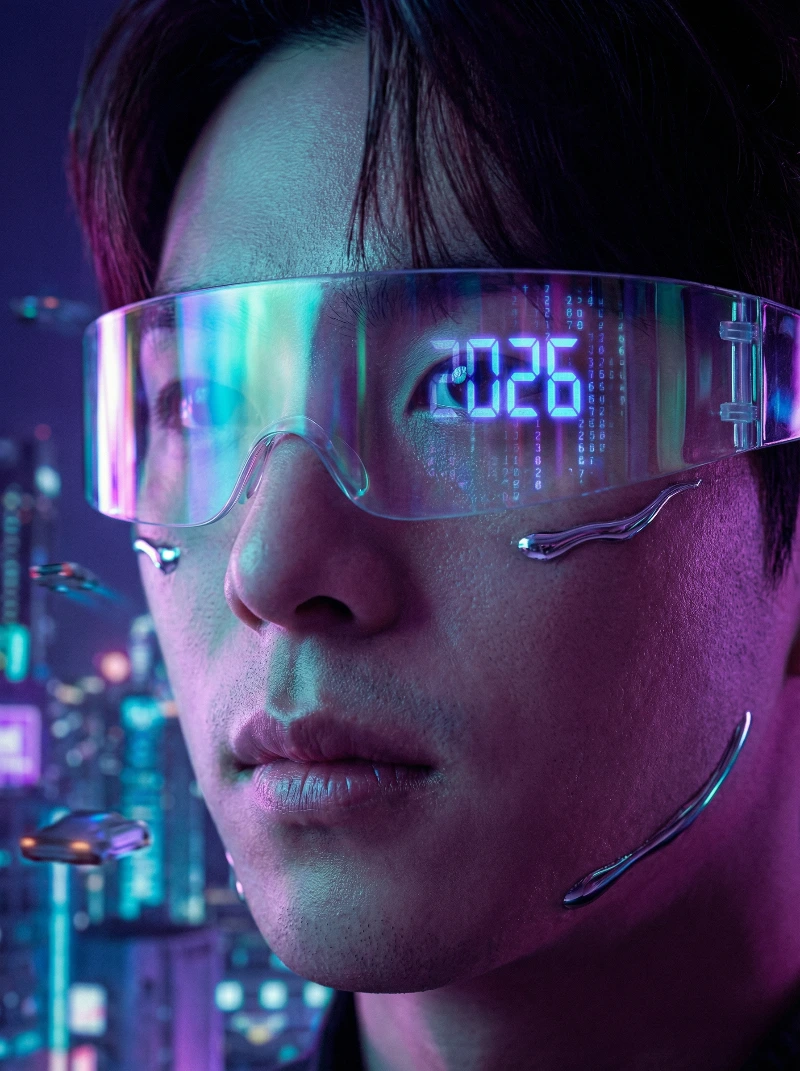
A cinematic close-up portrait of a futuristic visionary, hyper-realistic skin texture, iris reflecting a glowing neon "2026" digital matrix. The subject is wearing a high-tech translucent visor. Iridescent lighting, liquid chrome accents on cheekbones, vaporwave color palette with deep violet and electric teal. 8k resolution, shot on 35mm lens, sharp focus, ethereal bokeh background of a sprawling megacity.
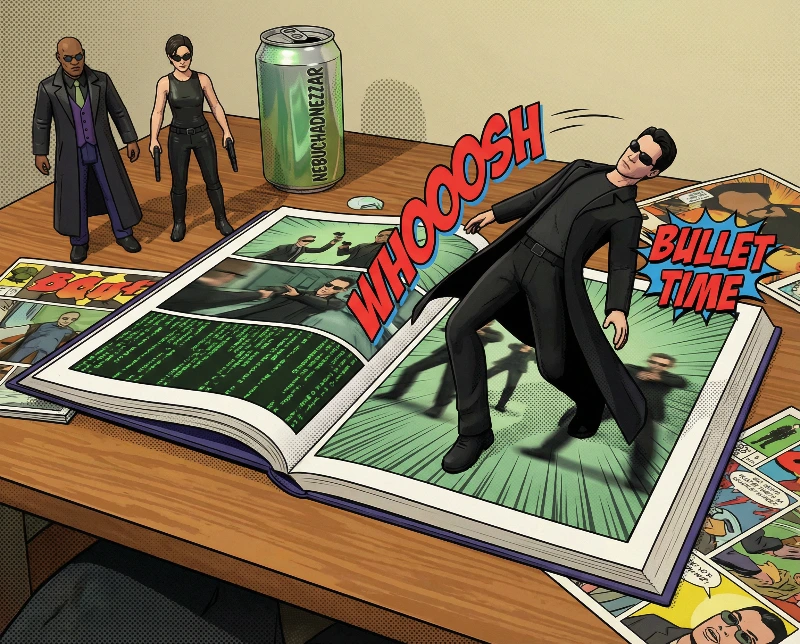
do this for [Neo from The Matrix] <instructions>Subject: An open graphic novel. A superhero character is doing his signature move through a page in 3D, with the right sound effect bubbles floating in the air. Style: Pop art mixed with character appropriate style, comic book cel-shading, vibrant primary colors, halftone patterns. Environment: A messy [audience appropriate] desk with action figures and soda cans related to the this super hero's universe. Lighting: Bright, flat, high-key lighting typical of comic book coloring mixed with character appropriate colors. Composition: Dynamic, foreshortened perspective emphasizing the signature move coming toward the viewer.</instructions>
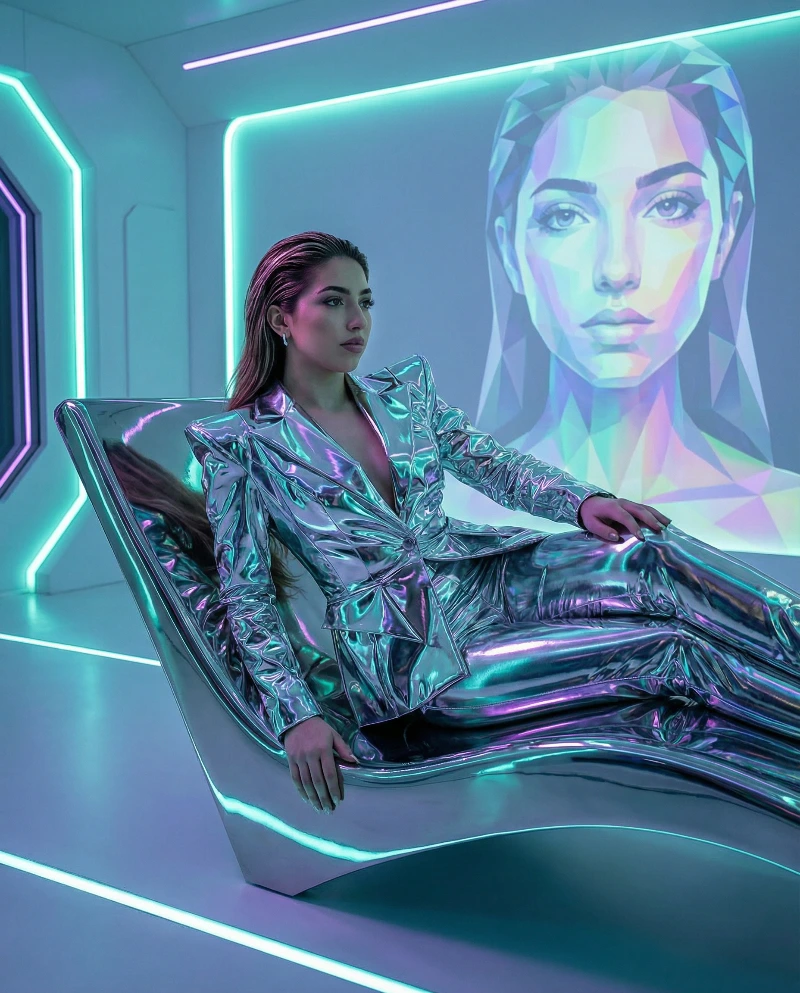
A futuristic fashion portrait of an elegant woman reclining on a metallic chaise lounge, wearing a reflective chrome silver outfit with sharp geometric tailoring. Soft neon lighting in teal, purple, and blue tones fills a minimalist sci-fi interior. Behind her, a large polygonal digital face mural mirrors her features, glowing with holographic gradients. Google Gemini Cinematic lighting, ultra-realistic skin texture, high fashion editorial style, cyberpunk luxury aesthetic, shallow depth of field, 8K detail
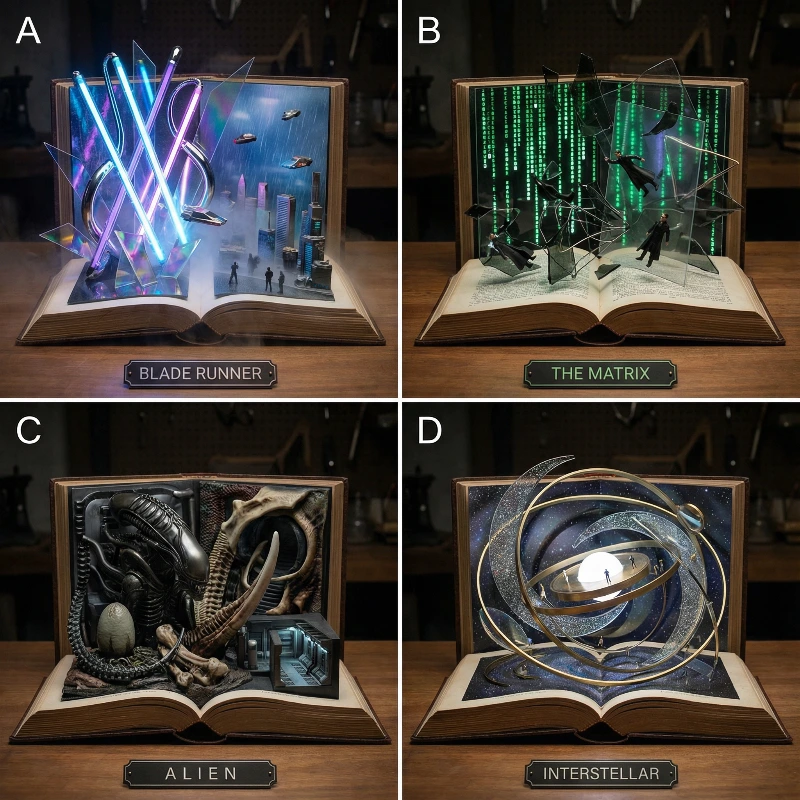
Panel A: [Blade Runner] represented as a kinetic sculpture made from rain-soaked neon signage, reflective chrome, and holographic light shards, emerging from an open book. Miniature cityscapes, flying spinners, and replicant silhouettes animate through drifting mist. Panel B: [The Matrix] represented as a kinetic sculpture constructed from cascading green code, black glass, and metallic wireframes inside an open book. Gravity-defying figures, digital rain, and fractured reality planes move in synchronized motion. Panel C: [Alien] represented as a kinetic sculpture formed from biomechanical bone, dark steel, and organic textures inside an open book. Xenomorph curves, egg chambers, and industrial corridors subtly pulse and coil. Panel D: [Interstellar] represented as a kinetic sculpture built from cosmic dust, light-bent glass, and rotating gravitational rings inside an open book. Black hole accretion disks, time-dilated figures, and orbital mechanics spin with precise, elegant motion. Movie titles displayed neatly underneath each panel.
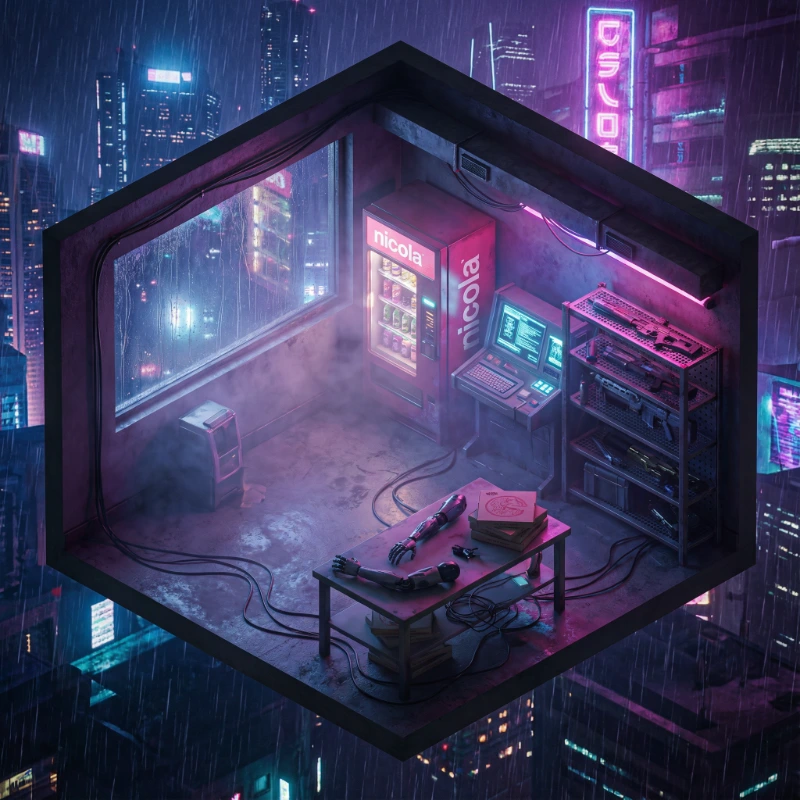
A gritty, neon-soaked isometric apartment inspired by Cyberpunk 2077. Visuals: A cramped mega-building unit with a weapon rack, a vending machine serving 'NiCola', and a computer terminal. View: One wall cut away to show the rainy, neon city skyline outside. Lighting: Pink and blue neon signage light spilling into the dark room, volumetric fog. Details: Cybernetic limbs on the table, pizza boxes, cables running everywhere. Style: Ray-traced realism, wet surfaces, high contrast.
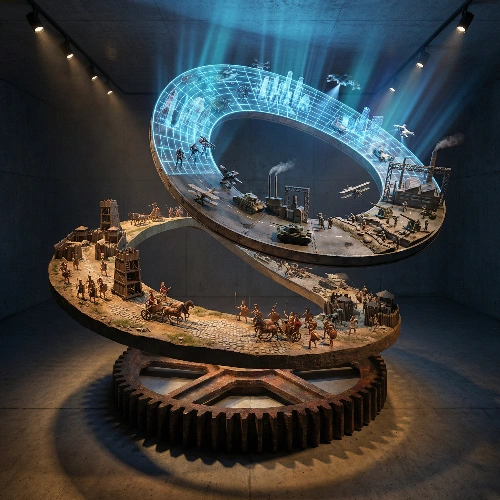
Do this for Warfare: <instruction> Input A is a Topic with a clear technological or cultural progression (e.g., Transportation, Warfare, Medicine, Architecture). Deconstruct the history into 3 Chronological Eras : Era 1 (The Origin - Bottom): Identify the pre-industrial state. (e.g., Transportation -> Horses & Carts on Cobblestone. Medicine -> Herbalists in a Village). Era 2 (The Industry - Middle): Identify the mechanical/modern state. (e.g., Transportation -> Early Cars & Steel Bridges. Medicine -> Victorian Surgery & Iron Beds). Era 3 (The Future - Top): Identify the sci-fi state. (e.g., Transportation -> Hovercars on Neon Roads. Medicine -> Med-Pods & Holograms). 2. Container Goal: "Chronological Loop" Museum Installation. The Form: A massive, continuous Mobius Strip or Twisted Ribbon rising from the floor. The Base: The structure is anchored by a giant Industrial Gear or Stone Foundation. The Setting: A dark, expansive concrete museum hall with overhead track lighting. 3. The Metamorphosis The Path: The surface of the ribbon acts as a road or floor that physically transforms as it ascends. Transition: It morphs from Rough Stone/Dirt (Bottom) to Asphalt/Steel (Middle) to Glowing Glass/Grid (Top). The Connectivity: A bridge or ramp connects the lower loop to the upper loop, implying a continuous journey. 4. The Narrative Scale Scale: 1:50 Scale Figures and Props populate the ribbon. Action: Bottom: Figures walking or using animals. Wooden market stalls. Middle: Factory workers, steel trusses, and combustion engines. Top: Futuristic figures in suits, floating vehicles, and Holographic Cityscapes projecting upwards from the glass surface. 5. Lighting & Atmosphere: Lighting: Gradient Temperature. Base: Warm, earthy halogen spots. Top: Cool, electric blue LED glow from the future section. Shadows: The twisting ribbon casts complex, dramatic shadows on the museum floor. Output: ONE image, 1:1 Aspect Ratio, 3D Render, "Installation Art" aesthetic, High Geometric Complexity. </instruction>
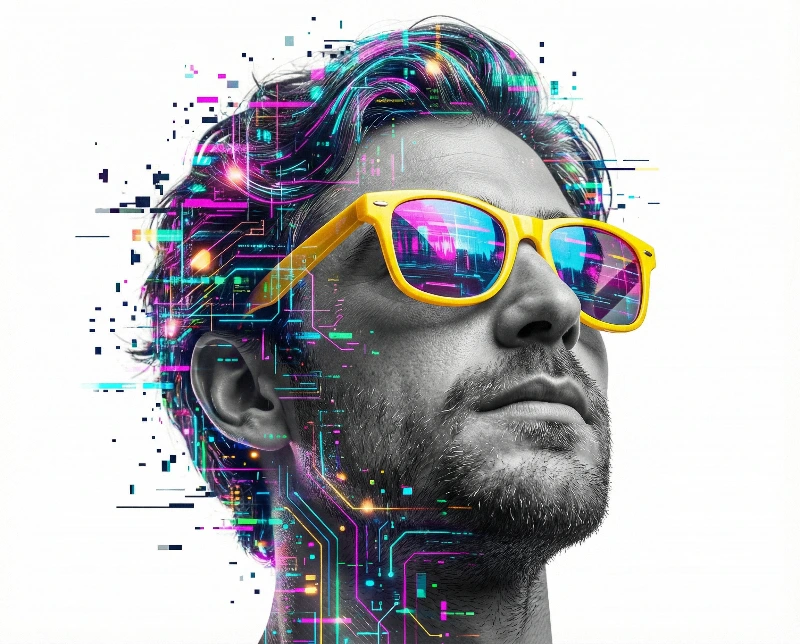
A hyper-realistic 8K close-up portrait of a person's head and upper neck, shot from a slightly low-angle perspective looking upward. Use the uploaded image as the face reference - the face must match 100% exactly (same identity, facial structure, proportions, skin details, and expression). Do not alter the face in any way. The subject is wearing bright yellow sunglasses with reflective lenses showing colorful abstract digital scenes in shades of pink, blue, and yellow. The face is rendered in detailed grayscale, showing realistic skin texture, pores, and light stubble on the jawline, creating strong contrast with the rest of the head. The hair and most of the head and neck are made of glowing digital circuit patterns, abstract shapes, lines, and data streams in vibrant colors like magenta, cyan, blue, green, yellow, and orange. These elements appear layered and complex, with a soft internal glow. Parts of the digital head are breaking apart and dissolving outward into pixels, lines, and glitch fragments that fade into a clean white background, giving a glitch-art, futuristic look. Cinematic lighting highlights one side of the face, with shadows under the chin and subtle rim lighting around the digital elements. Overall style is futuristic, cyber-inspired, high-detail, and photorealistic.
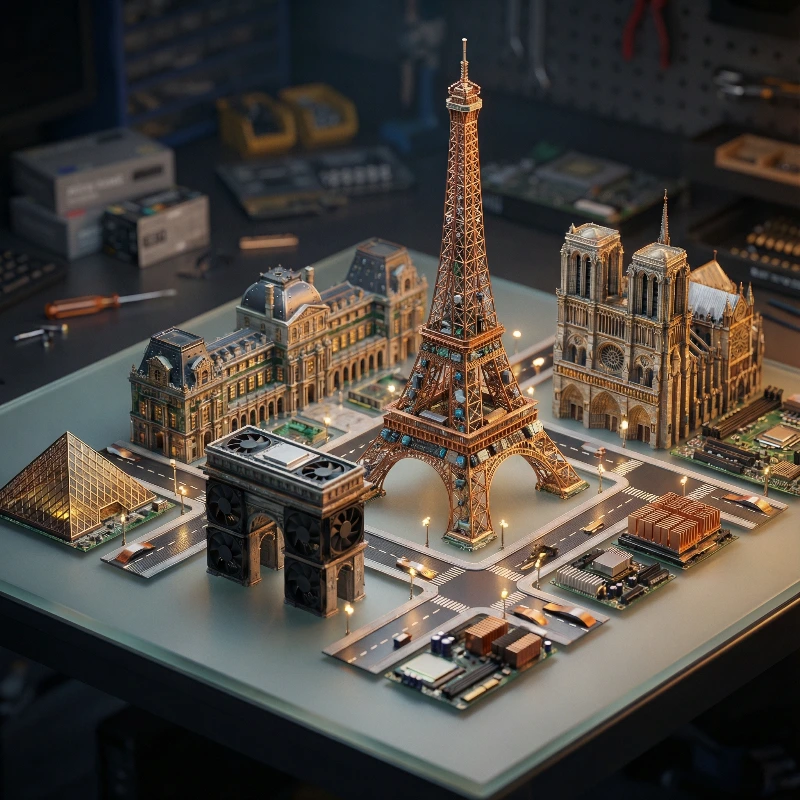
(Paris, PC) Anchor: [Location] :: [Material Concept]::4 Morphology: Miniature architectural cityscape of [Location], entire skyline constructed via the assemblage of [Material Concept] components, skyscrapers and structures formed from the constituent parts of [Material Concept], thematic structural engineering, hyper-detailed diorama::3 Material Physics: Physical properties of [Material Concept] applied to architecture, [Material Concept] textures replacing concrete and glass, innate material logic of [Material Concept], high-fidelity surface details::3 Illumination: Lighting exhibiting the surface properties of [Material Concept], ambient occlusion, volumetric atmosphere matching the material theme::2 Render Stack: Tilt-shift photography, macro lens, f/2.8, 8k, scale model aesthetic, detailed texture mapping, Unreal Engine 5 render::1 Negative: [Human presence, massive scale, blurry, low resolution, bad geometry, distortions, flat 2D, text, watermark]:: -1
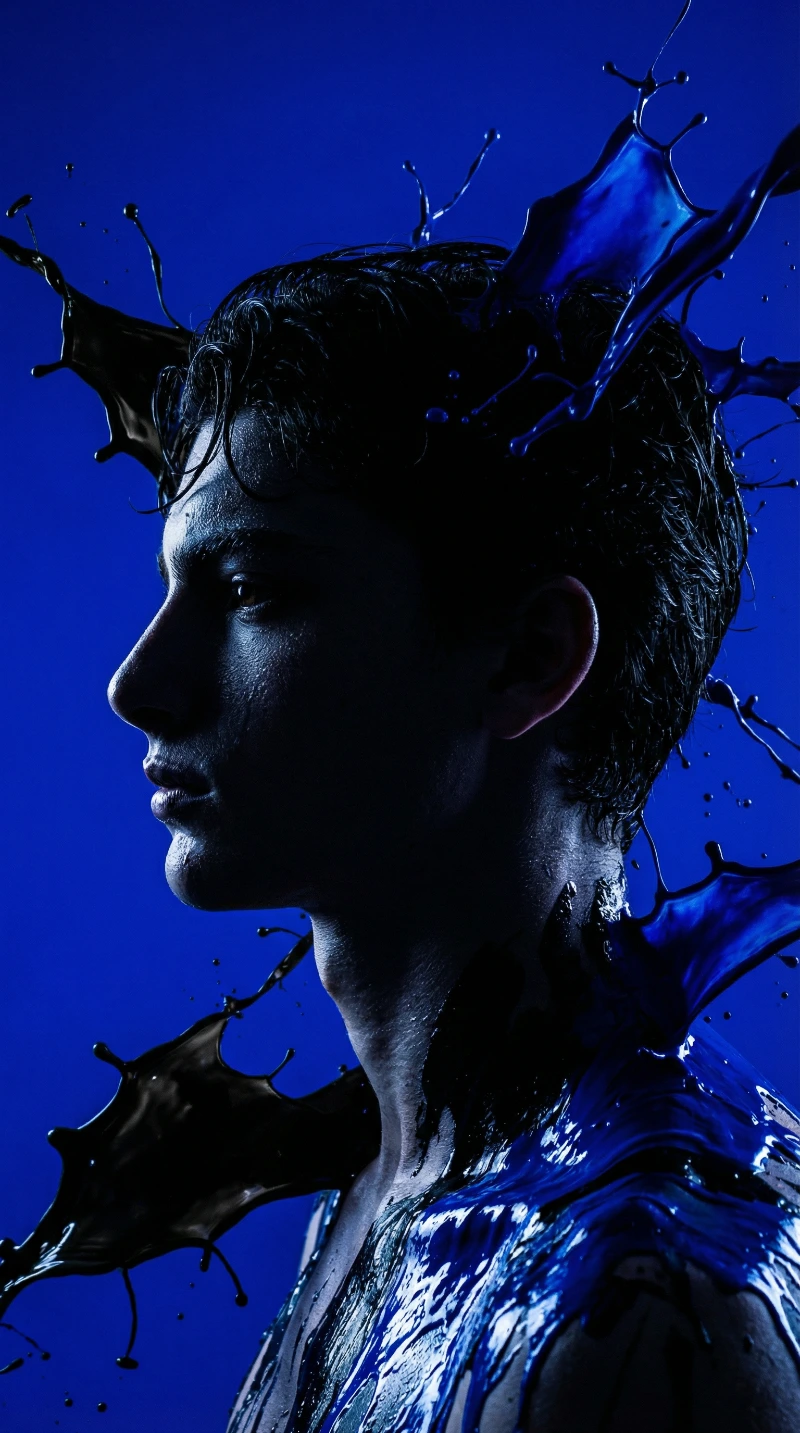
Convert this image into a dramatic, stylized portrait (use the same face as the uploaded photo), 9:16 aspect ratio, featuring a dark, almost silhouetted figure in profile looking to the left. The background is a deep electric blue. Intense black and sapphire paint splashes burst outward from the head and shoulders, creating powerful motion energy. Ultra-sharp lighting, cinematic contrast, HD photo.
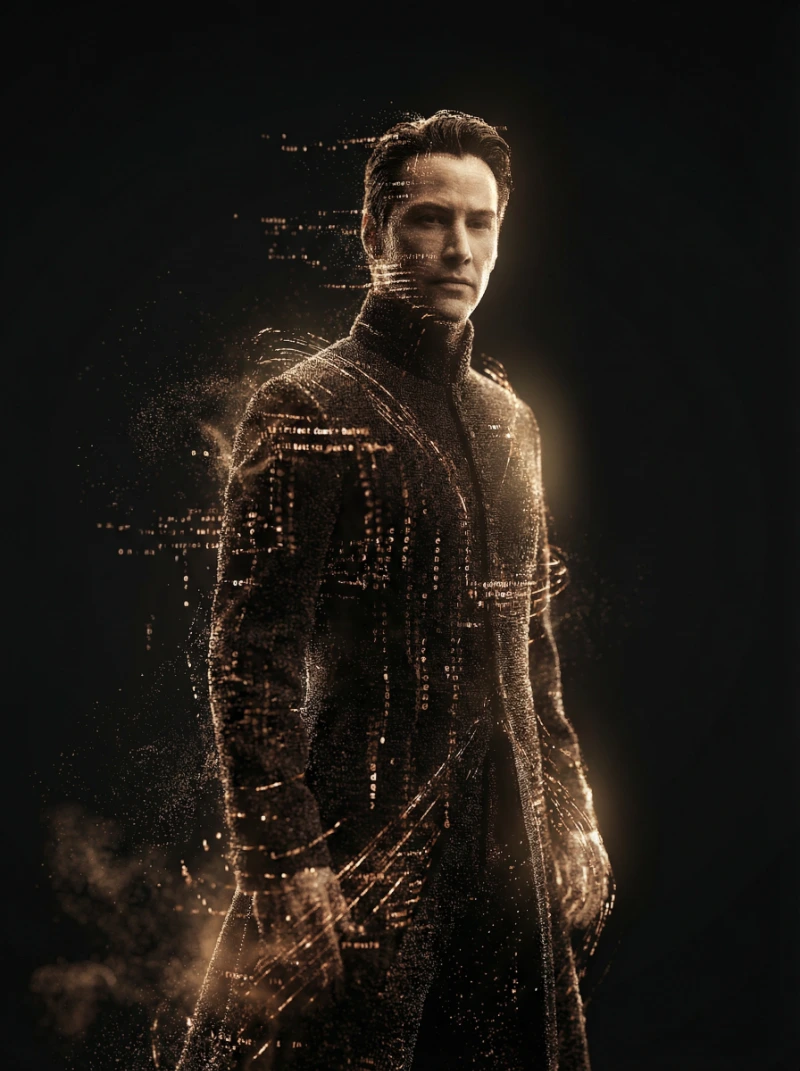
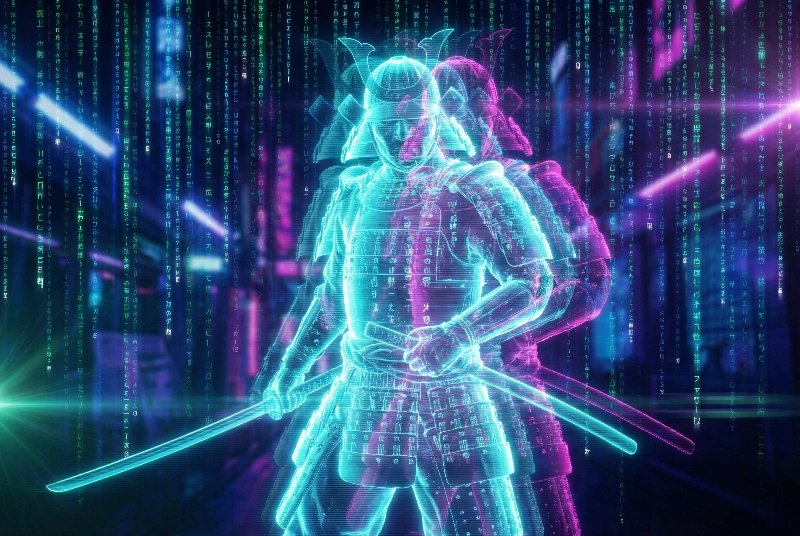
A mid-range shot of Neo from The Matrix, rendered in a dark brown, algorithmic texture. His figure is composed of countless tiny code particles and drifting data dust, gradually resolving from a soft blur into sharp clarity, ultimately forming the iconic silhouette of Neo in his long coat and calm, focused expression. The matte black background and minimalist composition reinforce a stream-of-consciousness abstract art style, evoking a dream-maker’s interpretation with a refined, futuristic edge. The atmosphere is mysterious and restrained, with a strong technological presence, enhanced by exquisite lighting effects—edge contour lighting, subtle volumetric glow, and shimmering particle highlights—creating high contrast, composure, and a distinctly high-end aesthetic.

A mysterious smoky room filled with surreal atmosphere, dim reflections of red and blue neon lights casting over the walls. At the center, a young man wearing a black hoodie sits at a wooden table, holding an open book with both hands, deeply immersed in reading. From inside the glowing book, magical blue light bursts out, transforming into ethereal butterflies and tiny luminous birds flying into the smoky air. Create a HD photo.
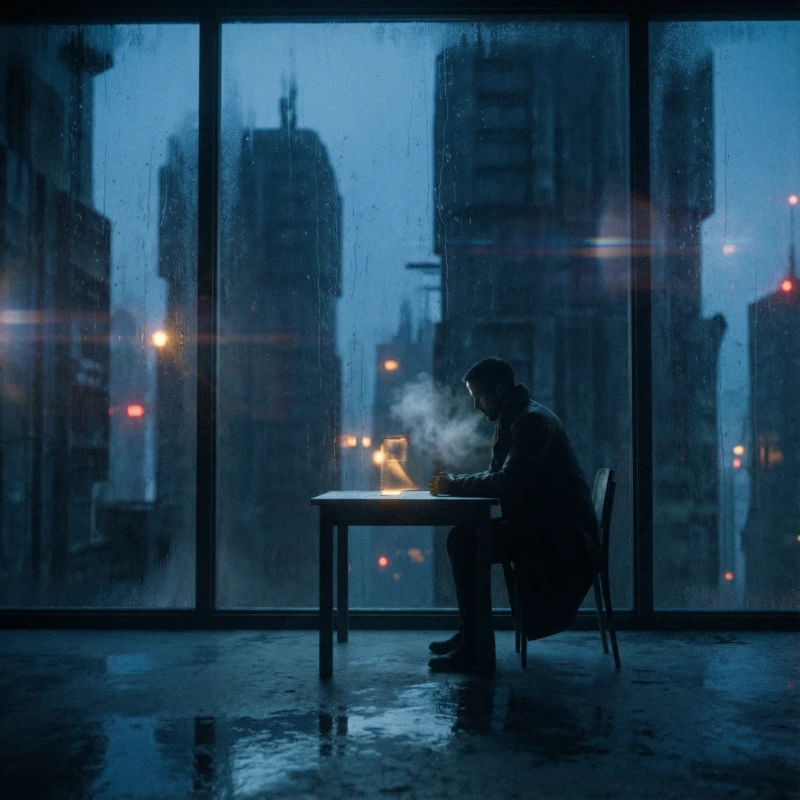
Officer K, profound solitude captured in cinema, hyper-real film still drenched in emotional weight, cold blue hour lighting with dying warmth at the edges of a decaying megacity, rain-streaked glass creating liquid distortions across a fogged apartment window, shallow depth of field isolating the lone figure against towering shadows, muted desaturated palette punctuated by a single amber holographic glow, slow-motion implied stillness, fine analog grain reminiscent of 1970s existential cinema despite a futuristic setting, lens flares bleeding into darkness, ray-traced reflections in pooled rainwater on concrete floors, breath visible in cold recycled air, negative space dominating the frame, crushing atmospheric pressure, intimate yet distant camera positioning, Vilmos Zsigmond-inspired melancholic cinematography, the weight of unspoken grief.
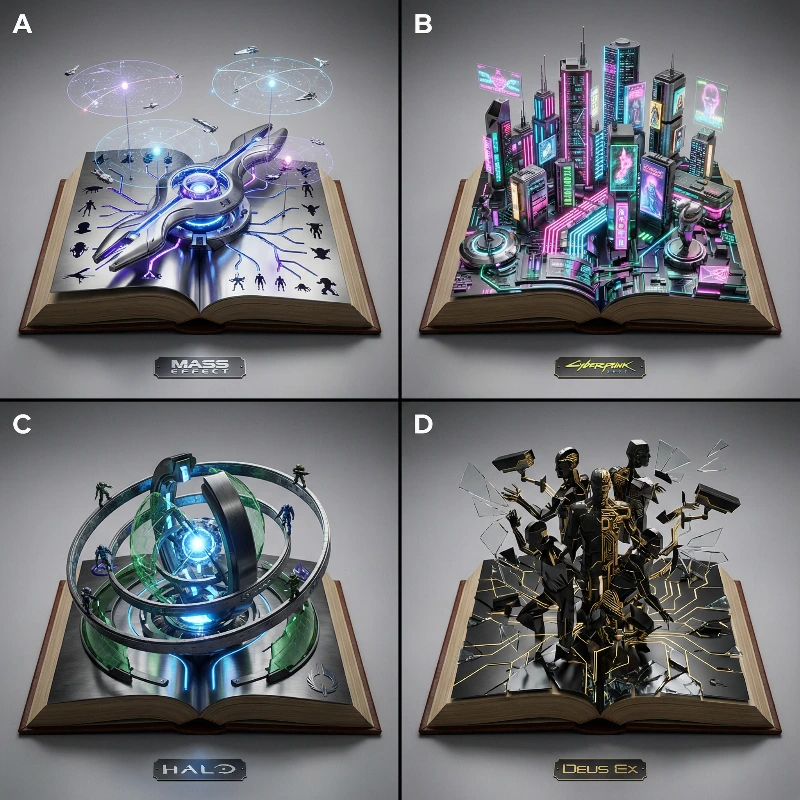
2×2 grid of iconic sci-fi video games, clean high-end studio lighting, ultra-sharp micro-detail, consistent camera angle, shallow depth of field. Panel A: [Mass Effect] represented as a kinetic sculpture made from polished alloy, glowing biotic energy, and holographic star maps, emerging from an open book. Miniature starships, alien species silhouettes, and branching galactic routes rotate in synchronized motion. Panel B: [Cyberpunk 2077] represented as a kinetic sculpture constructed from neon circuitry, chromed implants, and holographic ads inside an open book. Vertical megacities, augmented figures, and data streams pulse with electric movement. Panel C: [Halo] represented as a kinetic sculpture formed from military titanium, energy shields, and luminous plasma inside an open book. Ringworld arcs, armored Spartans, and Covenant symbols orbit in precise mechanical balance. Panel D: [Deus Ex] represented as a kinetic sculpture built from black steel, gold circuitry, and fractured glass emerging from an open book. Augmented human forms, surveillance motifs, and branching choice pathways interlock and subtly shift. Game titles displayed neatly underneath each panel.
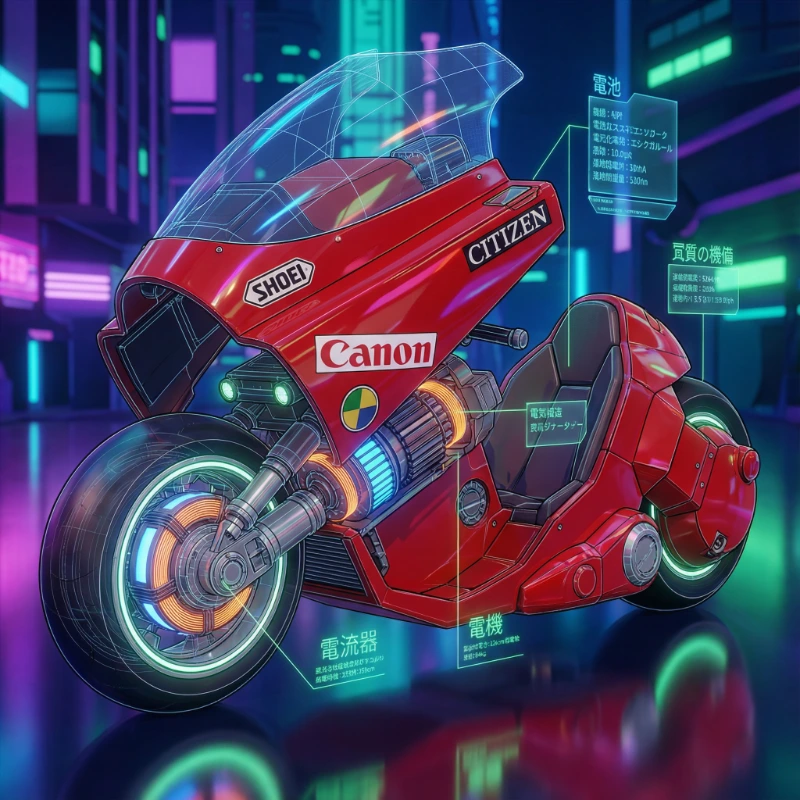
A futuristic technical cutaway illustration of Kaneda’s Bike from Akira. Visuals: The iconic red ceramic cowling is lifted to reveal the electric generator, superconducting coils, and wheel hub motors. Style: 1980s anime production art style (Katsuhiro Otomo) mixed with modern 3D CAD rendering. Colors: Iconic vibrant red, pharmaceutical stickers (Canon, Citizen, Shoei). Labels: Japanese kanji technical specifications floating in AR space. Lighting: Neon city reflections on the glossy red surface.