
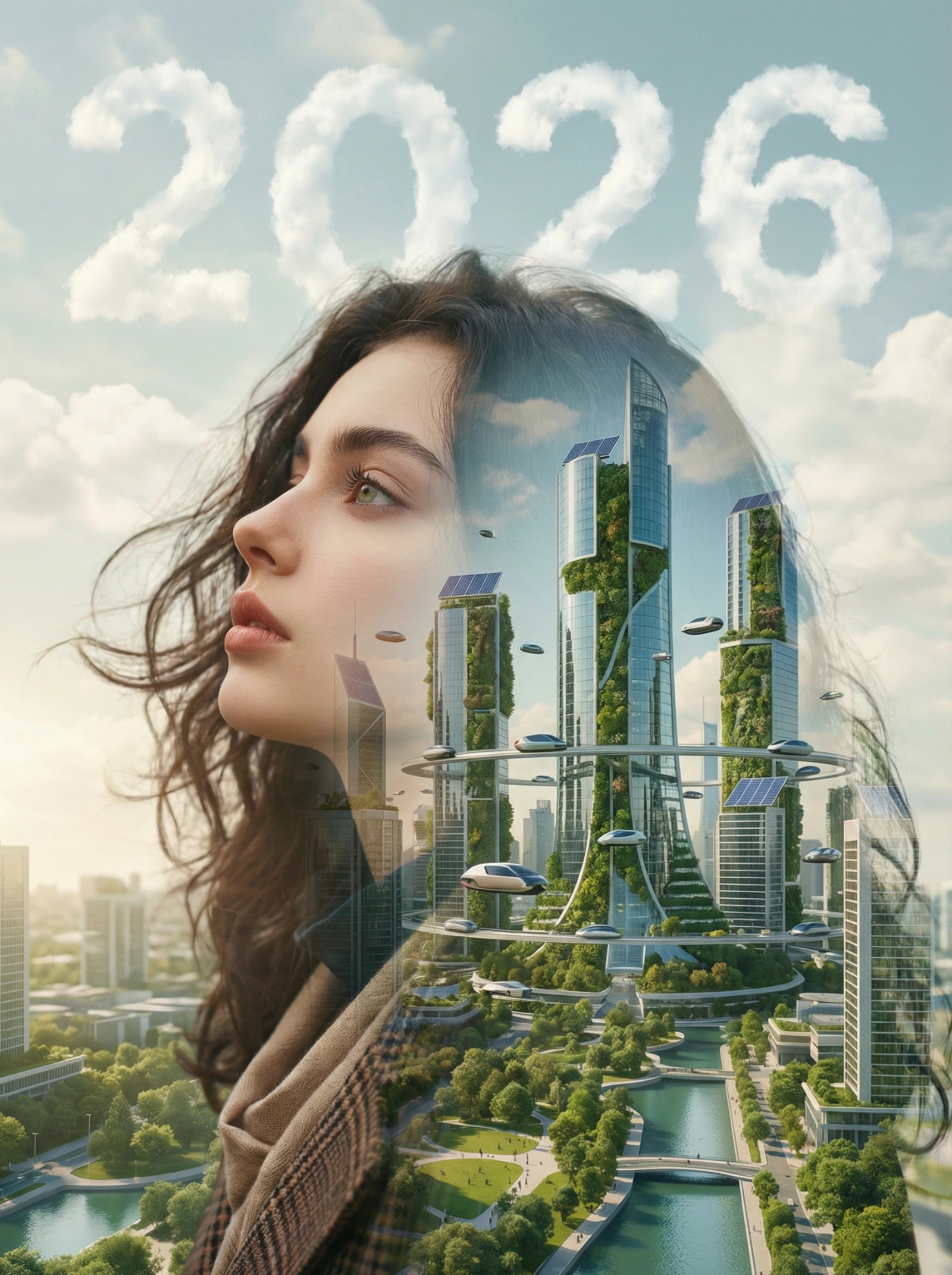
Reference Images:
2026 Sustainable Dreamscape
Prompt
Double exposure photography, profile of a contemplative woman merged with a lush, green sustainable city of 2026. Inside her silhouette, high-tech vertical gardens and floating vehicles are visible. The number "2026" is formed by the negative space of white clouds in the sky. Soft natural lighting, cinematic haze, dreamlike atmosphere, surrealism, fine art photography style.
Aspect Ratio
Model
Nano Banana ProYou might also like
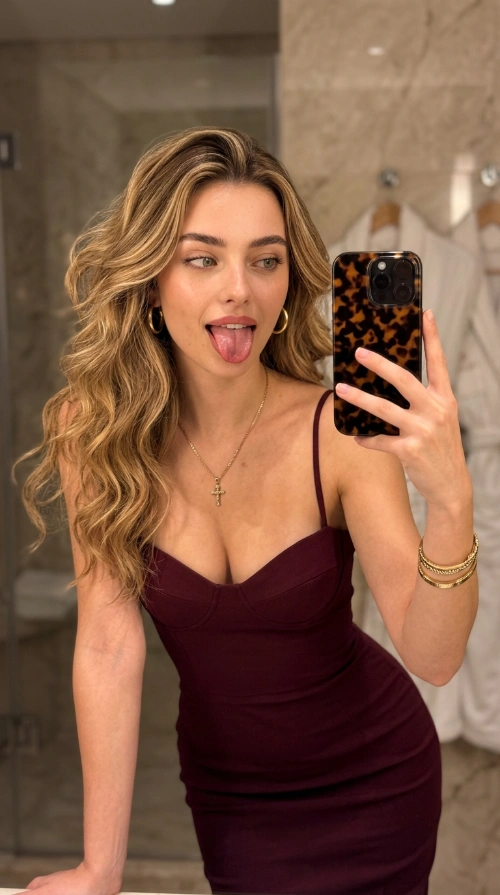
Glam Mirror Selfie
{ "image_type": "Photograph, Mirror Selfie", "shot": "Medium Shot", "shot_details": "Handheld mirror reflection, slightly tilted angle", "style": "Modern Lifestyle, Social Media Aesthetic", "quality": "High-fidelity, mobile photography style", "color_grade": "Warm indoor tones, saturated burgundy", "meta": { "aspect_ratio": "9:16", "resolution": "4k" }, "camera": { "device": "iPhone 17 Pro", "lens": "24mm f/1.8 Wide Angle", "aperture": "f/1.8", "distance": "Arm's length", "angle": "Eye level, slightly tilted", "framing": "Upper body and torso", "pov": "Subject looking into a mirror", "focus": "Sharp on face and eyes", "lens_effect": "Natural mobile sensor depth of field" }, "lighting": { "description": "Warm indoor vanity lighting from a bathroom mirror", "type": "Soft diffused light", "source": "Overhead and side vanity bulbs", "primary": "Warm frontal glow", "secondary": "Ambient indoor light", "highlights": "Soft specular highlights on the shoulders and hair", "shadows": "Soft shadows under the jaw and dress folds" }, "scene": { "location": "Upscale Bathroom or Dressing Room", "environment": "Interior, marble-textured walls, white bathrobes hanging in the background", "time": "Evening", "atmosphere": "Casual, playful, intimate" }, "subject": { "gender": "Female", "age": "Early 20s", "ethnicity": "Caucasian", "appearance": "Glamorous, fit, light tan", "body": { "type": "Slim, athletic", "skin": "Smooth, radiant" }, "expression": { "eyes": "Almond-shaped, focused on the phone screen", "gaze": "Indirect via mirror", "face_vibe": "Playful, cheeky, tongue sticking out" }, "hair": { "color": "Honey blonde with darker roots and highlights", "style": "Long, voluminous, loose waves" }, "pose": { "description": "Leaning slightly forward, one arm holding the phone, other arm supporting the lean" } }, "wardrobe": "Elegant maroon bodycon cocktail dress", "outfit_details": { "top": { "type": "Sweetheart neckline with spaghetti straps", "color": "Deep Burgundy / Maroon" }, "bottom": { "type": "Bodycon fit", "color": "Maroon" } }, "accessories": { "jewelry": [ "Gold hoop earrings", "Gold chain with a small cross pendant", "Stacked gold bracelets", "Tortoise-shell pattern phone case" ] }, "details": { "skin_effects": [ "Subtle pores", "Dewy finish" ], "realism": "High, organic skin texture, natural highlights on the tongue" }, "negatives": "Low resolution, blurry, distorted face, messy background, oversaturated skin, plastic texture" }
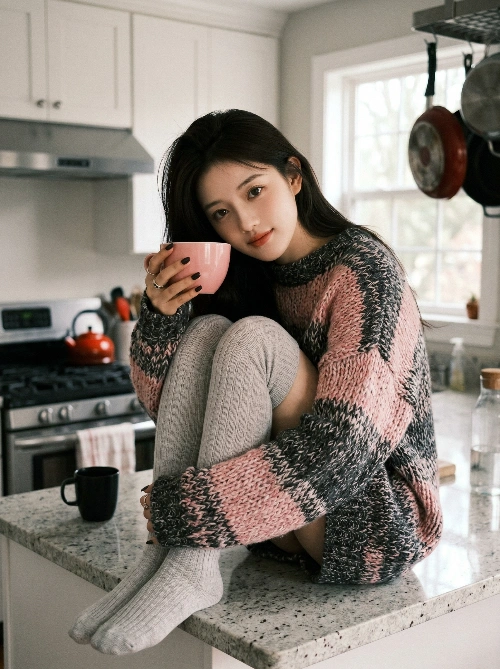
Vintage Intimate Portrait
Using the uploaded real subject as the visual baseline, create an ultra-high-detail, photorealistic portrait with a soft, atmospheric mood. Aim for a warm vintage film aesthetic, shallow depth of field, and cinematic color grading in 4K resolution, evoking a relaxed, introspective, and slightly melancholic intimate atmosphere. Character Setup Baseline: Strictly base the subject on the uploaded real female, preserving her facial features, proportions, and expression. The body should appear slender with natural curves. Hair and Makeup: Long hair with a slightly tousled look. Makeup is natural and minimal, with soft, well-defined brows. Fingernails are painted in a dark color, and a small silver ring is worn on the left hand. Expression: Looking directly at the camera with a gentle, subtle smile. Styling and Pose Outfit: An oversized, thick chunky knit sweater with rich texture, blending pink, dark gray, and white yarns, worn as a short dress. Paired with thick light gray ribbed over-the-knee knitted socks. Pose: Sitting on a lightly patterned gray granite kitchen countertop. Knees are drawn tightly to the chest, with the right arm wrapped around the legs. The left hand holds a simple pink coffee cup near the shoulder. Scene and Lighting Environment: A cozy kitchen in soft daytime lighting. The background is blurred but recognizable, including white cabinets with round silver handles, a stainless steel stove with a range hood and oven, a large multi-pane window, and hanging cookware in the upper left. On the countertop behind her are a simple black cup, a red electric kettle, and a transparent glass bottle. Lighting: Soft, diffused natural daylight enters from behind and from the left-side window, casting gentle highlights on her face and the knit texture of the clothing. Color and Atmosphere Color Palette: Emphasize charcoal gray, pink, warm cream tones, black, and soft red, creating a warm, slightly faded vintage film aesthetic. Mood: Relaxed, introspective, with a subtle melancholic tone. Photography and Image Quality Composition: 3:4 vertical format, medium-to-wide full-body shot, eye-level perspective. Simulate a modern smartphone camera with shallow depth of field. Focus and Quality: Sharp focus on the subject’s face and eyes, with cinematic color grading and realistic detail rendering at 4K resolution.
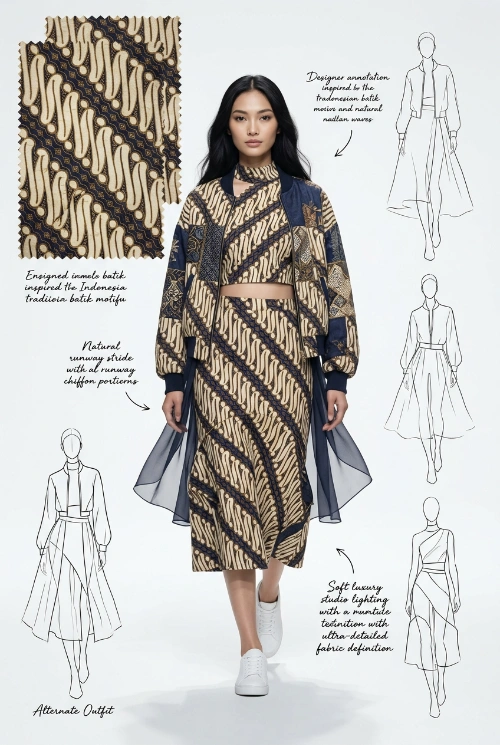
Ultra-Premium Batik Couture Board
{ "prompt": "Ultra-premium luxury fashion designer concept board on a pristine white studio canvas, inspired by high-end couture fashion houses. CENTER MODEL A tall slender Javanese female fashion model with elegant runway proportions walking gracefully in a natural runway stride pose. FASHION THEME Modern couture fashion inspired by traditional Indonesian Batik Parang motif. The textile pattern features flowing diagonal blade-like waves and repeating curved lines with rich tones of deep indigo, warm ivory, and antique gold. OUTFIT DESIGN • Cropped asymmetric mock-neck top decorated with the batik pattern • Relaxed oversized bomber jacket with patchwork batik panels and soft semi-transparent chiffon layers flowing from the waist • Sculptural segmented midi skirt with modern architectural silhouette • Minimalist clean white sneakers MODEL APPEARANCE Long jet-black hair with soft natural waves, delicate oval face, natural makeup, calm confident expression. DESIGN BOARD ELEMENTS • Top-left: enlarged fabric swatch showing the batik texture • Right side: three minimalist fashion sketches • Lower-left: alternate outfit sketch • Elegant handwritten designer annotations across the board LIGHTING Soft luxury studio lighting with subtle shadows and detailed textile highlights. STYLE High-end couture design board, editorial fashion presentation, masterpiece quality, ultra-detailed fabric texture." }
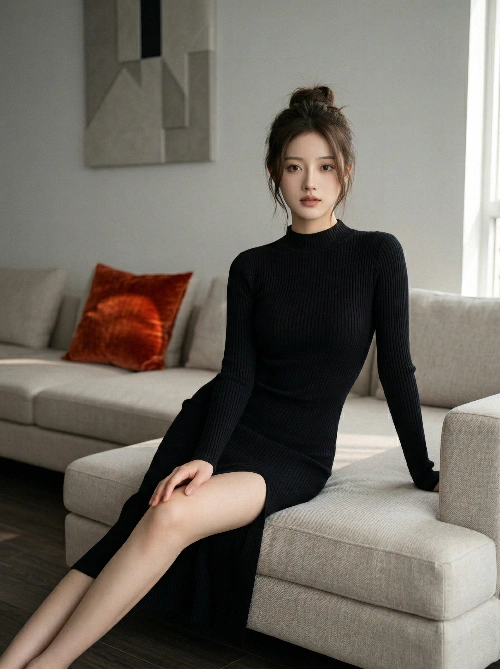
Elegant Home Fashion Portrait
Core Concept Using the uploaded real female subject as the visual reference, generate a magazine-quality fashion indoor portrait. The image should convey a calm, intimate, and luxurious modern atmosphere, capturing the subject’s elegant and relaxed state in a home environment, achieving the realism and artistic expression of high-end editorial photography. Subject Reference and Styling Reference: Strictly follow the facial features, body proportions, and personal aura of the uploaded subject. Emphasize refined facial structure and a slender, elegant figure. Expression: Calm with a subtle sense of focus; soft, confident, and slightly penetrating gaze directed at the camera, creating a delicate and intimate allure. Hairstyle: Long dark brown hair, loosely tied at the back into a slightly messy bun with natural volume, with a few loose strands falling along the sides of the face. Makeup and Accessories: Clean, natural makeup—almost no-makeup look. Accessories should be minimal, such as small earrings or none at all. Outfit and Pose Clothing: A black ribbed knit long-sleeve dress with a high neckline. The dress is form-fitting, contouring the body shape, with a high side slit that subtly reveals the leg depending on the pose. Pose: Seated gracefully on a light beige sectional sofa. The body is slightly angled toward the camera; one leg is bent and placed on the sofa, while the other extends forward, naturally revealing the leg through the slit. One hand rests casually on the bent knee, while the other is relaxed on the sofa cushion. The pose is composed, elegant, with a slight forward-leaning engagement. Environment and Lighting Environment: A modern interior living room. The background wall is gray-white, featuring a warm-toned abstract geometric artwork. The floor is dark wood. The space is clean and minimal, with a single accent color provided by an orange-red cushion on the sofa. Lighting: Soft natural daylight, simulating diffused light entering from a side window. Lighting is even with soft shadows, low to medium contrast. Color temperature is neutral-warm, creating a cozy and inviting atmosphere. Composition and Image Quality Composition: Medium-wide shot capturing the full seated pose on the sofa. The camera is positioned slightly above eye level with a subtle angle. Use the rule of thirds, placing the subject slightly to the right, balanced by the wall art. A slight foreground blur on the right edge (such as a wall or frame edge) can be included. Technical: Simulate a 35mm to 50mm lens perspective, with shallow to medium depth of field—sharp focus on the subject, slightly blurred background. Style and Quality: High-end fashion magazine photography style. Clean, ultra-high resolution image with neutral color grading, slightly warm highlights, and slightly reduced saturation for a refined, understated aesthetic. Avoid harsh shadows, overexposure, cluttered backgrounds, anatomical errors, low resolution, watermarks, or text. Mood and Atmosphere Overall Mood: Minimalist, fashionable, mature, and refined. Atmosphere: Calm, intimate, modern luxury—capturing an effortless sense of sophistication and the quiet charm of everyday living.
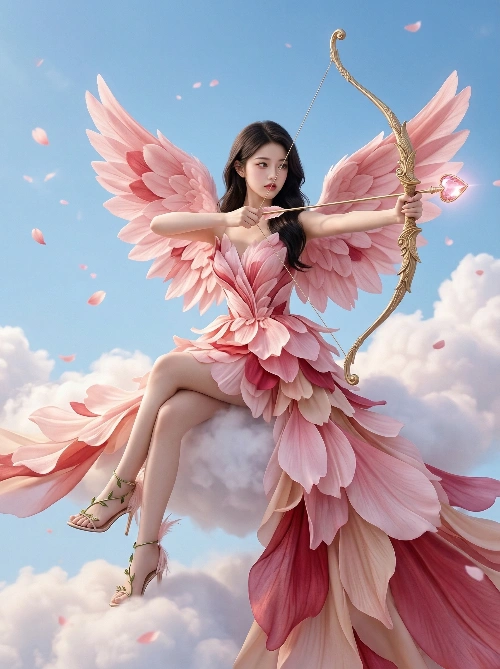
Ethereal Cupid Fashion Port
Using the real female subject you uploaded as the visual baseline, generate an ultra-high-precision photorealistic portrait that blends fantasy storytelling with high-fashion aesthetics. The character is reimagined as a modern Cupid, poised elegantly among the clouds, creating a visual spectacle that is ethereal, dramatic, and fashion-forward. Character Baseline and Styling Baseline: Strictly follow the facial contours, proportions, skin texture, and overall aura from the reference image. Age and ethnic characteristics must remain consistent with the original. Expression: Enhanced soft-glow makeup that remains faithful to her natural features. Expression is focused, with sharp, intent eyes suggesting precise aim. Hairstyle: Fully replicate the hair color, length, texture, and natural form from the reference image. Wardrobe, Accessories, and Pose Main Dress: A fantasy-inspired haute couture gown. Design: Structured, intricately detailed strapless bodice with a long, flowing train. Material: Constructed from layered, realistic soft pink cherry blossom petals, creating a light, semi-transparent, airy effect with clearly defined petal textures. Color: Dominated by soft sakura pink, blended with crimson and nude pink in a natural gradient. Wings: Large petal wings composed of countless cherry blossom petals arranged in a dimensional collage, transitioning naturally from pale pink to near-white. Each petal must exhibit realistic texture and light transmission. Footwear: Ultra-thin high-heeled decorative sandals, wrapped with vines and petals, accented with white feathers. Weapon Accessory: Holding an ornate gilded longbow with intricate engravings. The arrow tip is set with a heart-shaped gemstone, emitting a soft pink-gold glow. Pose and Composition Pose: The subject sits gracefully atop a fluffy cloud. The right leg is bent for support, while the left leg extends forward. The upper body leans slightly forward as she draws the bow, combining elegance with controlled strength. Composition: Medium shot with the subject centered in the frame, wings fully extended. Eye-level perspective. Sharp focus on the face and bow, with the surrounding clouds slightly softened. Environment and Lighting Environment: Suspended in a bright sky, seated on voluminous clouds. The background features a vivid blue sky with scattered floating cherry blossom petals, creating a dreamy, weightless atmosphere. Lighting: Soft directional diffused lighting. The key light from above at an angle defines the silhouette, complemented by fill light to maintain clean shadows. Light creates crystalline highlights on gemstones, metal surfaces, and petals, resulting in an airy yet dimensional tonal quality. Style and Texture Visual: Photography-grade hyperrealism with cinematic impact and extreme detail fidelity. Detail: Supports 8K-level rendering. All materials—skin, petals, metal—must achieve high physical realism. Fusion: Seamlessly combines high-fashion aesthetics, mythological drama, and romantic fantasy imagination. Quality: Achieves the clarity, color depth, and visual impact of top-tier commercial fashion campaigns.
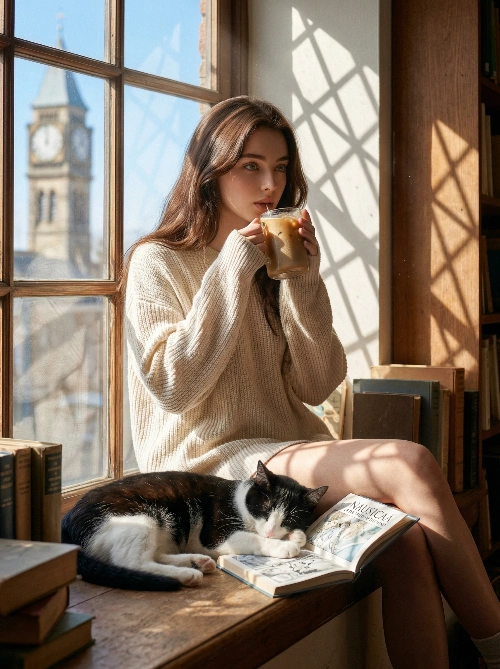
Sunlit Bookstore Cat Moment
Using the uploaded real female subject as the visual baseline, generate an immersive, story-rich environmental portrait with a warm and comforting atmosphere. The scene is set by a sunlit window inside a secondhand bookstore, capturing a quiet afternoon moment shared between a young woman and a cat. The overall style should be cinematic, highly detailed, and photorealistic, using light, texture, and everyday elements to create a cozy, healing, and narrative-driven visual experience. Character Baseline and Styling Baseline: Strictly follow the facial features, structure, and youthful aura of the woman in the uploaded image. She should have long chestnut-brown hair. Expression: Calm and relaxed, immersed in the quiet rhythm of reading and rest. Hair: Long chestnut-brown hair, naturally falling. Clothing: A cream-colored oversized sweater, large enough to cover her hands, enhancing a sense of softness, comfort, and enclosure. Scene, Details, and Interaction Primary Setting: A sunlit secondhand bookstore. The subject is seated on a slightly dusty windowsill. Core Props and Interaction: Books: Vintage manga scattered beneath and around her. An open copy of “Nausicaä of the Valley of the Wind” lies beside her. Cat: A black-and-white tuxedo cat curled up asleep by her legs, with one paw resting gently on the open manga page. Subtle details such as the faint twitching of the cat’s whiskers during sleep should be captured. Action: The subject is sipping iced coffee from a ceramic cup, with visible vapor or condensation gently rising from the cup. Environmental Details: Outside the window is a soft baby-blue sky, with a distant clock tower suggesting midday through lighting cues. The aged yellowed pages of old books, the knit texture of the sweater, and the fine details of the cat’s fur must all be rendered with high clarity. Lighting, Composition, and Image Quality Lighting: Bright natural sunlight streams through the old bookstore window, casting patterned, lattice-like shadows across the subject’s face. Light is the dominant visual element, creating a warm, airy atmosphere that emphasizes a “comfortable afternoon” mood. Composition: Medium-close framing focused on the subject, the cat, and the windowsill area. The perspective should resemble an environmental portrait with strong narrative presence. Color and Tone: Warm overall color palette, soft lighting, delicate shadows, and naturally balanced saturation, highlighting a cozy and nostalgic feeling. Image Quality: 8K ultra-high resolution with extreme detail. Must clearly render volumetric light (Tyndall effect), sweater fibers, aged paper textures, cat fur, glass surface imperfections, and fine dust particles suspended in the air. Mood and Atmosphere Core Mood: Healing, tranquil, lazy, nostalgic, and rich with literary and everyday life ambiance. The image should convey a sense of time slowing down, with a perfect moment of solitude shared harmoniously between a person, her pet, and her books.
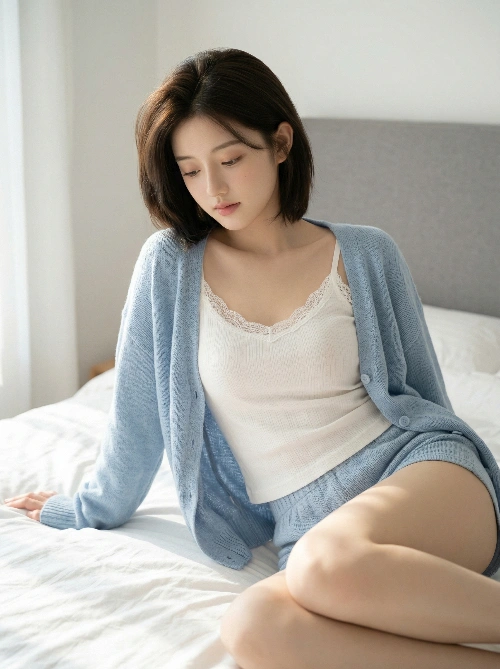
Gentle Morning Bedroom Port
Core Concept Using the uploaded real female subject as the visual reference, generate a soft, healing-style intimate portrait set in a bedroom during gentle morning light. The image emphasizes naturally relaxed posture and understated sensuality, achieving a balance that is modest yet visually engaging, soft yet full of tension. The goal is to create a poetic, emotionally resonant lifestyle narrative. Subject Reference and Styling Reference: Strictly follow the facial features, structure, and youthful aura of the uploaded subject. Preserve her short hairstyle. Expression: Gentle expression with a slightly downward gaze, conveying a blend of laziness and calm introspection. Body language is naturally relaxed with a subtle sense of reserved shyness. Hairstyle: Dark brown short hair, smooth with natural volume, slightly curled at the ends. Clothing: Inner layer: A simple white cotton camisole with slightly wider straps, a small round or subtle U-shaped neckline, possibly with delicate lace trim. The fit follows the natural body shape, subtly outlining curves. Outer layer: A loose, light blue knit cardigan with a relaxed silhouette. The front remains slightly open, faintly revealing the inner layer. Bottom: Matching high-waisted cotton shorts in a similar tone, with length covering mid-thigh. Accessories: Minimal, such as small metal stud earrings (if present in the original reference). Scene, Details, and Interaction Main setting: A private bedroom with a light gray upholstered headboard and soft, voluminous white bedding with natural wrinkles. Pose: A semi-reclining position on the bed, supported naturally by the arms. Legs are gently extended and slightly bent, forming soft body lines. Lighting: Soft morning natural light enters from the left, creating a gentle gradient of light and shadow, highlighting the knit texture, cotton fabric, and bedding folds. Details: Clearly render the layered bedding, knit textures, and camisole strap and neckline details. Use a balance of modest skin exposure and well-fitted clothing to create understated sensuality. Lighting, Composition, and Image Quality Lighting: Soft natural key light with warm, gentle tonal transitions and delicate shadows. Composition: Medium close-up portrait focusing on the upper body and face, with a softly blurred background. Color palette: Low-saturation, soft tones (light blue, off-white, gray) to enhance a calming, healing atmosphere. Image quality: 8K ultra-high resolution with extreme detail in knit fibers, cotton wrinkles, bedding textures, and natural skin luminosity. Style and Keywords Style: Editorial intimate photography × Japanese healing aesthetic × emotional portrait Keywords: soft, subtle, relaxed, natural curves, intimate space, soft lighting, cotton texture, low saturation
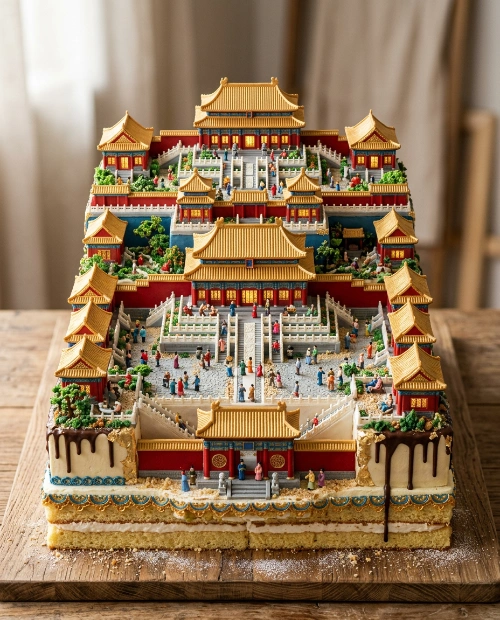
Edible Forbidden City Cake
MONUMENT: The Forbidden City Photorealistic hero product photography shot on Sony A7III with 85mm f/1.4 lens at f/2.8, soft natural daylight from upper left creating gentle realistic shadows and visible surface textures: A giant famous [MONUMENT] masterfully recreated as a delicious multi-tiered edible cake. Visible fluffy sponge cake layers, thick silky buttercream frosting, smooth fondant details, subtle edible gold leaf accents, realistic cake crumbs and ganache drips. The cake tiers ingeniously transformed into a luxurious miniature vibrant living city with tiny glowing windows, staircases, gardens and balconies built into the frosting and sponge. Miniature visitors in tiny colorful clothes walk the buttercream pathways, relax on cake terraces, sip tiny drinks and take photos. Intricate realistic cake textures mixed with whimsical architecture, physically plausible yet surreal. Shot for a luxury architecture magazine cover, ultra-detailed 8K, perfectly centered square composition, no text, no artifacts.