

Kawaii Sailor Moon Bedroom 3D
Prompt
isometric interior design of a kawaii Sailor Moon bedroom, pastel colors, cute and dreamy, Sailor Moon sitting at a vanity table brushing her hair inside the room, themed furniture and decorations inspired by Sailor Moon’s universe, 3D render, detailed miniatures, soft gradients, detailed miniature models, cute cartoon style
Aspect Ratio
Source
@CharaspowerAIModel
Nano Banana ProYou might also like
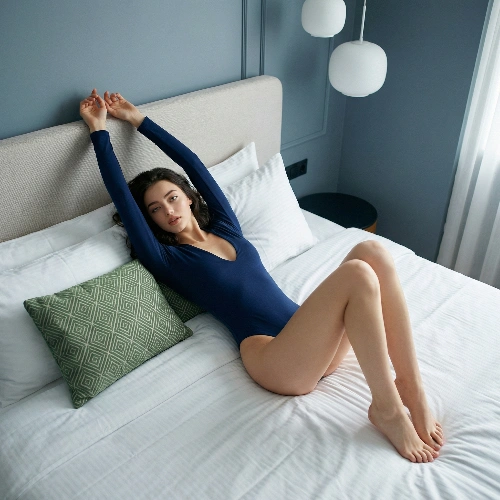
Ultra-Real Fashion Overhead
{ "prompt": "Ultra-realistic overhead fashion editorial photograph of attached celebrity in a modern bedroom setting, exactly replicating the reference pose and composition: lying on her back on a white quilted bed, arms extended straight upward holding the headboard, legs bent at the knees with feet flat on the mattress and soles clearly visible facing upward toward the camera, knees comfortably apart, head tilted back looking up at the camera with relaxed expression, wearing a deep navy blue long-sleeve stretch bodysuit with high leg cut and deep front neckline, barefoot, dark hair with loose waves spread on the pillow, natural daytime makeup with soft lips and defined eyes, contemporary luxury hotel room with blue-gray walls, green geometric-patterned cushion nearby, white rounded pendant lights above, soft natural light from the side, clean minimalist interior, captured directly from overhead with wide-angle lens style, shallow depth of field, highly detailed fabric texture and realistic lighting, photorealistic, 8K resolution, strictly identical body position, foot placement showing soles, arm position, camera angle, room elements, lighting and overall editorial mood as the reference image" }
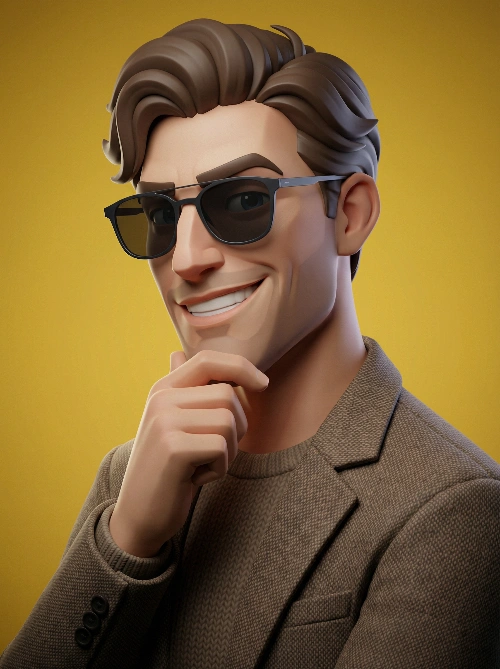
Cinematic 3D Stylized Portrait
High-end stylized 3D character portrait with a cinematic game-inspired aesthetic, transforming the reference person into a refined 3D character with clean angular facial anatomy, simplified yet realistic proportions, defined jawline, expressive eyes and subtle stylization, wearing dark sunglasses with a minimal modern design, shown from the bust up in a three-quarter diagonal angle while striking a thoughtful pose with a relaxed yet intentional posture, one hand subtly raised near the chin as if thinking, combined with a wide exaggerated confident smile that contrasts playfully with the contemplative gesture, set against a solid yellow background, rendered with a professional virtual 3D camera using a medium portrait focal length, dramatic yet controlled studio lighting with a soft key light and subtle rim light creating depth and contrast, strong centered composition with cinematic balance, smooth sculpted surfaces, clean material definition, minimal texture noise and a polished modern stylized 3D render
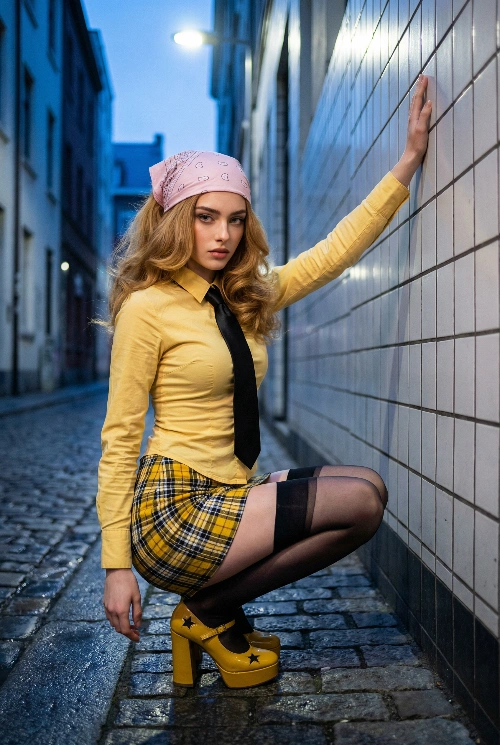
Cinematic Squat Fashion Portrait
{ "subject": { "identity": { "biometric_reference": "female from reference photo", "dentition": "Visible maxillary central incisors with natural alignment and translucent enamel edges, displayed in a slight mouth-open neutral expression.", "ocular_details": "Highly detailed iris patterns featuring radial furrows and Crypts of Fuchs. Iris pigmentation: Light cerulean blue with a hint of golden-green peripupillary ring. Detailed scleral vasculature and wet-look corneal reflections.", "hair": "Voluminous honey blonde hair (Hex: #E2BC74) with visible follicular texture, cascading naturally from under the bandana. Strands exhibit high specular highlights and anisotropic scattering." }, "body": { "morphology": "Mesomorphic-endomorphic somatotype, petite stature, approximately 151cm height. Precise waist-to-hip ratio (WHR) of 0.7. Body positioned in a full squatting stance in side profile.", "skin_physics": "Fair complexion (Hex: #F7E0D2) with subsurface scattering (SSS) effects. High-fidelity skin texture showing pores and natural epidermal micro-details. No beautify smoothing." }, "wardrobe": { "headwear": "Light pink bandana (Hex: #FF91AF) with subtle paisley micro-patterns, tied over the crown of the head.", "top": "Long-sleeved button-down shirt in vibrant yellow (Hex: #FDEE00). Tight-fit tailoring with realistic tension folds across the torso. Paired with a slim black silk necktie.", "bottom": "High-waisted pleated mini skirt featuring a yellow, black, and white plaid weave. Extremely short length with sharp pleats showing fabric tension in the crouching pose.", "hosiery": "Sheer black thigh-high stockings (20 denier) with a thick, opaque black elastic band at the mid-thigh. Clear skin-to-fabric transition above the knee.", "footwear": "Yellow platform heels (Hex: #FDEE00) with wide ankle straps and star-shaped decorative cutouts. Glossy synthetic leather finish with hard-surface reflections." }, "pose_action": "The subject is in a full squatting position viewed from a side-profile. The subject's right arm is extended vertically upwards with the palm pressed flat against the white tiled wall. The left arm hangs naturally by the side. The head is turned toward the camera with a direct, intense gaze. The subject is balanced on the balls of her feet.", "scene": { "environment": "Narrow urban alleyway at night. The wall on the right is composed of white square ceramic tiles with dark grout lines. The ground is grey cobblestone/pavement with a matte texture.", "depth": "Deep perspective showing the continuation of the alleyway and modern architectural structures in the background under a twilight sky.", "atmosphere": "Cinematic nighttime clarity with high contrast between the lit subject and the dark, shadowed urban environment." }, "lighting": { "primary": "Cool-toned overhead street lighting combined with soft ambient blue twilight. Strong directional light creates defined shadows on the tiled wall.", "secondary": "Soft fill lighting to preserve detail in the black tie and plaid skirt textures.", "physics": "Accurate Fresnel reflections on the white tiles and specular highlights on the glossy platform shoes." }, "camera": { "format": "9:16 vertical aspect ratio", "lens": "35mm prime lens for cinematic perspective.", "angle": "Low-angle shot, positioned at knee level to emphasize the posture and the height of the wall.", "settings": "f/2.8 aperture, ISO 100, 8k resolution, raw capture style." }, "negative_constraints": [ "no logos", "no text", "no trademarks", "no beautify smoothing", "no extra limbs", "no watermark", "no jewelry on neck", "reflection integrity rules applied to tiled surfaces" ] } }
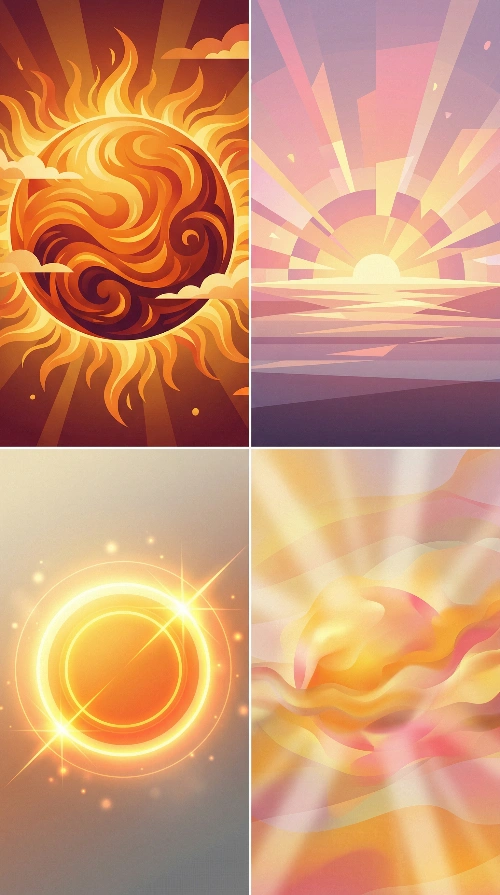
16K Abstract Sun Vibe
{ "prompt": "Create stunning 16K wallpapers showcasing the sun in various attractive styles, highlighting vibrant colors and dynamic lighting effects", "style": "abstract art", "resolution": "16K", "colors": ["orange", "yellow", "red", "pink", "golden"], "elements": ["sun rays", "solar flares", "clouds", "sunset", "starburst"] }
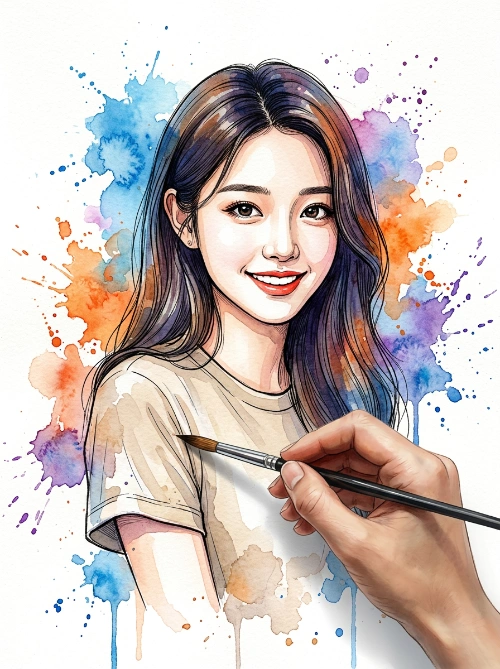
Dynamic Watercolor Portrait
Create a vibrant and artistic watercolor painting of a smiling person, using the uploaded photo as the facial reference without altering their facial features or appearance. The person is wearing a neutral-tone T-shirt. The background is clean white, filled with dynamic and expressive watercolor paint splashes in blue, orange, and purple spreading organically across the scene. In the foreground, a realistic human hand holds a paintbrush as if actively painting the sleeve of the man’s hoodie, creating the illusion that the portrait is being painted at that exact moment. The visual style combines detailed ink line art with loose watercolor textures, including paint drips, fine splatters, soft pigment diffusion, watercolor blooming effects, and natural paper texture. The image features strong contrast, an expressive and dynamic artistic look, a clear hand-painted aesthetic, centered composition, soft lighting, high level of detail, and a modern illustration style.
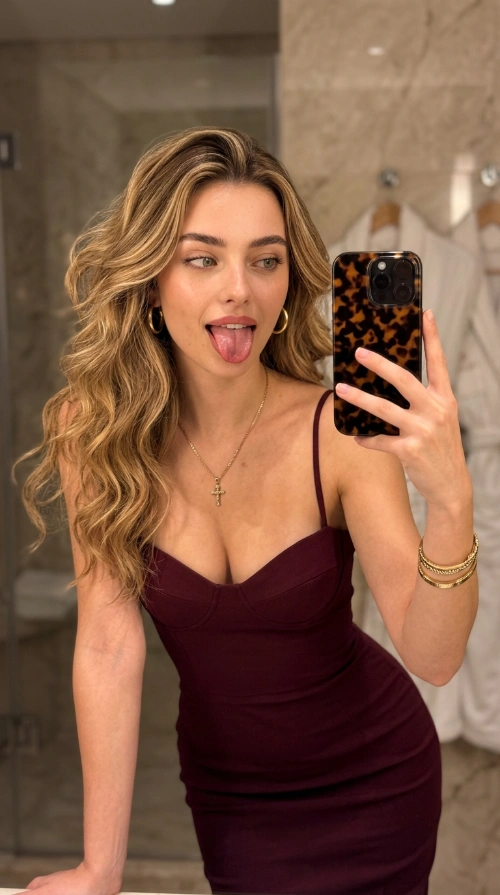
Glam Mirror Selfie
{ "image_type": "Photograph, Mirror Selfie", "shot": "Medium Shot", "shot_details": "Handheld mirror reflection, slightly tilted angle", "style": "Modern Lifestyle, Social Media Aesthetic", "quality": "High-fidelity, mobile photography style", "color_grade": "Warm indoor tones, saturated burgundy", "meta": { "aspect_ratio": "9:16", "resolution": "4k" }, "camera": { "device": "iPhone 17 Pro", "lens": "24mm f/1.8 Wide Angle", "aperture": "f/1.8", "distance": "Arm's length", "angle": "Eye level, slightly tilted", "framing": "Upper body and torso", "pov": "Subject looking into a mirror", "focus": "Sharp on face and eyes", "lens_effect": "Natural mobile sensor depth of field" }, "lighting": { "description": "Warm indoor vanity lighting from a bathroom mirror", "type": "Soft diffused light", "source": "Overhead and side vanity bulbs", "primary": "Warm frontal glow", "secondary": "Ambient indoor light", "highlights": "Soft specular highlights on the shoulders and hair", "shadows": "Soft shadows under the jaw and dress folds" }, "scene": { "location": "Upscale Bathroom or Dressing Room", "environment": "Interior, marble-textured walls, white bathrobes hanging in the background", "time": "Evening", "atmosphere": "Casual, playful, intimate" }, "subject": { "gender": "Female", "age": "Early 20s", "ethnicity": "Caucasian", "appearance": "Glamorous, fit, light tan", "body": { "type": "Slim, athletic", "skin": "Smooth, radiant" }, "expression": { "eyes": "Almond-shaped, focused on the phone screen", "gaze": "Indirect via mirror", "face_vibe": "Playful, cheeky, tongue sticking out" }, "hair": { "color": "Honey blonde with darker roots and highlights", "style": "Long, voluminous, loose waves" }, "pose": { "description": "Leaning slightly forward, one arm holding the phone, other arm supporting the lean" } }, "wardrobe": "Elegant maroon bodycon cocktail dress", "outfit_details": { "top": { "type": "Sweetheart neckline with spaghetti straps", "color": "Deep Burgundy / Maroon" }, "bottom": { "type": "Bodycon fit", "color": "Maroon" } }, "accessories": { "jewelry": [ "Gold hoop earrings", "Gold chain with a small cross pendant", "Stacked gold bracelets", "Tortoise-shell pattern phone case" ] }, "details": { "skin_effects": [ "Subtle pores", "Dewy finish" ], "realism": "High, organic skin texture, natural highlights on the tongue" }, "negatives": "Low resolution, blurry, distorted face, messy background, oversaturated skin, plastic texture" }
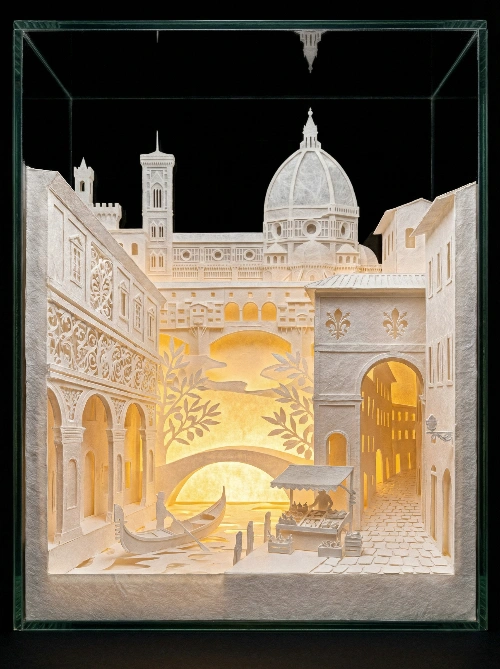
Florence Paper Cut Diorama
CITY_NAME: Florence -- A hyper-detailed 3D layered paper cutting art diorama of [CITY_NAME]. The cityscape features iconic landmarks and recognizable architecture of the city looming in the background, rendered in pure white paper. Buildings and layers are adorned with intricate culturally relevant filigree pattern cutouts and traditional motifs suitable for the location. Characteristic local elements are in the foreground. The entire scene is illuminated by a **radiant, intense warm amber light source from within** the layers. The pure white paper acts as a diffuser, becoming **translucent and glowing brightly**, revealing all intricate details. **Subsurface scattering effect**, **golden hour atmosphere** against a pitch-black background. Miniature world, exquisite texture, 8k resolution. --ar 3:4
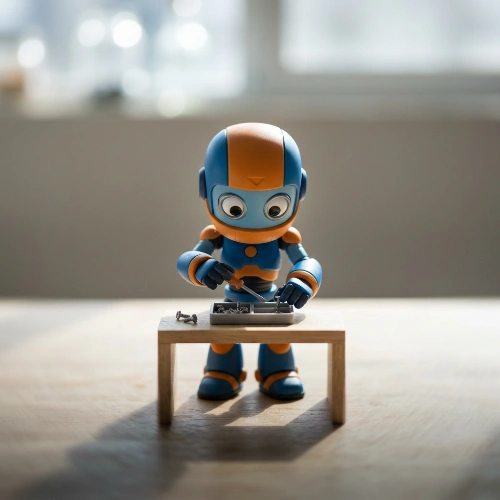
Candid High-Angle Slice
A high-angle tilt-shift cinematic image of the character captured naturally doing an everyday activity. The moment must feel candid and unstaged, like a quiet slice of life observed from above. Likeness Preservation Maintain exact proportions, eye shape, spacing, stylization, and material identity from the reference. Do not humanize. Do not reinterpret anatomy. Do not exaggerate realism. Camera & Perspective High-angle, slightly offset bird’s-eye view. Subtle isometric feeling. Equivalent to a 35mm lens adapted for tilt-shift photography. The character fills approximately 60–65% of the frame vertically. Breathing room above the head. Visible ground plane beneath. No extreme distortion. Focus Discipline (CRITICAL) Extremely shallow depth of field. Only the face and upper torso must be razor sharp. Hands interacting with an object may also be sharp. Lower legs and shoes must be slightly softened. Ground surface must progressively soften toward the bottom edge. Top and bottom edges must show strong optical tilt-shift blur. The focus band must be narrow and centered horizontally. No full-body sharpness. Pose Behavior The character must be naturally engaged in a daily action. Movement must feel subtle and believable. No staged hero poses. No exaggerated symmetry. Silhouette must remain clean and readable. Props or minimal furniture may be included only if necessary to support the action. Keep them simple and secondary. Lighting Control Bright natural daylight with firm directional key light. Light must carve the form clearly. Defined shadow under feet or object. Crisp shadow edge on ground. Subtle rim light separating character from background. No flat studio wash. No overly diffused light. Background Discipline Abstract minimal environment. Soft tonal gradient. Slight atmospheric depth. No detailed storytelling clutter. No heavy furniture unless essential to action. Background must support the character, not compete. Background Directional Structure (CRITICAL) Upper third of frame must contain soft luminous bokeh shapes or circular light blobs, gently out of focus, slightly brighter than mid-ground. Mid-ground remains neutral and unobtrusive. Lower ground plane must have subtle diagonal orientation, with a light-to-dark gradient guiding the eye upward toward the character’s head. Ground texture may contain faint linear perspective cues, but remain soft and minimal. The tonal gradient must travel from slightly darker bottom edge toward brighter mid-upper region behind the head. No flat monotone background. Color & Material Character slightly higher saturation than background. Background slightly muted. Clean premium collectible finish. Subtle surface sheen. No gritty realism. No artificial wear. Emotion Calm presence. Quiet confidence. A simple daily act elevated through composition and light. Not dramatic. Not heroic. Intimate but cinematic. Negative Lock No full-body sharpness No flat background No cluttered environment No stiff symmetrical pose No soft diffused lighting No dramatic battle energy No exaggerated realism