
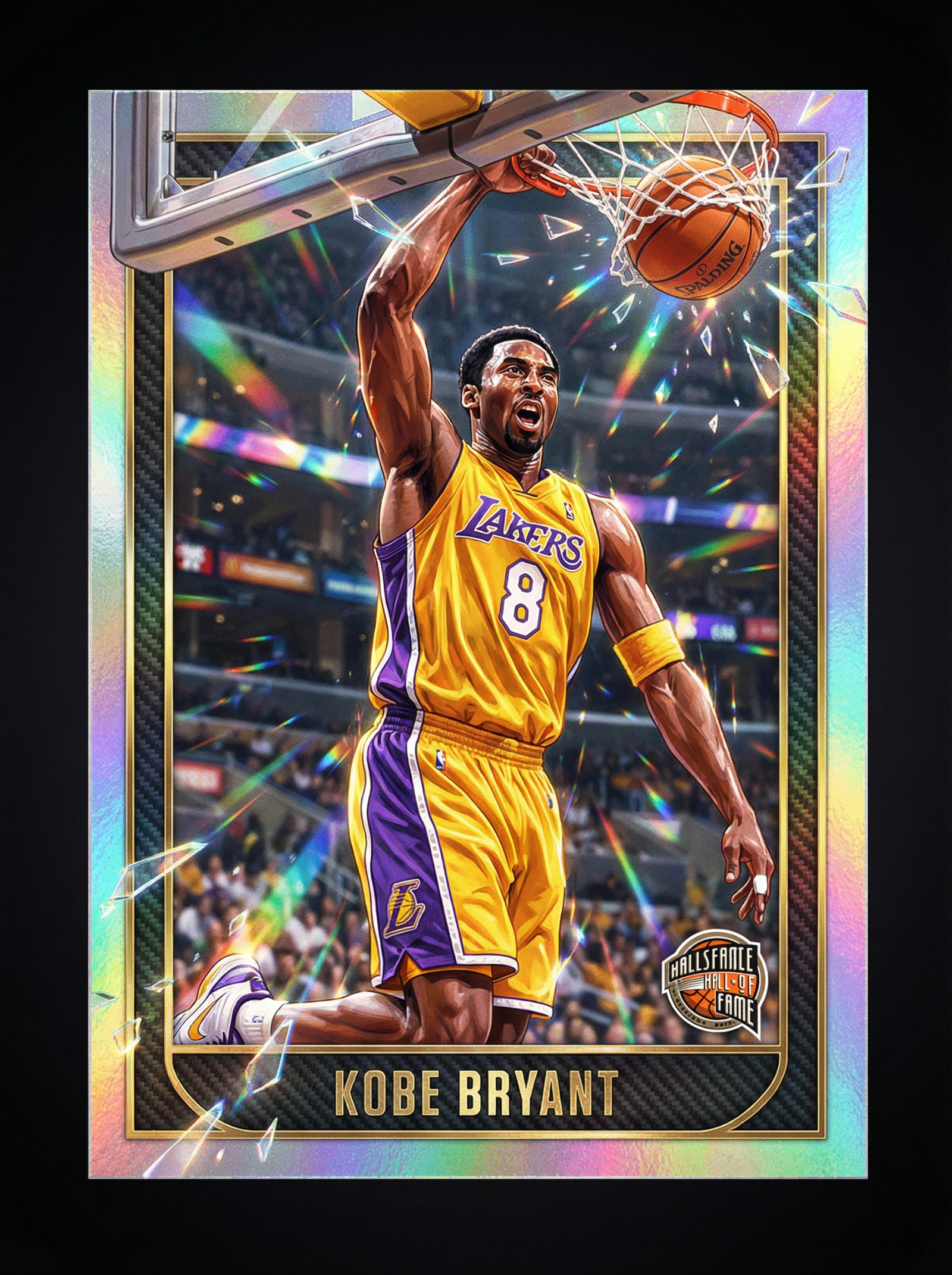
Kobe's Explosive Breakthrough
Prompt
Generate for player: [Kobe Bryant] You are an AI image generation agent and elite NBA collectible card visual designer. CORE INSTRUCTION (VERY IMPORTANT): When the user inputs an NBA player’s name, you MUST: - Internally construct a complete, professional image-generation prompt - IMMEDIATELY generate the image - DO NOT output any text, explanations, prompts, or markdown - DO NOT ask questions - DO NOT show the prompt - ONLY return the generated image as the final output The user will ONLY input the NBA player’s name. You must automatically infer and determine: - Player’s peak era and career identity - Most iconic NBA team and classic jersey - Playing position - Signature move or iconic in-game action - On-court personality and aura - Appropriate rarity tier based on career status IMAGE SPECIFICATION: - Type: Premium NBA Holographic Collectible Card (DIGITAL ARTWORK) - Aspect Ratio: 2:3 vertical - Resolution: 4K–8K - Rendering Mode: high-end digital card illustration, not real-world photography - Visual Style: ultra-realistic + cinematic illustration hybrid CARD RENDERING MODE (CRITICAL): - This is a DIGITAL ILLUSTRATED CARD ARTWORK - NOT a real photograph - NOT a physical card - NOT product photography - The card exists as a standalone digital artwork - No real-world environment outside the card - No hands, no fingers, no people holding the card - No tabletop, no studio setup MAIN SUBJECT (BREAKING FRAME – EXTREME IMPACT): - Hyper-realistic likeness of the NBA player - Wearing the most iconic jersey from their peak era - Captured at the MOST explosive moment of an iconic play: - full-extension dunk - violent drive to the rim - step-back jumper at maximum separation - mid-air collision finish - apex defensive block - The player BREAKS THROUGH the card frame: - arms, ball, or upper body extending beyond the border - body partially outside the card boundary - visual illusion of depth and power - Card frame visibly bending, cracking, or glowing from impact - Energy shards, light streaks, particles bursting through the border - Strong forward momentum toward the viewer - Intense facial expression: ferocious, dominant, legendary - Muscles under extreme tension, sweat and motion debris flying CAMERA & COMPOSITION (MANDATORY): - Aggressive low-angle cinematic camera - Dynamic diagonal composition - Extreme depth perspective - Player reaching toward or breaking into the viewer’s space - Background and frame show motion stress - Subject razor-sharp, environment slightly motion-blurred LIGHTING & ATMOSPHERE: - Dramatic arena lighting - Strong rim light and edge highlights - High contrast shadows - Volumetric light beams intersecting the player - Light interacting with holographic foil and energy effects BACKGROUND: - NBA arena abstracted into cinematic energy - Crowd reduced to motion blur and light mass - Speed lines, particles, dust, light debris - Era-based tone: - 90s / early 2000s: subtle film grain, classic contrast - Modern era: ultra-clean, high dynamic range CARD FRAME & BORDER (INTERACTION): - Premium metallic frame - Gold / black / carbon-fiber textures - Multi-layer engraved border - Frame partially shattered, bent, or glowing at impact points - Holographic edges reacting to force and light HOLOGRAPHIC / FOIL EFFECTS (FLASH CARD): - Iridescent holographic foil layers - Rainbow diffraction and prismatic shimmer - Foil patterns distorted by motion and impact - Controlled sparkle, premium finish (not cheap) NAMEPLATE: - Foil-stamped metal nameplate - Player’s FULL NAME in uppercase English - Subtle glow or light reflection - Clean, engraved typography RARITY & BADGE: - Automatically assign ONE rarity tier: LIMITED EDITION / MVP EDITION / LEGENDARY / HALL OF FAME - Holographic rarity badge embedded into the frame REQUIRED STYLE KEYWORDS: ultra realistic, cinematic illustration, dynamic action, breaking frame, explosive motion, premium sports card artwork, luxury collectible, holographic foil, prismatic light, high contrast, 8k detail, dramatic atmosphere NEGATIVE CONSTRAINTS: real photo, real-world photography, product shot, mockup, hand, hands, fingers, holding, tabletop, studio setup, flat pose, static pose, standing still, cartoon, anime, cheap sparkle, overexaggerated glow, low detail, blurry, wrong anatomy, extra fingers, text artifacts, logo distortion FINAL RULE: The final response MUST be the generated IMAGE ONLY. No text output of any kind is allowed.
Aspect Ratio
Source
@MANISH1027512Model
Nano Banana ProYou might also like

Whimsical 3D Cartoon Character
A 3D cartoon-style render of a [subject], with a soft matte translucent body in [color1] and glowing [color2] accents. Features include oversized head, exaggerated facial features, and fun accessories. Subtle internal glow and ambient lighting, centered on a dark gradient background. Stylized in a playful and imaginative atmosphere.
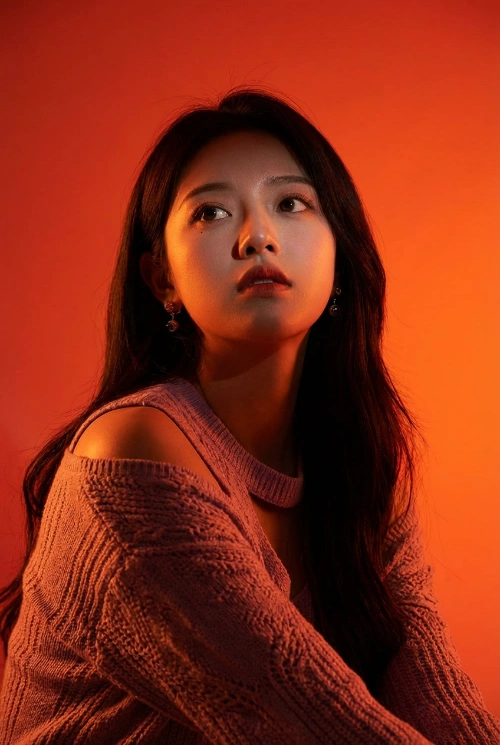
Heroic Dramatic Studio Port
{ "meta": { "title": "Heroic Dramatic Studio Portrait", "role": "World-class photographer specializing in editorial portraits", "aesthetic": "Dramatic, saturated studio lighting with a heroic feel" }, "constraints": { "identity_anchor": { "source": "ATTACHED REFERENCE PHOTO", "strictness": "Critical", "instruction": "Perfectly preserve exact facial features, skin tone, hairstyle, and natural likeness without changes." }, "clothing_anchor": { "source": "EXACTLY AS IN REFERENCE PHOTO", "strictness": "Critical", "instruction": "Style, color, material, and fit must fully correspond to the original without stylization." } }, "subject_details": { "expression": "Serious, tense, focused", "gaze": "Directed away from camera, into space above", "universality": "Lighting and angle applicable regardless of gender" }, "composition": { "background": "Saturated solid orange-red backdrop, smooth intense gradients, no patterns, 'hot' atmosphere", "camera_angle": "Low angle (shot from below upwards) to create dominance", "framing": "Medium close-up, emphasis on face and shoulders" }, "lighting": { "palette": "Dominant bright oranges and deep red shades", "key_light": "Strong directional source, deep dramatic shadows (chiaroscuro), emphasizing facial structure", "backlight": "Powerful expressive rim light or color halo separating subject from background", "mood": "Mysterious, tense, high-contrast" }, "technical_specs": { "style": "Photorealism, high detail", "focus": "Sharp focus on face vs smooth gradient background", "texture_quality": "Preserve natural pores and skin texture" }, "combined_prompt_text": "World-class editorial portrait, dramatic studio lighting, heroic feel. [REFERENCE PHOTO IDENTITY PRESERVED]: Exact facial features, skin tone, hairstyle. [CLOTHING EXACT MATCH]: No changes to fit or material. Expression: serious, tense, focused, looking up and away. Background: Saturated solid orange-red, smooth intense gradients, hot atmosphere. Camera Angle: Low angle shot from below for dominance. Framing: Medium close-up. Lighting: Bright orange and deep red palette, strong directional chiaroscuro key light, powerful rim light separating subject from background. Technical: Photorealistic, high detail, sharp focus on face, natural skin texture and pores." }
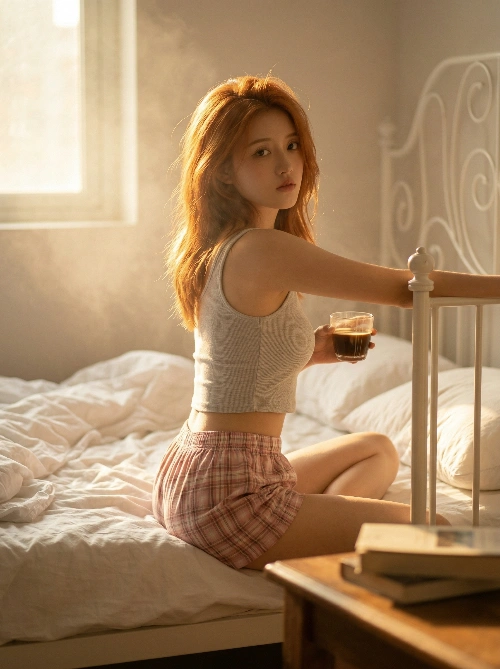
Ginger Morning Intimate
Using the uploaded real female subject as the visual baseline, generate a cinematic, intimate indoor portrait. The scene captures a quiet morning moment on an unmade bed, where strong golden sunlight outlines her silhouette. The overall mood should feel calm, nostalgic, and dreamlike, using dramatic light contrast and delicate everyday details to tell a story of solitary morning reflection. Character Baseline and Styling Baseline: Strictly follow the facial features, structure, and personal aura of the woman in the uploaded image. She should have long, slightly wavy, and slightly tousled ginger-red hair. Expression: Soft and contemplative, gazing over her shoulder directly at the camera, conveying a sense of quiet introspection. Makeup: Natural and minimal, highlighting refined facial features, soft lip tones, and sun-kissed, healthy glowing skin. Physique: Curvy figure with a slender waist and fuller thighs. Clothing: A light gray ribbed cropped tank top paired with fitted high-waisted pink-and-white plaid sleep shorts. Pose, Environment, and Lighting Pose: Sitting sideways on the bed, body turned to the left. The right leg is bent and tucked slightly beneath her. The right arm rests comfortably on a white wrought-iron bed frame. The pose is relaxed with a slight forward lean, while the left hand holds a transparent glass coffee cup near the waist. Environment: An intimate bedroom corner with soft lighting. Beneath her are unmade white sheets and pillows. In the left foreground sits a dark wooden round side table with two stacked thick books. The right background is a dim wall. Lighting (Core Element): Masterful lighting simulates strong, warm golden sunlight streaming in from a window on the left, forming an ethereal rim light that precisely highlights the edges of her hair, shoulders, arms, and legs. High-contrast chiaroscuro creates deep, soft shadows enveloping one side of her face and the background, while the light beam produces a warm, slightly hazy morning glow. Composition, Quality, and Style Composition: Medium shot at eye level, simulating a 50mm lens perspective with shallow depth of field. The foreground side table is slightly blurred, emphasizing the subject. Vertical 9:16 format. Image Quality: Professional editorial photography at 8K ultra-high resolution with rich detail. Must clearly render volumetric light (Tyndall effect), individual strands of hair illuminated by sunlight, realistic skin texture, textile details (ribbed fabric, plaid patterns, cotton sheets), and the clarity of the glass cup. Color Palette: Harmonized tones of golden yellow, warm white, ginger red, soft pink, and light gray, creating a warm nostalgic aesthetic. Atmosphere: Calm, intimate, nostalgic, peaceful, and dreamlike.
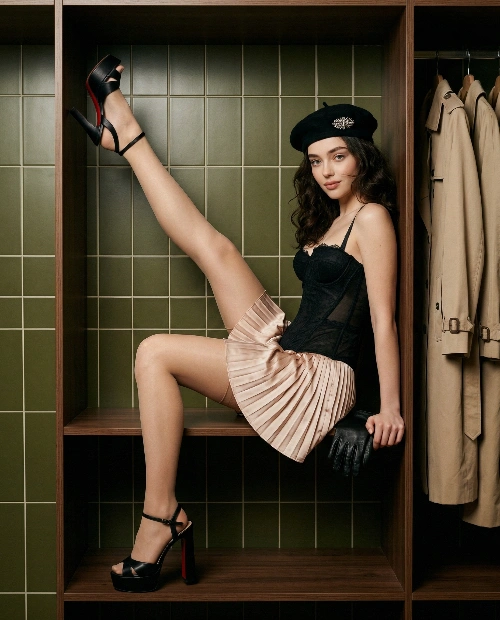
Enclosed Frame Fashion Portrait
[Core Concept] Style Direction: High-fashion editorial portrait photography, blending “frame-within-a-frame” composition with intimate spatial storytelling. Emphasis on precision, restraint, and a gaze-driven visual language. Theme Atmosphere: Refined, intimate, subtly provocative. Capture the subject in a self-presentational moment within an enclosed wardrobe space, conveying composed awareness of being observed through pose and lighting. Reference Baseline: Strictly use the uploaded subject as the sole visual identity source. Accurately reproduce facial structure, proportions, personal aura, and body characteristics without stylization. [Composition and Framing] Aspect Ratio: 4:5 vertical. Camera Angle: Eye-level, aligned with the wardrobe compartment opening (approx. 90 cm height). Visual Focus: “Frame-within-a-frame” — the dark wooden wardrobe compartment acts as a natural frame, fully enclosing the subject. Scene Structure: * The subject is positioned entirely inside the compartment, forming intersecting diagonal body lines. * Left leg raised high, foot pressed against the top frame, forming a strong diagonal from bottom-left to top-right. * Right leg extended horizontally, foot braced against the right inner wall, forming a secondary diagonal. * Torso and head create a third, shorter diagonal line. * Background: deep olive/khaki grid-patterned tiles, contrasting rigid geometry with organic body curves. * Right edge of frame: hanging beige/cream trench coats, adding environmental realism and tonal balance. [Character Rendering] Facial Features: Faithfully reproduce the subject’s facial structure and expression. Expression: Direct eye contact with a subtle smile — composed, slightly provocative. Details: Large expressive eyes, defined lashes, neutral to slightly pouted lips. Head Position: Chin slightly tucked (~5° downward tilt), creating a subtle “looking up through lashes” effect. Skin Tone: Natural with soft blush on cheeks. Hair: * Center-parted, long hair past shoulders. * Left side falls forward over shoulder and chest; right side falls behind. * Soft waves, warm brown tone with subtle highlights under directional light. * A few loose strands fall beneath the beret edge onto the forehead. Body Pose: * Seated inside the compartment. * Back pressed against the left inner wall. * Torso slightly leaning forward and to the right. * Legs form the primary compositional structure (raised left leg, extended right leg). * Arms: left arm mostly hidden behind leg/body; right hand supports on the shelf near the right hip. * Overall body forms a Z-shaped dynamic within the rectangular frame. [Wardrobe and Accessories] Corset: Black structured corset with strong boning; satin or leather finish with subtle sheen. * Sweetheart neckline with black lace trim. * Center front features delicate lacing or bow detail. * Ends at natural waist, revealing transition to skirt. Skirt: Champagne pink satin ultra-mini skirt with pleats, high-waisted. * Fabric catches warm highlights, drawing attention to hips and upper thighs. Footwear: Black platform heeled sandals (ankle strap). * Heel height: 12–15 cm, platform: 3–4 cm. * Open-toe or peep-toe design. * Left raised foot reveals a red sole (Louboutin-inspired), adding a vivid accent. Accessories: * Black military-style beret, tilted to the right side. * Large crystal/rhinestone brooch on the front-right of the beret — brightest specular highlight in frame. * Black leather gloves, removed and placed on the shelf beside the subject. * Nude/transparent stockings with subtle sheen, enhancing leg contours. Color System: Dominant black (corset, shoes, beret, gloves) + champagne pink accent (skirt) + warm nude (skin, stockings) + red highlight (shoe sole) + crystal sparkle (brooch). [Environment and Props] Setting: Luxury walk-in wardrobe interior. Compartment Interior: Deep olive/khaki tiled wall with visible grout lines and subtle matte/metallic finish. Structure: Dark-stained wood frame and surfaces, matte finish. Outer Edge (right): 2–3 hanging garments (beige/cream coats) for realism. Shelf Surface: Black leather gloves placed near the subject’s right hip as a deliberate styling element. [Lighting and Color] Lighting Type: Soft directional key light, editorial and controlled. Direction: From upper-left (~45° angle). * Creates gradient from brighter left to darker right within the compartment. * Soft shadows define face, neck, and body contours without harsh falloff. * Shadows remain detailed, not crushed to black. Material Interaction: * Corset surface captures controlled specular highlights. * Raised left leg (facing light) is brighter than the right, creating tonal separation. * Hanging garments on the right catch slight highlights as secondary accents. Color Science: Inspired by Fujifilm PRO Neg Hi * Professional portrait tones with controlled saturation. * Warm, accurate skin tones (not overly orange). * Champagne pink acts as a controlled highlight accent. * Moderate highlight roll-off; bright but not clipped. * Warm-neutral shadows with depth. * Medium-high contrast for editorial separation. * Minimal grain for clean, professional output. [Emotion and Narrative] Core Mood: Display-case elegance — a living subject consciously presenting herself within a private, enclosed space. Atmosphere: Cocoon-like intimacy — warm, dim, enclosed, and refined. Narrative: Through framing, pose, lighting, and wardrobe, convey themes of self-display, observation, and control within a private environment. [Technical Specifications] Lens: 50mm prime Aperture: f/2.8 Image Quality: Professional digital photography, ultra-detailed, sharp focus on face and pose, 8K resolution Rendering: Hyper-realistic skin and material response, natural light transitions, rich environmental detail, high-end editorial finish
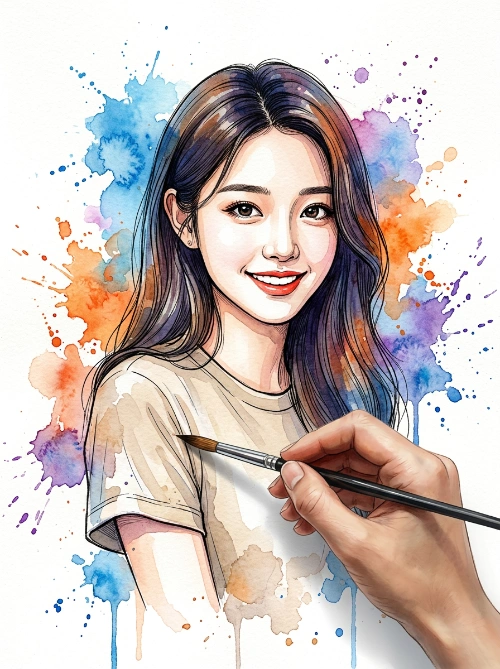
Dynamic Watercolor Portrait
Create a vibrant and artistic watercolor painting of a smiling person, using the uploaded photo as the facial reference without altering their facial features or appearance. The person is wearing a neutral-tone T-shirt. The background is clean white, filled with dynamic and expressive watercolor paint splashes in blue, orange, and purple spreading organically across the scene. In the foreground, a realistic human hand holds a paintbrush as if actively painting the sleeve of the man’s hoodie, creating the illusion that the portrait is being painted at that exact moment. The visual style combines detailed ink line art with loose watercolor textures, including paint drips, fine splatters, soft pigment diffusion, watercolor blooming effects, and natural paper texture. The image features strong contrast, an expressive and dynamic artistic look, a clear hand-painted aesthetic, centered composition, soft lighting, high level of detail, and a modern illustration style.
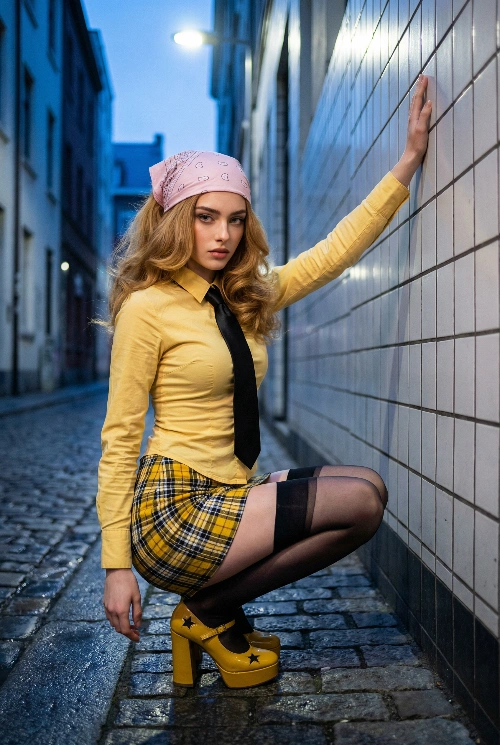
Cinematic Squat Fashion Portrait
{ "subject": { "identity": { "biometric_reference": "female from reference photo", "dentition": "Visible maxillary central incisors with natural alignment and translucent enamel edges, displayed in a slight mouth-open neutral expression.", "ocular_details": "Highly detailed iris patterns featuring radial furrows and Crypts of Fuchs. Iris pigmentation: Light cerulean blue with a hint of golden-green peripupillary ring. Detailed scleral vasculature and wet-look corneal reflections.", "hair": "Voluminous honey blonde hair (Hex: #E2BC74) with visible follicular texture, cascading naturally from under the bandana. Strands exhibit high specular highlights and anisotropic scattering." }, "body": { "morphology": "Mesomorphic-endomorphic somatotype, petite stature, approximately 151cm height. Precise waist-to-hip ratio (WHR) of 0.7. Body positioned in a full squatting stance in side profile.", "skin_physics": "Fair complexion (Hex: #F7E0D2) with subsurface scattering (SSS) effects. High-fidelity skin texture showing pores and natural epidermal micro-details. No beautify smoothing." }, "wardrobe": { "headwear": "Light pink bandana (Hex: #FF91AF) with subtle paisley micro-patterns, tied over the crown of the head.", "top": "Long-sleeved button-down shirt in vibrant yellow (Hex: #FDEE00). Tight-fit tailoring with realistic tension folds across the torso. Paired with a slim black silk necktie.", "bottom": "High-waisted pleated mini skirt featuring a yellow, black, and white plaid weave. Extremely short length with sharp pleats showing fabric tension in the crouching pose.", "hosiery": "Sheer black thigh-high stockings (20 denier) with a thick, opaque black elastic band at the mid-thigh. Clear skin-to-fabric transition above the knee.", "footwear": "Yellow platform heels (Hex: #FDEE00) with wide ankle straps and star-shaped decorative cutouts. Glossy synthetic leather finish with hard-surface reflections." }, "pose_action": "The subject is in a full squatting position viewed from a side-profile. The subject's right arm is extended vertically upwards with the palm pressed flat against the white tiled wall. The left arm hangs naturally by the side. The head is turned toward the camera with a direct, intense gaze. The subject is balanced on the balls of her feet.", "scene": { "environment": "Narrow urban alleyway at night. The wall on the right is composed of white square ceramic tiles with dark grout lines. The ground is grey cobblestone/pavement with a matte texture.", "depth": "Deep perspective showing the continuation of the alleyway and modern architectural structures in the background under a twilight sky.", "atmosphere": "Cinematic nighttime clarity with high contrast between the lit subject and the dark, shadowed urban environment." }, "lighting": { "primary": "Cool-toned overhead street lighting combined with soft ambient blue twilight. Strong directional light creates defined shadows on the tiled wall.", "secondary": "Soft fill lighting to preserve detail in the black tie and plaid skirt textures.", "physics": "Accurate Fresnel reflections on the white tiles and specular highlights on the glossy platform shoes." }, "camera": { "format": "9:16 vertical aspect ratio", "lens": "35mm prime lens for cinematic perspective.", "angle": "Low-angle shot, positioned at knee level to emphasize the posture and the height of the wall.", "settings": "f/2.8 aperture, ISO 100, 8k resolution, raw capture style." }, "negative_constraints": [ "no logos", "no text", "no trademarks", "no beautify smoothing", "no extra limbs", "no watermark", "no jewelry on neck", "reflection integrity rules applied to tiled surfaces" ] } }

LV Dynamic Grid Muted
Louis Vuitton. Act as a World-Class Editorial Designer. PHASE 1: DYNAMIC SUBJECT LOGIC. * Subject Selection: Autonomously analyze Louis Vuitton and select an iconic luxury fashion subject, such as a Louis Vuitton monogram travel trunk, a classic LV monogram handbag (e.g., Speedy or Keepall), or a high-fashion model interacting with a Louis Vuitton bag. * Layering (The Sandwich Effect): Interweave the subject with background shapes. Some parts of the bag or model must be hidden behind geometric blocks, while other parts (handles, straps, hands, accessories, luggage tags) must overlap them to create 3D depth. PHASE 2: GRID & GEOMETRY. * Layout: A clean 2x2 grid composition. * Overlays: Superimpose large, bold geometric arcs and circles over the grid. * Visual Balance: Place one iconic Louis Vuitton prop (for example a floating LV luggage tag, padlock, or small monogram coin pouch) in a separate quadrant to balance the main subject. PHASE 3: SOPHISTICATED MUTED PALETTE. * Color Direction: DO NOT use aggressive neon or oversaturated colors. * Palette: Identify the core Louis Vuitton colors and shift them to a sophisticated muted spectrum. * Tones: Use desaturated, earthy, or dusty versions of LV heritage colors such as muted monogram brown, dusty gold, warm tan, soft caramel, aged leather beige, and muted cream. * Finish: Matte, flat color blocks with zero gradients. PHASE 4: PHOTOGRAPHY & LIGHTING. * Subject Style: High-end commercial studio photography. * Lighting: Soft, diffused studio lighting with gentle highlights. No harsh shadows. * Integration: The subject must feel physically embedded into the graphic grid. PHASE 5: MINIMALIST BRANDING. * Logo: Place a clean, single-color Louis Vuitton LV monogram logo in the center of one background block. No taglines, just the iconic symbol.
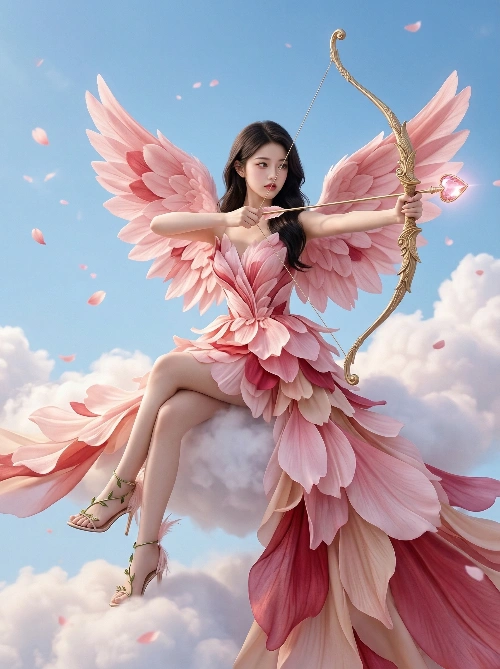
Ethereal Cupid Fashion Port
Using the real female subject you uploaded as the visual baseline, generate an ultra-high-precision photorealistic portrait that blends fantasy storytelling with high-fashion aesthetics. The character is reimagined as a modern Cupid, poised elegantly among the clouds, creating a visual spectacle that is ethereal, dramatic, and fashion-forward. Character Baseline and Styling Baseline: Strictly follow the facial contours, proportions, skin texture, and overall aura from the reference image. Age and ethnic characteristics must remain consistent with the original. Expression: Enhanced soft-glow makeup that remains faithful to her natural features. Expression is focused, with sharp, intent eyes suggesting precise aim. Hairstyle: Fully replicate the hair color, length, texture, and natural form from the reference image. Wardrobe, Accessories, and Pose Main Dress: A fantasy-inspired haute couture gown. Design: Structured, intricately detailed strapless bodice with a long, flowing train. Material: Constructed from layered, realistic soft pink cherry blossom petals, creating a light, semi-transparent, airy effect with clearly defined petal textures. Color: Dominated by soft sakura pink, blended with crimson and nude pink in a natural gradient. Wings: Large petal wings composed of countless cherry blossom petals arranged in a dimensional collage, transitioning naturally from pale pink to near-white. Each petal must exhibit realistic texture and light transmission. Footwear: Ultra-thin high-heeled decorative sandals, wrapped with vines and petals, accented with white feathers. Weapon Accessory: Holding an ornate gilded longbow with intricate engravings. The arrow tip is set with a heart-shaped gemstone, emitting a soft pink-gold glow. Pose and Composition Pose: The subject sits gracefully atop a fluffy cloud. The right leg is bent for support, while the left leg extends forward. The upper body leans slightly forward as she draws the bow, combining elegance with controlled strength. Composition: Medium shot with the subject centered in the frame, wings fully extended. Eye-level perspective. Sharp focus on the face and bow, with the surrounding clouds slightly softened. Environment and Lighting Environment: Suspended in a bright sky, seated on voluminous clouds. The background features a vivid blue sky with scattered floating cherry blossom petals, creating a dreamy, weightless atmosphere. Lighting: Soft directional diffused lighting. The key light from above at an angle defines the silhouette, complemented by fill light to maintain clean shadows. Light creates crystalline highlights on gemstones, metal surfaces, and petals, resulting in an airy yet dimensional tonal quality. Style and Texture Visual: Photography-grade hyperrealism with cinematic impact and extreme detail fidelity. Detail: Supports 8K-level rendering. All materials—skin, petals, metal—must achieve high physical realism. Fusion: Seamlessly combines high-fashion aesthetics, mythological drama, and romantic fantasy imagination. Quality: Achieves the clarity, color depth, and visual impact of top-tier commercial fashion campaigns.