

Museum Clownfish Specimen
Prompt
Create a museum-exhibit–grade educational fish infographic, focused on a Clownfish (Amphiprioninae). Core layout Center: a large clownfish specimen occupying 60–70% of the canvas. Surroundings: scientific annotations and fun educational facts arranged radially or in clearly separated sections. Overall feel: like a labeled fish specimen displayed inside a museum glass showcase. Fish specimen presentation (critical requirements) Physical realism: the fish specimen is physically placed flat on paper, not a photo within a photo, but a real tangible specimen. Viewpoint: strict top-down vertical view; fish and paper exist on the same physical plane. Lighting: soft natural overhead light; the fish casts delicate, realistic shadows onto the paper. Fixation method (natural history style): thin silver metal specimen pins or fine wires fix the fish to the paper; pins pass through key anatomical points such as the dorsal area or fin base; pin tips slightly pierce the paper; visible tiny pinholes and subtle paper indentations. Texture and detail: clearly visible scale arrangement and reflective highlights; semi-transparent fin membranes; layered structure of the gill cover; moist reflective shine in the eye; subtle thickness and dimensionality along the body edge; fins may be gently spread but never exaggerated. Proportion: the fish occupies about 60–70% of the paper surface, with surrounding negative space reserved for annotations. Natural state: relaxed, natural posture with a static real-specimen feeling, not a swimming pose. Annotation system design Use thin leader lines extending from anatomical structures to text boxes. Leader lines appear hand-drawn or printed directly on the paper. Required labeled body parts (6–8 total) Head Eye: field of view and whether it can perceive color. Mouth: terminal mouth type and relation to feeding habits. Gill cover (operculum): explanation of how oxygen is extracted from water. Body Scales: ctenoid scales, their protective function and drag reduction. Lateral line system: sensory organ for detecting water movement and vibration. Fin system Dorsal fin: balance. Pectoral fins: steering and braking. Pelvic fins: stability. Caudal fin: primary propulsion, with notes on agility rather than speed. Internal or special structure (visualized) Swim bladder: buoyancy control, or bony skeleton structure adapted to reef environments. Signature features Bright orange body with white vertical bands. Thick mucus layer protecting it from sea anemone stings. Adaptation to coral reef symbiosis. Information card content for each annotation Part name in English. One to two child-friendly functional explanations. A fun fact or trivia element marked with a magnifying glass or light-bulb icon. Additional page elements Top area Common name: Clownfish. Scientific name: Amphiprion ocellaris in italic. Classification: Class Actinopterygii, Order Perciformes, Family Pomacentridae. Distribution map icon showing a world map with Indo-Pacific coral reef regions highlighted. Bottom or side information panel Basic profile: length 7–11 cm; weight about 200 g; lifespan 6–10 years; habitat coral reefs (marine); diet omnivore. Special survival skills: symbiosis with sea anemones, protective mucus coating, strong territory memory, shown with icons and short explanations. Fun facts for children: can change sex during its lifetime; lives safely among venomous sea anemones. Life cycle diagram: egg → larva → juvenile → adult, with key growth changes labeled. Design aesthetics in natural history style Paper texture: ivory or off-white premium paper, color #F8F6F0 or #FFFEF7, visible paper fibers, optional subtle vintage wear. Spatial relationship: fish specimen is a real physical object on the paper; fixation pins or wires have silver metallic texture; text is printed or handwritten directly on the same paper; leader lines are thin pen-drawn strokes. Color scheme: paper background #F8F6F0 or #FFFEF7; annotation text #2C3E50; leader lines #8B7355 or #696969; emphasis markers #D4AF37; specimen pins #C0C0C0. Typography: title in an elegant printed or handwritten serif style such as Garamond; scientific name italicized; annotations in a clear small handwritten or printed style. Overall impression Like a 19th-century naturalist’s specimen sheet, personally annotated on a workbench. Optional decorative elements Thin corner frame lines; a millimeter ruler aligned with the fish; handwritten collection ID and date; a very faint aquatic plant watermark silhouette. Critical visual rules Do not place a photo of a fish into the image. The fish specimen itself must be physically on the paper. The entire scene is one flat specimen sheet viewed from above, as if looking down at a naturalist’s desk. Image specifications Aspect ratio 16:9 (landscape) or 3:4 (portrait). Resolution 300 DPI, suitable for A3 or A2 printing. Format high-quality PNG. Scientific accuracy requirements Realistic clownfish proportions. Correct anatomical terminology. Child-friendly descriptions that remain scientifically accurate.
Aspect Ratio
Source
@LZhou15365Model
Nano Banana ProYou might also like
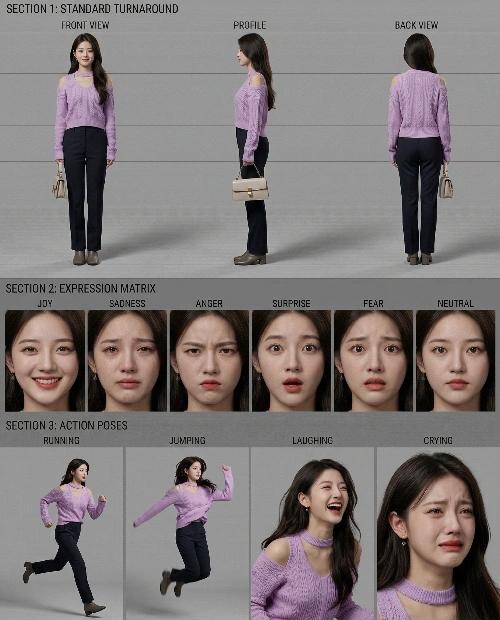
8K Cinematic Character Ref Sheet
[Core Visual Concept] Ultra-high-definition professional live-action character design sheet. Based on the character features from the reference image, create an industrial-grade visual reference set intended for big-screen film production. The overall style must be locked to photorealistic live-action photography, strictly prohibiting any anime or stylized rendering, targeting 8K cinematic-level detail fidelity. [Three Core Sections of the Design Sheet] 1. Standard Turnaround Sheet View Specifications: Includes full-body standing views of the character from three angles: front, profile (side), and back. Visual Alignment: All views must maintain perfectly consistent proportions, ensuring character height, facial feature placement, and clothing folds align precisely across angles. Background Setting: Clean industrial gray or neutral background with subtle physical shadows to enhance depth. 2. Expression Sheet Emotion Matrix: Showcase six fundamental emotional states under realistic lighting conditions: joy, sadness, anger, surprise, fear, and neutral. Facial Realism: Focus on capturing realistic facial muscle movement, including natural forehead lines, compression around the eyes, and dynamic lip changes, while preserving skin texture and pore-level detail. 3. Action Pose Sheet Typical Actions: Depict the character in representative cinematic motions, including running, jumping, laughing, and crying. Gravity and Dynamics: Emphasize the physical behavior of clothing under motion, including natural draping and tension in fabric, as well as accurate muscle engagement, creating an authentic captured-in-motion feel. [Character Attributes and Texture Constraints] Identity Consistency: Strictly replicate the facial features, skin tone, hair texture, and body proportions from the reference image. Prohibited Styles: Absolutely no cel-shading, exaggerated anime proportions, or flat color blocking. Lighting Quality: Use neutral global illumination to ensure consistent color and visible detail across all angles, suitable for 3D modeling reference. [Execution Instructions and Output Specifications] Composition: Clean and organized multi-panel layout. Image Quality: Ultra-high resolution, RAW photographic texture, 8K UHD.
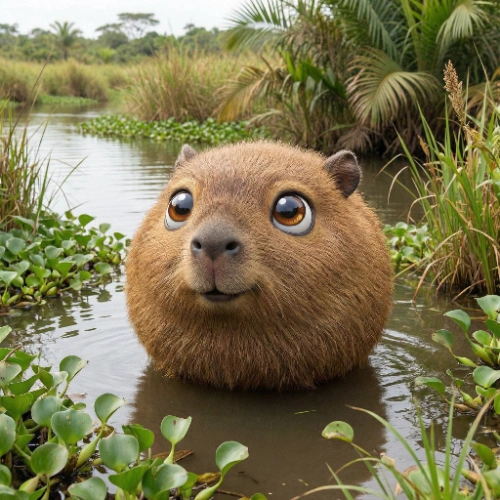
Spherical Cute Animal
Make a photo of a cute ball-shaped version of a [animal: Capybara], with big adorable over-sized eyes, it has no head, instead its face is part of the ball, its head and body are one. They are in their usual habitat. Must be almost spherical and cartoonishly cute. Its eyes are looking up in the most adorable cheeky fashion.

Modern Pro 3:4 Headshot
Intelligent professional portrait headshot in the style of American ID photography. The subject size is balanced and natural within the frame. Use a subtle light gray to white gradient studio background. Lighting is soft and natural, highlighting realistic skin tones and gentle depth. The image should be clear and high-quality with sharp facial focus. Skin texture appears clean, luminous, and healthy. The head-to-shoulder proportion is comfortable and natural. The overall mood is modern and elegant. The subject has a relaxed, natural, and confident expression with bright, lively eyes. Medium portrait framing with the subject centered in the composition. Low contrast lighting to create a refined, professional studio portrait aesthetic. Suitable for business and professional profile photos. Aspect ratio: 3:4.
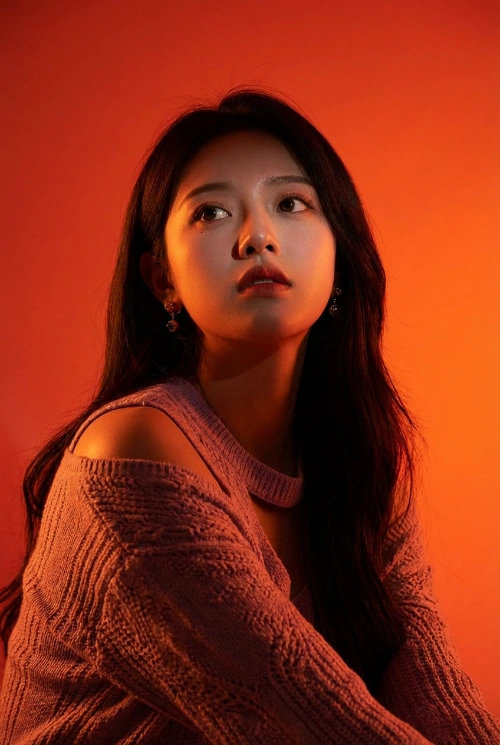
Heroic Dramatic Studio Port
{ "meta": { "title": "Heroic Dramatic Studio Portrait", "role": "World-class photographer specializing in editorial portraits", "aesthetic": "Dramatic, saturated studio lighting with a heroic feel" }, "constraints": { "identity_anchor": { "source": "ATTACHED REFERENCE PHOTO", "strictness": "Critical", "instruction": "Perfectly preserve exact facial features, skin tone, hairstyle, and natural likeness without changes." }, "clothing_anchor": { "source": "EXACTLY AS IN REFERENCE PHOTO", "strictness": "Critical", "instruction": "Style, color, material, and fit must fully correspond to the original without stylization." } }, "subject_details": { "expression": "Serious, tense, focused", "gaze": "Directed away from camera, into space above", "universality": "Lighting and angle applicable regardless of gender" }, "composition": { "background": "Saturated solid orange-red backdrop, smooth intense gradients, no patterns, 'hot' atmosphere", "camera_angle": "Low angle (shot from below upwards) to create dominance", "framing": "Medium close-up, emphasis on face and shoulders" }, "lighting": { "palette": "Dominant bright oranges and deep red shades", "key_light": "Strong directional source, deep dramatic shadows (chiaroscuro), emphasizing facial structure", "backlight": "Powerful expressive rim light or color halo separating subject from background", "mood": "Mysterious, tense, high-contrast" }, "technical_specs": { "style": "Photorealism, high detail", "focus": "Sharp focus on face vs smooth gradient background", "texture_quality": "Preserve natural pores and skin texture" }, "combined_prompt_text": "World-class editorial portrait, dramatic studio lighting, heroic feel. [REFERENCE PHOTO IDENTITY PRESERVED]: Exact facial features, skin tone, hairstyle. [CLOTHING EXACT MATCH]: No changes to fit or material. Expression: serious, tense, focused, looking up and away. Background: Saturated solid orange-red, smooth intense gradients, hot atmosphere. Camera Angle: Low angle shot from below for dominance. Framing: Medium close-up. Lighting: Bright orange and deep red palette, strong directional chiaroscuro key light, powerful rim light separating subject from background. Technical: Photorealistic, high detail, sharp focus on face, natural skin texture and pores." }
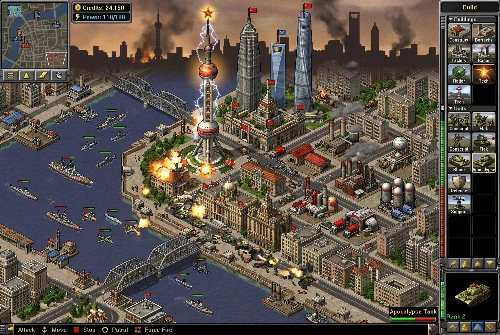
Retro Shanghai RTS Battle
Retro real-time strategy game screenshot in the visual style of the classic 2000s RTS game Red Alert 2. Isometric top-down battlefield map set in modern Shanghai, China. The terrain, roads, rivers, and city layout resemble Shanghai, with recognizable landmarks adapted into RTS game structures: Oriental Pearl Tower functioning as a tech structure, Shanghai Tower and Jin Mao Tower appearing as tall futuristic command buildings, Bund waterfront converted into defensive structures and walls, Huangpu River crossing the map with RTS bridges. Dense Shanghai urban districts turned into RTS base layouts with factories, power plants, radar domes, barracks, and refineries designed using Shanghai architectural elements and Chinese urban aesthetics. Classic RTS base-building scene: construction yards, tank factories, power plants, radar dishes, missile turrets, and supply depots integrated with Shanghai-style buildings and skyline silhouettes. Units include tanks, infantry squads, helicopters, and naval units moving around the Huangpu River. Explosions, smoke, and battle effects typical of early 2000s RTS games. Authentic retro game interface: classic RTS UI panels, minimap in the corner, unit selection boxes, build menu icons, health bars above units, resource counters, and command buttons similar to early RTS interfaces. Pixel-art inspired textures and slightly low-resolution sprites to mimic early 2000s PC game graphics. Camera perspective: classic isometric RTS camera angle from above, showing a large portion of the battlefield and city layout. Bright strategic map colors with clear terrain segmentation for roads, water, buildings, and base structures. Atmosphere: busy battlefield in a stylized Shanghai warzone, tanks rolling through city streets, defensive turrets near landmarks, helicopters flying over the skyline, naval units in the Huangpu River. Nostalgic early-2000s PC game aesthetic, detailed RTS battlefield composition, cinematic but clearly recognizable as a game screenshot.
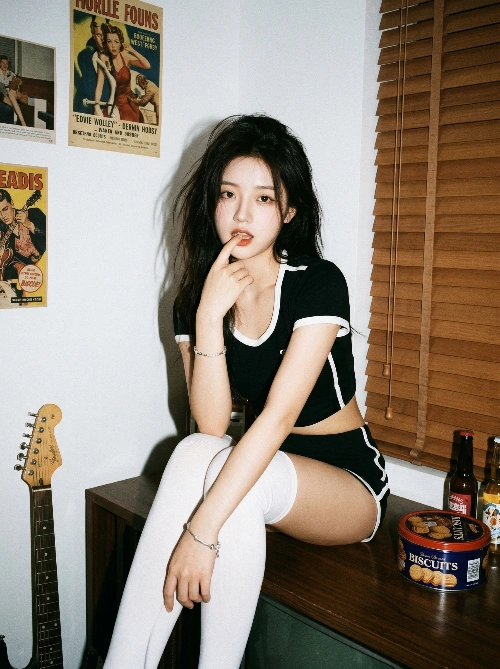
Rebellious 90s Cool Girl Portrait
Using the uploaded real subject as the visual baseline, create a full-body portrait with an independent, rebellious aesthetic and a vintage film texture. Embrace a 1990s point-and-shoot camera style, using direct flash, high-contrast lighting, retro color grading, and casual composition to convey a raw, authentic, and edgy “cool girl” atmosphere. Character Setup (Based on the real uploaded subject) Baseline: Use the real female subject as the foundation, preserving her facial features and body proportions. Hair: Thick, slightly messy long hair (color matching the uploaded subject). Outfit: Sporty black cropped top with white trim, paired with matching black shorts and white over-the-knee socks. Accessories: A silver bracelet worn on the wrist. Pose and Composition Pose: Sitting casually on an elevated dark wooden surface (such as a counter or piano top). The body leans forward slightly, relaxed but with a sharp edge. One hand is raised near the mouth, lightly biting a finger. The gaze is directed straight at the camera, with a sensual yet nonchalant expression. Composition: Full-body shot using a 35mm focal length, slightly low-angle perspective to emphasize leg lines. Medium-distance framing, appearing spontaneous yet visually balanced. Sharp focus on the subject, with the background falling off due to the rapid light decay of direct flash. Scene and Details Background: A white wall decorated with vintage posters taped onto it, along with brown wooden blinds. Foreground and Props: Include visible elements such as the neck of an electric guitar, a tin of cookies, and several bottles to enhance the lived-in, candid atmosphere. Lighting and Color Lighting: Simulate direct on-camera flash with hard lighting. The light should be harsh and frontal, casting sharp, well-defined shadows on the wall behind the subject. High contrast, with no soft lighting or diffusion. Color and Texture: Vintage film aesthetic, emulating Kodak Gold 200 tones. Warm hues from wooden blinds and furniture contrast with the cool white flash. Colors should be deep and slightly muted, with rich blacks and subtle film grain, creating a lo-fi indie visual style. Overall Mood and Style Style: Independent, rebellious “cool girl” aesthetic. Raw, authentic, with a Y2K-inspired retro fashion editorial vibe, resembling a snapshot. Mood: Casual, direct, with a hint of playful defiance. Technical Specifications and Constraints Image Quality: Photorealistic, but intentionally incorporating vintage film imperfections and direct-flash artifacts. Avoid: Soft lighting, studio lighting setups, shallow depth-of-field bokeh effects, polished studio portraits, skin smoothing, 3D-rendered looks, cartoon or illustration styles, distorted hands, missing guitar strings, floating objects, anatomical inaccuracies, stiff posing, excessive post-processing, and HDR effects.
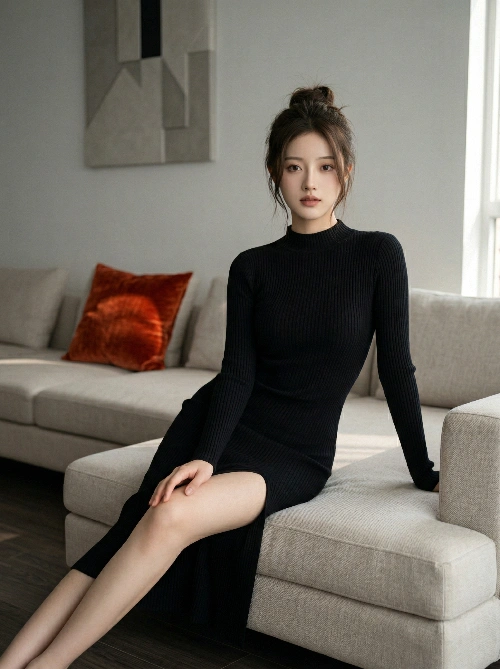
Elegant Home Fashion Portrait
Core Concept Using the uploaded real female subject as the visual reference, generate a magazine-quality fashion indoor portrait. The image should convey a calm, intimate, and luxurious modern atmosphere, capturing the subject’s elegant and relaxed state in a home environment, achieving the realism and artistic expression of high-end editorial photography. Subject Reference and Styling Reference: Strictly follow the facial features, body proportions, and personal aura of the uploaded subject. Emphasize refined facial structure and a slender, elegant figure. Expression: Calm with a subtle sense of focus; soft, confident, and slightly penetrating gaze directed at the camera, creating a delicate and intimate allure. Hairstyle: Long dark brown hair, loosely tied at the back into a slightly messy bun with natural volume, with a few loose strands falling along the sides of the face. Makeup and Accessories: Clean, natural makeup—almost no-makeup look. Accessories should be minimal, such as small earrings or none at all. Outfit and Pose Clothing: A black ribbed knit long-sleeve dress with a high neckline. The dress is form-fitting, contouring the body shape, with a high side slit that subtly reveals the leg depending on the pose. Pose: Seated gracefully on a light beige sectional sofa. The body is slightly angled toward the camera; one leg is bent and placed on the sofa, while the other extends forward, naturally revealing the leg through the slit. One hand rests casually on the bent knee, while the other is relaxed on the sofa cushion. The pose is composed, elegant, with a slight forward-leaning engagement. Environment and Lighting Environment: A modern interior living room. The background wall is gray-white, featuring a warm-toned abstract geometric artwork. The floor is dark wood. The space is clean and minimal, with a single accent color provided by an orange-red cushion on the sofa. Lighting: Soft natural daylight, simulating diffused light entering from a side window. Lighting is even with soft shadows, low to medium contrast. Color temperature is neutral-warm, creating a cozy and inviting atmosphere. Composition and Image Quality Composition: Medium-wide shot capturing the full seated pose on the sofa. The camera is positioned slightly above eye level with a subtle angle. Use the rule of thirds, placing the subject slightly to the right, balanced by the wall art. A slight foreground blur on the right edge (such as a wall or frame edge) can be included. Technical: Simulate a 35mm to 50mm lens perspective, with shallow to medium depth of field—sharp focus on the subject, slightly blurred background. Style and Quality: High-end fashion magazine photography style. Clean, ultra-high resolution image with neutral color grading, slightly warm highlights, and slightly reduced saturation for a refined, understated aesthetic. Avoid harsh shadows, overexposure, cluttered backgrounds, anatomical errors, low resolution, watermarks, or text. Mood and Atmosphere Overall Mood: Minimalist, fashionable, mature, and refined. Atmosphere: Calm, intimate, modern luxury—capturing an effortless sense of sophistication and the quiet charm of everyday living.
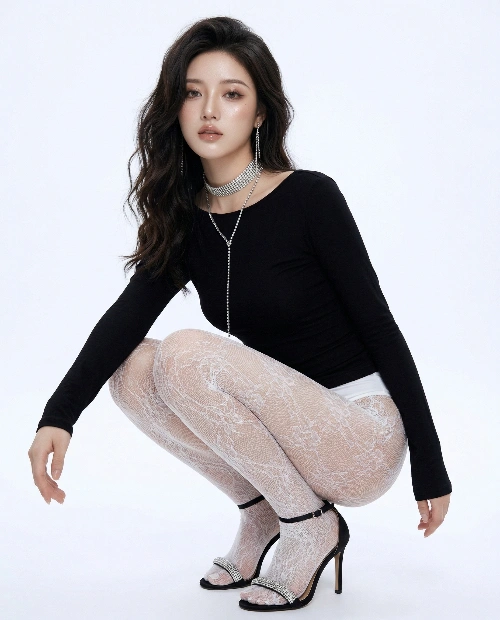
Sensual Low Squat Fashion Port
Using the real female subject you uploaded as the visual baseline, generate an ultra-high-detail, photography-grade realistic fashion portrait. The image should focus on a dynamic low squatting pose, presenting a sensual yet high-fashion outfit against a pure white soft-lit background. The overall mood should blend sensuality, confidence, and avant-garde fashion, with detail rendered to an extreme 8K level. Character Baseline and Styling Baseline: Strictly follow the facial features, structure, and personal aura of the woman in the uploaded image. Her distinctive facial contours must be clearly recognizable. Expression: Sensual and confident, with slightly parted lips. Makeup should be a captivating nude glam style, emphasizing highlighted cheekbones, subtly smoky eye makeup, and glossy, hydrated lips. Hairstyle: Voluminous, softly curled long hair, styled into loose waves, side-parted and falling naturally over the shoulders. Clothing, Accessories, and Pose Outfit: Top: A minimalist black long-sleeve top with a wide neckline. Bottom: Paired with white underwear, layered with white lace tights covering the legs and feet; the lace should display a delicate semi-transparent texture. Footwear: A pair of black stiletto heeled sandals, featuring ankle straps and embellished toe straps with sparkling accents, worn over the lace tights. Accessories: Necklaces: A bold, sparkling rhinestone choker, paired with a long, slender Y-shaped necklace extending down toward the abdomen. Earrings: A pair of long dangling earrings. Pose: The subject is in a low squatting position. The right leg is deeply bent, while the left leg casually crosses over the right thigh. The right arm is extended to support the body on the ground, and the left hand rests loosely near the knee. The pose should convey strong balance, dynamic tension, and a sense of relaxed elegance. Environment and Lighting Environment: A clean white seamless studio background with soft diffusion, free of any distractions. Lighting: Bright, even studio lighting. The light should clearly define the body contours, the intricate textures of the clothing (especially the lace), and produce precise highlights and reflections on accessories such as rhinestones and metal, creating a clean, bright, and layered lighting effect. Composition and Image Quality Composition: Medium-to-close framing, focusing on the pose and upper body. The camera angle is slightly top-down to enhance the compositional tension and visual impact of the squatting pose. Technical: Photorealistic, ultra-detailed style. Sharp focus is required, accurately rendering all complex materials including skin texture, hair strands, lace patterns, jewelry facets, and the sheen of the footwear. Image Quality: 8K ultra-high resolution with extremely rich detail. The image must be clean and sharp, achieving the level of polish and artistic quality of top-tier fashion editorials. Mood and Style Overall Style: Sensual, high-end, avant-garde fashion editorial aesthetic. Atmosphere: Within a minimalist setting, use pose, lighting, and fine detail to convey a controlled sensual allure and an effortlessly rebellious fashion attitude.