

Museum Clownfish Specimen
Prompt
Create a museum-exhibit–grade educational fish infographic, focused on a Clownfish (Amphiprioninae). Core layout Center: a large clownfish specimen occupying 60–70% of the canvas. Surroundings: scientific annotations and fun educational facts arranged radially or in clearly separated sections. Overall feel: like a labeled fish specimen displayed inside a museum glass showcase. Fish specimen presentation (critical requirements) Physical realism: the fish specimen is physically placed flat on paper, not a photo within a photo, but a real tangible specimen. Viewpoint: strict top-down vertical view; fish and paper exist on the same physical plane. Lighting: soft natural overhead light; the fish casts delicate, realistic shadows onto the paper. Fixation method (natural history style): thin silver metal specimen pins or fine wires fix the fish to the paper; pins pass through key anatomical points such as the dorsal area or fin base; pin tips slightly pierce the paper; visible tiny pinholes and subtle paper indentations. Texture and detail: clearly visible scale arrangement and reflective highlights; semi-transparent fin membranes; layered structure of the gill cover; moist reflective shine in the eye; subtle thickness and dimensionality along the body edge; fins may be gently spread but never exaggerated. Proportion: the fish occupies about 60–70% of the paper surface, with surrounding negative space reserved for annotations. Natural state: relaxed, natural posture with a static real-specimen feeling, not a swimming pose. Annotation system design Use thin leader lines extending from anatomical structures to text boxes. Leader lines appear hand-drawn or printed directly on the paper. Required labeled body parts (6–8 total) Head Eye: field of view and whether it can perceive color. Mouth: terminal mouth type and relation to feeding habits. Gill cover (operculum): explanation of how oxygen is extracted from water. Body Scales: ctenoid scales, their protective function and drag reduction. Lateral line system: sensory organ for detecting water movement and vibration. Fin system Dorsal fin: balance. Pectoral fins: steering and braking. Pelvic fins: stability. Caudal fin: primary propulsion, with notes on agility rather than speed. Internal or special structure (visualized) Swim bladder: buoyancy control, or bony skeleton structure adapted to reef environments. Signature features Bright orange body with white vertical bands. Thick mucus layer protecting it from sea anemone stings. Adaptation to coral reef symbiosis. Information card content for each annotation Part name in English. One to two child-friendly functional explanations. A fun fact or trivia element marked with a magnifying glass or light-bulb icon. Additional page elements Top area Common name: Clownfish. Scientific name: Amphiprion ocellaris in italic. Classification: Class Actinopterygii, Order Perciformes, Family Pomacentridae. Distribution map icon showing a world map with Indo-Pacific coral reef regions highlighted. Bottom or side information panel Basic profile: length 7–11 cm; weight about 200 g; lifespan 6–10 years; habitat coral reefs (marine); diet omnivore. Special survival skills: symbiosis with sea anemones, protective mucus coating, strong territory memory, shown with icons and short explanations. Fun facts for children: can change sex during its lifetime; lives safely among venomous sea anemones. Life cycle diagram: egg → larva → juvenile → adult, with key growth changes labeled. Design aesthetics in natural history style Paper texture: ivory or off-white premium paper, color #F8F6F0 or #FFFEF7, visible paper fibers, optional subtle vintage wear. Spatial relationship: fish specimen is a real physical object on the paper; fixation pins or wires have silver metallic texture; text is printed or handwritten directly on the same paper; leader lines are thin pen-drawn strokes. Color scheme: paper background #F8F6F0 or #FFFEF7; annotation text #2C3E50; leader lines #8B7355 or #696969; emphasis markers #D4AF37; specimen pins #C0C0C0. Typography: title in an elegant printed or handwritten serif style such as Garamond; scientific name italicized; annotations in a clear small handwritten or printed style. Overall impression Like a 19th-century naturalist’s specimen sheet, personally annotated on a workbench. Optional decorative elements Thin corner frame lines; a millimeter ruler aligned with the fish; handwritten collection ID and date; a very faint aquatic plant watermark silhouette. Critical visual rules Do not place a photo of a fish into the image. The fish specimen itself must be physically on the paper. The entire scene is one flat specimen sheet viewed from above, as if looking down at a naturalist’s desk. Image specifications Aspect ratio 16:9 (landscape) or 3:4 (portrait). Resolution 300 DPI, suitable for A3 or A2 printing. Format high-quality PNG. Scientific accuracy requirements Realistic clownfish proportions. Correct anatomical terminology. Child-friendly descriptions that remain scientifically accurate.
Aspect Ratio
Source
@LZhou15365Model
Nano Banana ProYou might also like
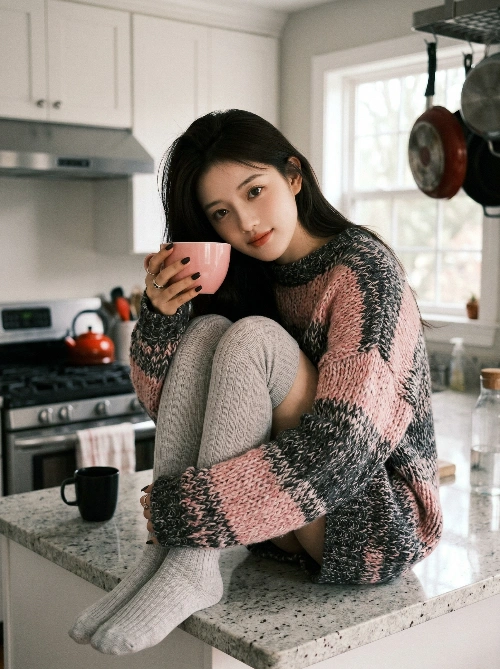
Vintage Intimate Portrait
Using the uploaded real subject as the visual baseline, create an ultra-high-detail, photorealistic portrait with a soft, atmospheric mood. Aim for a warm vintage film aesthetic, shallow depth of field, and cinematic color grading in 4K resolution, evoking a relaxed, introspective, and slightly melancholic intimate atmosphere. Character Setup Baseline: Strictly base the subject on the uploaded real female, preserving her facial features, proportions, and expression. The body should appear slender with natural curves. Hair and Makeup: Long hair with a slightly tousled look. Makeup is natural and minimal, with soft, well-defined brows. Fingernails are painted in a dark color, and a small silver ring is worn on the left hand. Expression: Looking directly at the camera with a gentle, subtle smile. Styling and Pose Outfit: An oversized, thick chunky knit sweater with rich texture, blending pink, dark gray, and white yarns, worn as a short dress. Paired with thick light gray ribbed over-the-knee knitted socks. Pose: Sitting on a lightly patterned gray granite kitchen countertop. Knees are drawn tightly to the chest, with the right arm wrapped around the legs. The left hand holds a simple pink coffee cup near the shoulder. Scene and Lighting Environment: A cozy kitchen in soft daytime lighting. The background is blurred but recognizable, including white cabinets with round silver handles, a stainless steel stove with a range hood and oven, a large multi-pane window, and hanging cookware in the upper left. On the countertop behind her are a simple black cup, a red electric kettle, and a transparent glass bottle. Lighting: Soft, diffused natural daylight enters from behind and from the left-side window, casting gentle highlights on her face and the knit texture of the clothing. Color and Atmosphere Color Palette: Emphasize charcoal gray, pink, warm cream tones, black, and soft red, creating a warm, slightly faded vintage film aesthetic. Mood: Relaxed, introspective, with a subtle melancholic tone. Photography and Image Quality Composition: 3:4 vertical format, medium-to-wide full-body shot, eye-level perspective. Simulate a modern smartphone camera with shallow depth of field. Focus and Quality: Sharp focus on the subject’s face and eyes, with cinematic color grading and realistic detail rendering at 4K resolution.
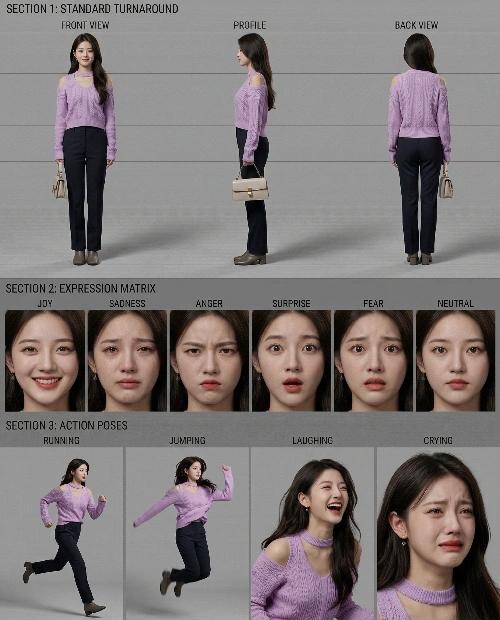
8K Cinematic Character Ref Sheet
[Core Visual Concept] Ultra-high-definition professional live-action character design sheet. Based on the character features from the reference image, create an industrial-grade visual reference set intended for big-screen film production. The overall style must be locked to photorealistic live-action photography, strictly prohibiting any anime or stylized rendering, targeting 8K cinematic-level detail fidelity. [Three Core Sections of the Design Sheet] 1. Standard Turnaround Sheet View Specifications: Includes full-body standing views of the character from three angles: front, profile (side), and back. Visual Alignment: All views must maintain perfectly consistent proportions, ensuring character height, facial feature placement, and clothing folds align precisely across angles. Background Setting: Clean industrial gray or neutral background with subtle physical shadows to enhance depth. 2. Expression Sheet Emotion Matrix: Showcase six fundamental emotional states under realistic lighting conditions: joy, sadness, anger, surprise, fear, and neutral. Facial Realism: Focus on capturing realistic facial muscle movement, including natural forehead lines, compression around the eyes, and dynamic lip changes, while preserving skin texture and pore-level detail. 3. Action Pose Sheet Typical Actions: Depict the character in representative cinematic motions, including running, jumping, laughing, and crying. Gravity and Dynamics: Emphasize the physical behavior of clothing under motion, including natural draping and tension in fabric, as well as accurate muscle engagement, creating an authentic captured-in-motion feel. [Character Attributes and Texture Constraints] Identity Consistency: Strictly replicate the facial features, skin tone, hair texture, and body proportions from the reference image. Prohibited Styles: Absolutely no cel-shading, exaggerated anime proportions, or flat color blocking. Lighting Quality: Use neutral global illumination to ensure consistent color and visible detail across all angles, suitable for 3D modeling reference. [Execution Instructions and Output Specifications] Composition: Clean and organized multi-panel layout. Image Quality: Ultra-high resolution, RAW photographic texture, 8K UHD.
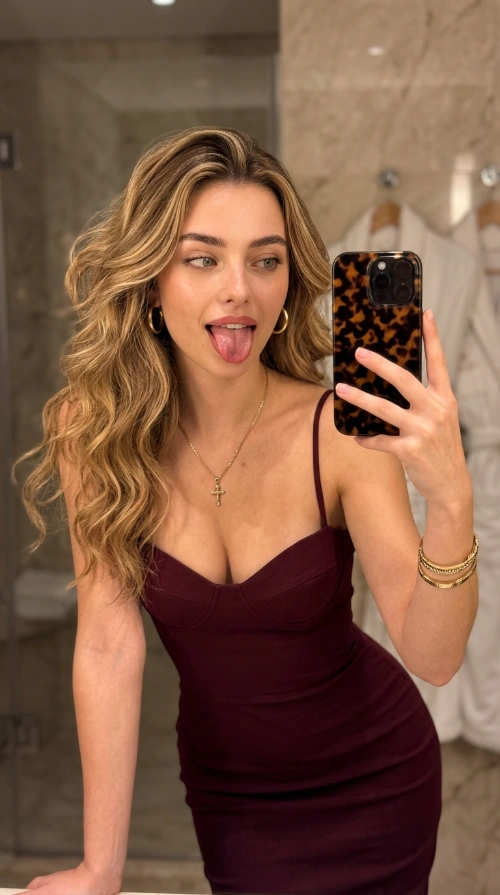
Glam Mirror Selfie
{ "image_type": "Photograph, Mirror Selfie", "shot": "Medium Shot", "shot_details": "Handheld mirror reflection, slightly tilted angle", "style": "Modern Lifestyle, Social Media Aesthetic", "quality": "High-fidelity, mobile photography style", "color_grade": "Warm indoor tones, saturated burgundy", "meta": { "aspect_ratio": "9:16", "resolution": "4k" }, "camera": { "device": "iPhone 17 Pro", "lens": "24mm f/1.8 Wide Angle", "aperture": "f/1.8", "distance": "Arm's length", "angle": "Eye level, slightly tilted", "framing": "Upper body and torso", "pov": "Subject looking into a mirror", "focus": "Sharp on face and eyes", "lens_effect": "Natural mobile sensor depth of field" }, "lighting": { "description": "Warm indoor vanity lighting from a bathroom mirror", "type": "Soft diffused light", "source": "Overhead and side vanity bulbs", "primary": "Warm frontal glow", "secondary": "Ambient indoor light", "highlights": "Soft specular highlights on the shoulders and hair", "shadows": "Soft shadows under the jaw and dress folds" }, "scene": { "location": "Upscale Bathroom or Dressing Room", "environment": "Interior, marble-textured walls, white bathrobes hanging in the background", "time": "Evening", "atmosphere": "Casual, playful, intimate" }, "subject": { "gender": "Female", "age": "Early 20s", "ethnicity": "Caucasian", "appearance": "Glamorous, fit, light tan", "body": { "type": "Slim, athletic", "skin": "Smooth, radiant" }, "expression": { "eyes": "Almond-shaped, focused on the phone screen", "gaze": "Indirect via mirror", "face_vibe": "Playful, cheeky, tongue sticking out" }, "hair": { "color": "Honey blonde with darker roots and highlights", "style": "Long, voluminous, loose waves" }, "pose": { "description": "Leaning slightly forward, one arm holding the phone, other arm supporting the lean" } }, "wardrobe": "Elegant maroon bodycon cocktail dress", "outfit_details": { "top": { "type": "Sweetheart neckline with spaghetti straps", "color": "Deep Burgundy / Maroon" }, "bottom": { "type": "Bodycon fit", "color": "Maroon" } }, "accessories": { "jewelry": [ "Gold hoop earrings", "Gold chain with a small cross pendant", "Stacked gold bracelets", "Tortoise-shell pattern phone case" ] }, "details": { "skin_effects": [ "Subtle pores", "Dewy finish" ], "realism": "High, organic skin texture, natural highlights on the tongue" }, "negatives": "Low resolution, blurry, distorted face, messy background, oversaturated skin, plastic texture" }
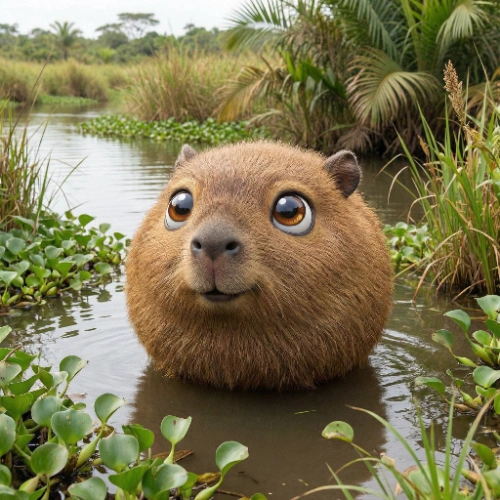
Spherical Cute Animal
Make a photo of a cute ball-shaped version of a [animal: Capybara], with big adorable over-sized eyes, it has no head, instead its face is part of the ball, its head and body are one. They are in their usual habitat. Must be almost spherical and cartoonishly cute. Its eyes are looking up in the most adorable cheeky fashion.

Sunrise Bridge Calm
A cinematic outdoor photograph shows the person attached in the uploaded reference image (keep the face 100% accurate) standing on a quiet railway bridge during sunrise. Soft orange light hits their face. Fog moves slowly over the tracks below. They rest one hand on the railing and smile calmly at the camera while birds fly past in the distance. Aspect ratio 4:5
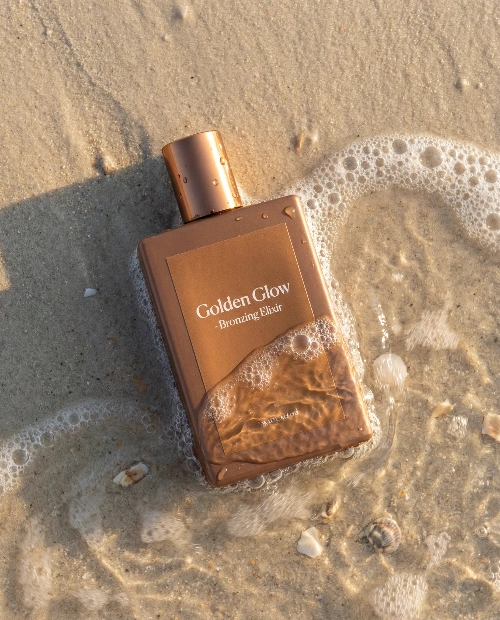
Golden Glow Beach Elixir
Ultra-realistic summer skincare product photography of a bronzing drop bottle named "Golden Glow - Bronzing Elixir", rectangular matte bottle in warm sun-kissed bronze tone with a clean white cap, placed diagonally on wet beach sand as a gentle ocean wave washes over it, delicate sea foam and tiny bubbles surrounding the base, water partially flowing across the label, fine sand texture visible beneath shallow clear water, golden sunlight casting natural highlights and soft shadows, high-detail water ripples and realistic foam patterns, fresh summer aesthetic, minimal clean branding centered and sharp, warm golden-hour beach lighting, cinematic top-down flat lay composition, natural reflections on wet surface, editorial beauty campaign style, ultra-detailed, photorealistic 8K, soft warm color grading, luxury skincare advertisement Aspect ratio 4.5
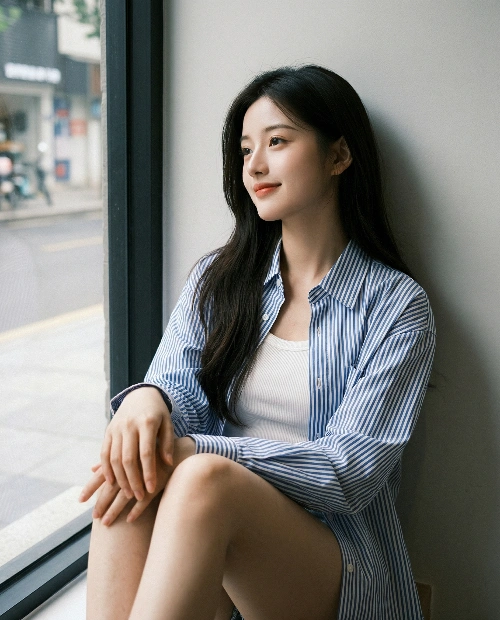
Lazy Afternoon Window Calm
Style Direction: Ultra-photorealistic cinematic lifestyle photography, blending Japanese fresh minimalism with Korean tonal aesthetics. Emphasize a sense of relaxation and emotional softness, with a clean, gentle visual style that combines fashion editorial storytelling with everyday warmth. Theme and Atmosphere: A quiet, lazy afternoon by the window, conveying calmness, softness, and intimacy. Use light and body language to express a “healing daily life” mood. Reference Baseline: Strictly use the uploaded subject as the sole identity reference. Accurately reproduce facial structure, proportions, skin tone, hairstyle, and all recognizable features. No stylization or alteration of the real face. Aspect Ratio and Framing: 4:5 vertical composition. Full-body or half-body framing depending on the reference, prioritizing upper body and leg interaction. Centered alignment with balanced visual weight. Subject Placement: The subject leans by the window in a relaxed posture, occupying the right two-thirds of the frame. The left side is left open to show a softly blurred outdoor street scene, creating an emotional contrast between interior and exterior. Interaction Design: Relaxed posture, hands naturally overlapped and resting between the legs. Back gently leaning against the wall, legs slightly bent, conveying a casual, lived-in interaction. Real Subject (Photorealistic Rendering) Facial Fidelity: 100% preservation of original facial structure, proportions, skin tone, and hair color. Skin texture must be realistic, with visible pores and natural light transitions, avoiding any artificial smoothing. Eyes appear soft and slightly unfocused, with a faint smile conveying relaxed ease. Expression: Calm, slightly distant, with a soft, dreamy gaze and naturally relaxed lips, expressing a gentle and healing presence. Pose: Based on the reference sitting pose — back lightly against the wall, legs slightly bent and overlapped, hands resting naturally on the legs, shoulders fully relaxed with no stiffness. Wardrobe Reconstruction: Inner Layer: White spaghetti-strap tank top with ribbed texture, closely fitting the skin with visible material detail. Outer Layer: Blue-and-white striped shirt, loose fit, sleeves slightly rolled, natural fabric folds, evenly spaced stripes. Bottom: Likely shorts or a short skirt (frame limited to legs), maintaining a casual homewear aesthetic. Material Rendering: Skin-contact softness of the tank top, cotton texture of the shirt, and gravity-driven folds must all be clearly visible and realistic. Lighting and Environment Lighting Setup: Side-back natural light simulating sunlight from the window on the left. Light grazes the face, shoulders, and clothing, creating soft highlights, while shadows transition naturally (e.g., neck, inner arms), enhancing depth and atmosphere. Background: Interior: Light gray matte wall paired with an off-white cushion (soft, voluminous, with natural folds under light). Exterior: Blurred street scene outside the window, with faint silhouettes of buildings and pedestrians in cooler tones, contrasting with the warm interior light. Environmental Details: Dark window frame (metal or wood texture), clean windowsill, realistic cushion volume and folds, minimal clutter to maintain a clean, minimalist home aesthetic. Output Style Image Quality: 8K resolution with RAW-level detail. Hair strands, skin pores, fabric textures, and light gradients must be rendered with extreme realism. Color Grading: Low-saturation soft tones dominated by off-white, light gray, and pale blue, with warm yellow highlights simulating afternoon sunlight. Overall palette should feel fresh, calm, and healing. Post-processing Look: Cinematic grading with preserved shadow detail, soft highlights, and moderate contrast to reinforce the relaxed emotional tone. Lens Language: 35mm prime lens, f/2.8 aperture, with slight background blur and natural depth transition, keeping the subject as the visual focus.