
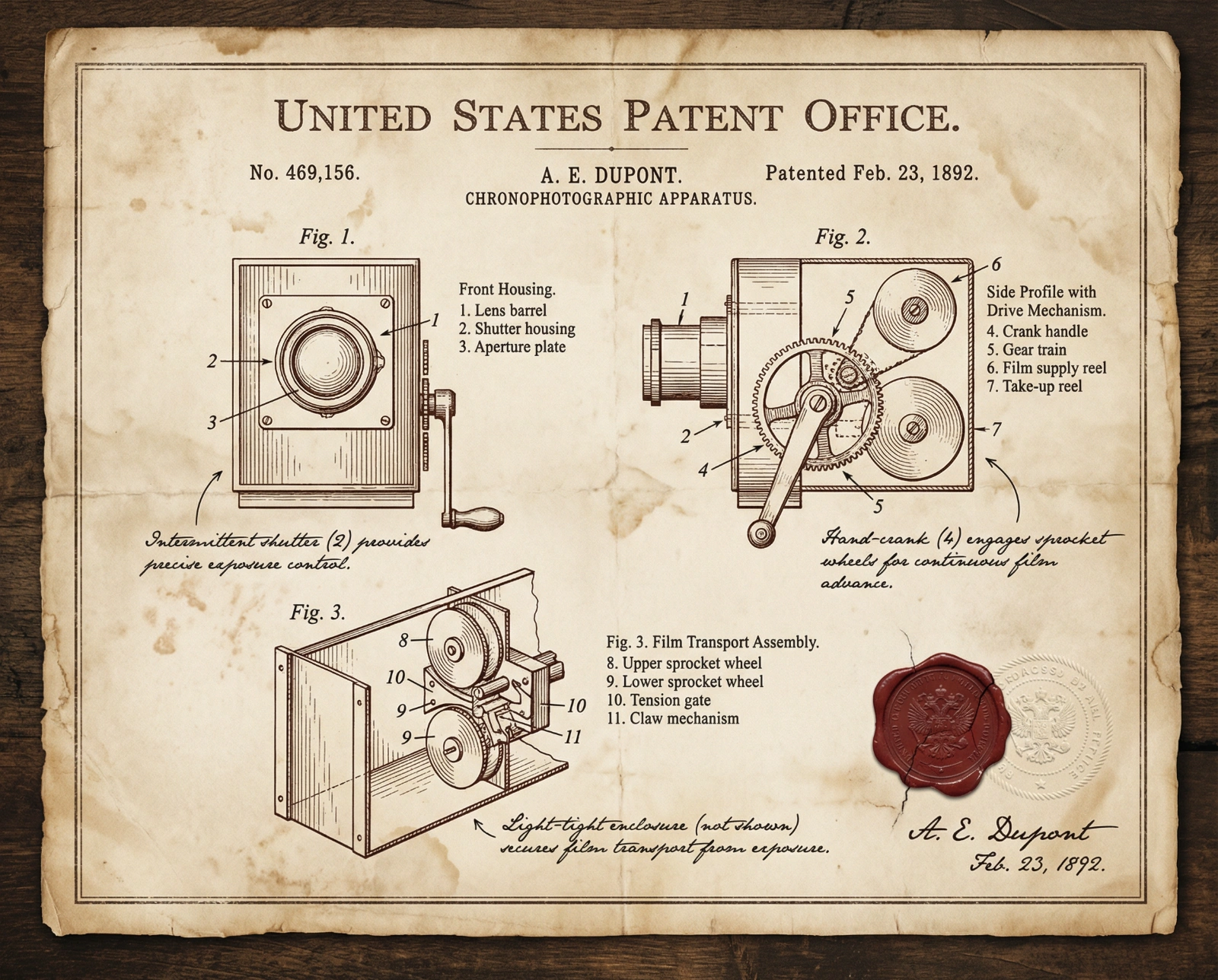
1892 Vintage Camera Patent
Prompt
A vintage patent document for an early motion picture camera (chronophotographic apparatus), styled after late 1800s United States Patent Office filings. The page features precise technical drawings with numbered callouts (Fig. 1, Fig. 2, Fig. 3) showing the front housing, side profile with hand-crank mechanism, and an exploded view of the film transport assembly. Handwritten annotations in fountain-pen ink describe the intermittent shutter, sprocket wheels, and light-tight enclosure. The paper is aged ivory with foxing stains and soft fold creases. An official embossed seal and a deep red wax stamp appear in the lower right corner. A hand-signed inventor’s name and the date 1892 appear at the bottom. The entire image feels like a recovered archival document—authoritative, historic, and slightly mysterious.
Aspect Ratio
Source
@AllaAislingModel
Nano Banana ProYou might also like
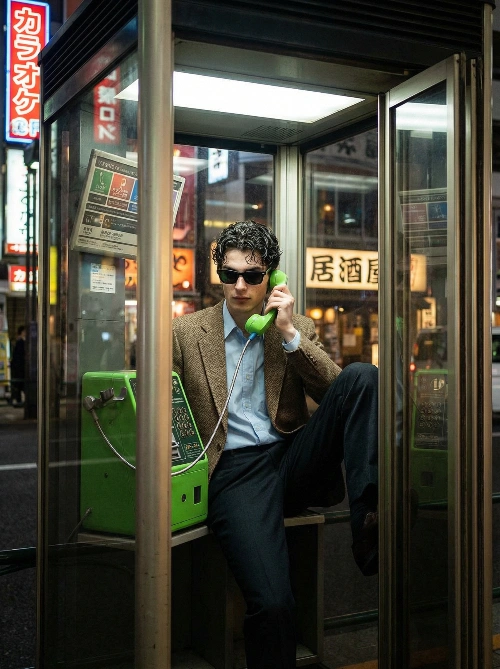
Neon Night Phone Booth
A person with dark, curly hair and sunglasses is seated inside a classic glass phone booth at night. They are wearing a light-colored collared shirt, a textured blazer, and dark pants, with one leg casually propped up. They are holding a bright green payphone receiver to their ear. The phone booth is illuminated from within, highlighting the details of the phone and the person. In the background, out of focus, are vibrant, neon-lit city buildings with Japanese characters, suggesting an urban night scene. Use the provided image as face reference
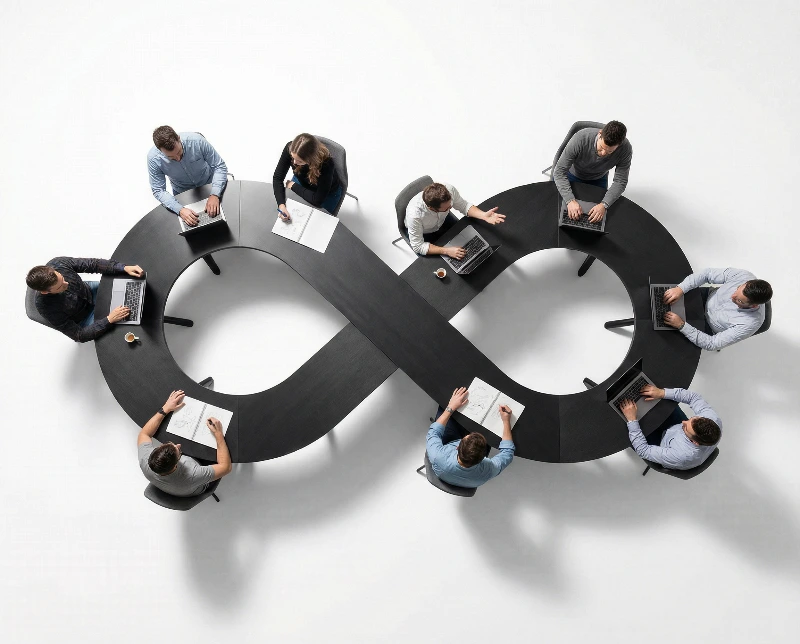
Infinity Table Collaborative Peak
Ultra-wide-angle hyper-realistic top-down flat lay photography. The central focus is a custom physical conference table meticulously shaped like [a perfect infinity symbol ∞]. The table features [brushed matte black carbon fiber with subtle graphite texture and soft satin highlights] and placed on a [pure snow-white] floor, creating significant negative space around it for a clean, minimalist composition. A group of [8] real people are sitting around the edges of this [infinity]-shaped table. [2 on each loop curve, 2 at the inner crossover, 1 at each far end] Actions: [half the group intensely working on ultra-thin laptops, others sketching ideas on paper, one person mid-gesture explaining a concept, another casually sipping espresso—captured as a frozen moment of peak collaboration]. Lighting & Quality: Professional studio lighting with crisp, distinct drop shadows that define the [infinity] silhouette on the floor. 8k resolution, sharp focus, cinematic commercial aesthetic.
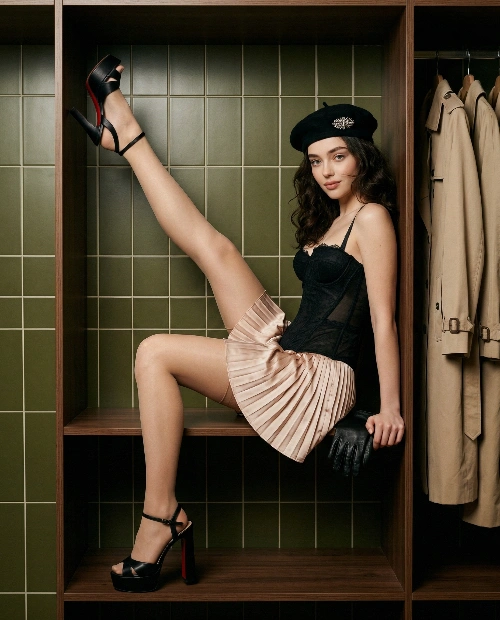
Enclosed Frame Fashion Portrait
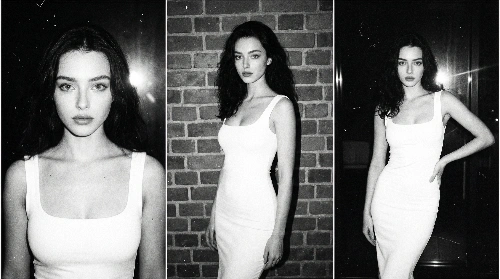
[Core Concept] Style Direction: High-fashion editorial portrait photography, blending “frame-within-a-frame” composition with intimate spatial storytelling. Emphasis on precision, restraint, and a gaze-driven visual language. Theme Atmosphere: Refined, intimate, subtly provocative. Capture the subject in a self-presentational moment within an enclosed wardrobe space, conveying composed awareness of being observed through pose and lighting. Reference Baseline: Strictly use the uploaded subject as the sole visual identity source. Accurately reproduce facial structure, proportions, personal aura, and body characteristics without stylization. [Composition and Framing] Aspect Ratio: 4:5 vertical. Camera Angle: Eye-level, aligned with the wardrobe compartment opening (approx. 90 cm height). Visual Focus: “Frame-within-a-frame” — the dark wooden wardrobe compartment acts as a natural frame, fully enclosing the subject. Scene Structure: * The subject is positioned entirely inside the compartment, forming intersecting diagonal body lines. * Left leg raised high, foot pressed against the top frame, forming a strong diagonal from bottom-left to top-right. * Right leg extended horizontally, foot braced against the right inner wall, forming a secondary diagonal. * Torso and head create a third, shorter diagonal line. * Background: deep olive/khaki grid-patterned tiles, contrasting rigid geometry with organic body curves. * Right edge of frame: hanging beige/cream trench coats, adding environmental realism and tonal balance. [Character Rendering] Facial Features: Faithfully reproduce the subject’s facial structure and expression. Expression: Direct eye contact with a subtle smile — composed, slightly provocative. Details: Large expressive eyes, defined lashes, neutral to slightly pouted lips. Head Position: Chin slightly tucked (~5° downward tilt), creating a subtle “looking up through lashes” effect. Skin Tone: Natural with soft blush on cheeks. Hair: * Center-parted, long hair past shoulders. * Left side falls forward over shoulder and chest; right side falls behind. * Soft waves, warm brown tone with subtle highlights under directional light. * A few loose strands fall beneath the beret edge onto the forehead. Body Pose: * Seated inside the compartment. * Back pressed against the left inner wall. * Torso slightly leaning forward and to the right. * Legs form the primary compositional structure (raised left leg, extended right leg). * Arms: left arm mostly hidden behind leg/body; right hand supports on the shelf near the right hip. * Overall body forms a Z-shaped dynamic within the rectangular frame. [Wardrobe and Accessories] Corset: Black structured corset with strong boning; satin or leather finish with subtle sheen. * Sweetheart neckline with black lace trim. * Center front features delicate lacing or bow detail. * Ends at natural waist, revealing transition to skirt. Skirt: Champagne pink satin ultra-mini skirt with pleats, high-waisted. * Fabric catches warm highlights, drawing attention to hips and upper thighs. Footwear: Black platform heeled sandals (ankle strap). * Heel height: 12–15 cm, platform: 3–4 cm. * Open-toe or peep-toe design. * Left raised foot reveals a red sole (Louboutin-inspired), adding a vivid accent. Accessories: * Black military-style beret, tilted to the right side. * Large crystal/rhinestone brooch on the front-right of the beret — brightest specular highlight in frame. * Black leather gloves, removed and placed on the shelf beside the subject. * Nude/transparent stockings with subtle sheen, enhancing leg contours. Color System: Dominant black (corset, shoes, beret, gloves) + champagne pink accent (skirt) + warm nude (skin, stockings) + red highlight (shoe sole) + crystal sparkle (brooch). [Environment and Props] Setting: Luxury walk-in wardrobe interior. Compartment Interior: Deep olive/khaki tiled wall with visible grout lines and subtle matte/metallic finish. Structure: Dark-stained wood frame and surfaces, matte finish. Outer Edge (right): 2–3 hanging garments (beige/cream coats) for realism. Shelf Surface: Black leather gloves placed near the subject’s right hip as a deliberate styling element. [Lighting and Color] Lighting Type: Soft directional key light, editorial and controlled. Direction: From upper-left (~45° angle). * Creates gradient from brighter left to darker right within the compartment. * Soft shadows define face, neck, and body contours without harsh falloff. * Shadows remain detailed, not crushed to black. Material Interaction: * Corset surface captures controlled specular highlights. * Raised left leg (facing light) is brighter than the right, creating tonal separation. * Hanging garments on the right catch slight highlights as secondary accents. Color Science: Inspired by Fujifilm PRO Neg Hi * Professional portrait tones with controlled saturation. * Warm, accurate skin tones (not overly orange). * Champagne pink acts as a controlled highlight accent. * Moderate highlight roll-off; bright but not clipped. * Warm-neutral shadows with depth. * Medium-high contrast for editorial separation. * Minimal grain for clean, professional output. [Emotion and Narrative] Core Mood: Display-case elegance — a living subject consciously presenting herself within a private, enclosed space. Atmosphere: Cocoon-like intimacy — warm, dim, enclosed, and refined. Narrative: Through framing, pose, lighting, and wardrobe, convey themes of self-display, observation, and control within a private environment. [Technical Specifications] Lens: 50mm prime Aperture: f/2.8 Image Quality: Professional digital photography, ultra-detailed, sharp focus on face and pose, 8K resolution Rendering: Hyper-realistic skin and material response, natural light transitions, rich environmental detail, high-end editorial finish
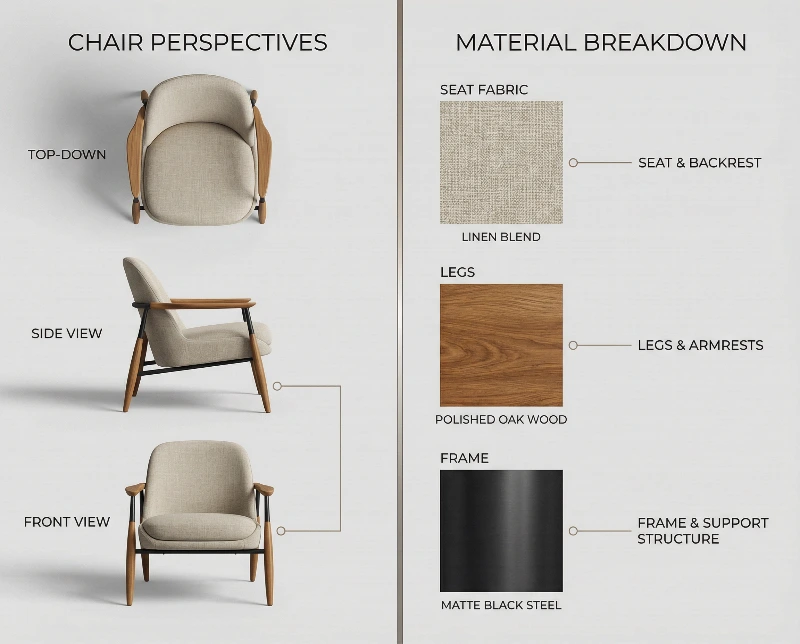
Realistic Chair 3D Showcase
{ "objective": "Create a detailed product showcase image of a chair design with multiple perspectives and material information", "image_specifications": { "style": "Realistic 3D render or high-quality product illustration", "layout": "Split view", "aspect_ratio": "3:2 or 4:3", "background": "Neutral (light gray or white) to enhance clarity and contrast" }, "left_side": { "section_title": "Chair Perspectives", "views": [ { "view": "Top-down", "description": "Display the full chair from above, showing seat shape and armrest layout" }, { "view": "Side view", "description": "Profile of the chair to show leg design, seat height, and backrest angle" }, { "view": "Front view", "description": "Straight-on view to show width, symmetry, and front structure" } ], "visual_style": "Consistent lighting and shadows for realism, subtle shadows to define form" }, "right_side": { "section_title": "Material Breakdown", "content": [ { "material": "Seat Fabric", "material_type": "Linen blend", "swatch_image": "Small fabric texture sample shown", "label_style": "Clean sans-serif text with arrows pointing to chair sections" }, { "material": "Legs", "material_type": "Polished oak wood", "swatch_image": "Close-up wood grain sample", "label_style": "Consistent labeling with visual connection to perspective images" }, { "material": "Frame", "material_type": "Matte black steel", "swatch_image": "Small metallic texture sample", "label_style": "Minimalist annotations" } ] }, "visual_elements": { "separation": "Vertical dividing line or subtle split background", "color_palette": "Natural tones for materials, grayscale for background and lines", "typography": "Modern, readable font for labels and section titles" }, "output_format": { "type": "Image", "high_resolution": true, "use_case": ["Product sheet", "Interior design catalog", "Furniture showcase"] } }
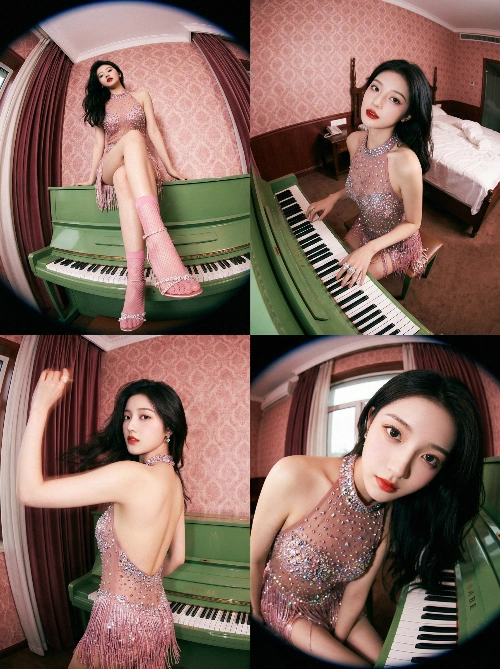
Vintage Glam Piano Portrait
{ "project_title": "Vintage Glamour Piano Series", "common_elements": { "subject": "Young woman the person I are applauded with dark black hair, and red lipstick.", "outfit": "Sheer, dusty pink halter-neck bodysuit covered in large iridescent crystals and sequins, with a fringed skirt layer.", "environment": "Ornate vintage hotel room with pink damask wallpaper, heavy maroon curtains, patterned beige carpet, and a retro green upright piano.", "lighting_and_style": "Direct flash photography, high contrast, vintage aesthetic, fisheye or wide-angle lens distortion, saturated colors, 4k resolution, hyper-realistic textures." }, "frames": [ { "frame_id": 1, "position": "Top Left", "visual_prompt": "Low-angle fisheye shot. The subject is perched on top of a green upright piano, leaning back with knees bent. One leg is extended dramatically toward the camera lens, making the foot appear larger than life. She wears pink fishnet socks and pink strappy heels with crystal details. The focus is sharp on the texture of the fishnet and shoe in the foreground, blurring slightly toward her face.", "pose_details": "Sitting on piano, leg extended, looking away casually." }, { "frame_id": 2, "position": "Top Right", "visual_prompt": "High-angle wide shot looking down at the subject seated at the green piano. She is looking up at the camera with a soft expression. Her right hand rests on the piano keys, fingers spread, showcasing a large ring. The wide-angle lens elongates her arm and hand. The background shows an unmade bed with gold satin sheets and a vintage lamp.", "pose_details": "Seated at keys, hand on piano, head tilted up." }, { "frame_id": 3, "position": "Bottom Left", "visual_prompt": "Dynamic medium shot. The subject stands with her back to the camera, turning her head to look over her left shoulder. Her left arm is raised toward the camera, creating a motion-blurred foreground element. The side profile of the bodysuit reveals a backless design and hanging crystal fringe. The lighting highlights the sparkle of the gems and the curve of her shoulder.", "pose_details": "Standing/turning away, looking back, arm in motion." }, { "frame_id": 4, "position": "Bottom Right", "visual_prompt": "Close-up extreme wide-angle shot, similar to a 0.5x selfie. The subject leans forward into the lens, distorting the perspective so her head appears larger. She looks directly at the viewer with a piercing gaze. The intricate detailing of the crystal bodice is highly visible. The green piano keys are visible in the lower right corner.", "pose_details": "Leaning forward, direct eye contact, close-up." } ] }
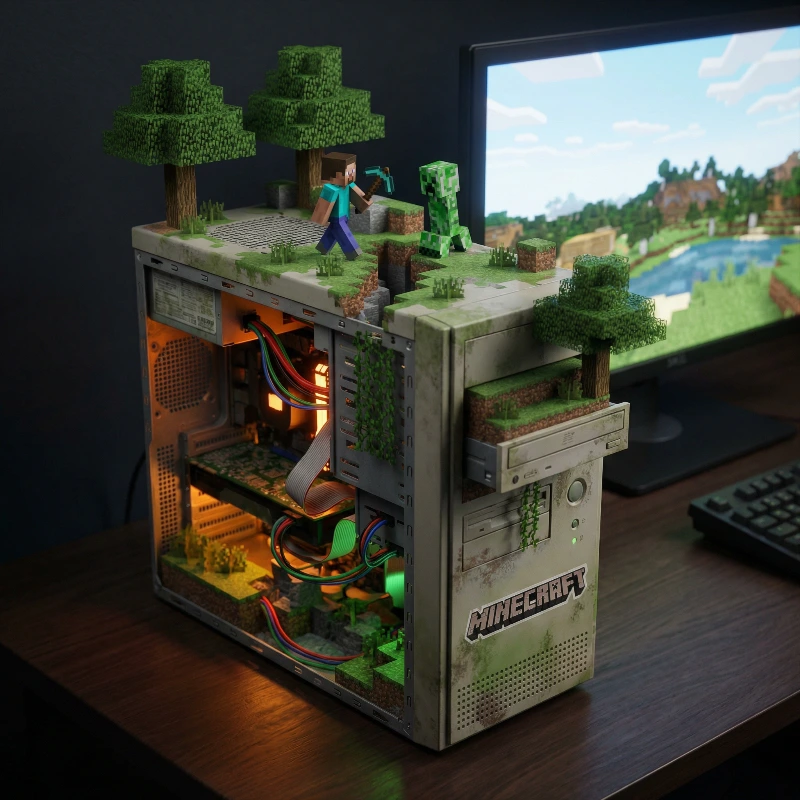
Minecraft Hardware Glitch Diorama
Input A: Minecraft --- Input A is a Video Game Title (e.g., The Legend of Zelda, Halo, Street Fighter, Elden Ring). Deconstruct the game to generate 3 Integrated Assets : Container : Identify the defining hardware for that title. (e.g., Zelda -> Gold NES Cartridge or Switch. Halo -> Original Xbox. Street Fighter -> Arcade Cabinet Control Deck). Biome : Identify the primary environment of the game. (e.g., Zelda -> Hyrule Grass/Ruins. Halo -> Alien Metal/Ring Surface. Elden Ring -> Golden Erdtree Leaves/Ash). The Cast (The Figures): Identify the Protagonist and a key Enemy/NPC. 2. Dynamic Container Goal: "Hardware Diorama" Photography. Object: The "Container" (Step 1) sits on a dark desk. Transformation: The hardware is NOT pristine. It is partially Disassembled or Weathered . Effect: The "Biome" (Step 1) is physically growing out of the vents, cartridge slots, or screen bezels of the hardware. (e.g., Moss growing on an Xbox, Sand spilling from a Game Boy). 3. Diorama (The Conflict): The Figures: High-detail 1:18 Scale 3D Figures of the "Cast" stand on top of the modified hardware. The Interaction: They are engaged in combat or exploration using the console's geometry as terrain. (e.g., Link climbing the D-pad like a cliff. Master Chief taking cover behind a memory card slot). The Screen: If the hardware has a screen (Handheld/Arcade), it displays a glowing, pixelated backdrop that merges with the 3D foreground elements. 4. Visual Syntax (The Glitch): Wiring: Exposed colored wires or circuit boards protrude from the hardware, weaving through the environmental elements (vines/rocks), connecting the digital world to the physical one. Labels: A worn sticker or label on the device displays the Game Title in its original font. 5. Lighting & Atmosphere: Lighting: Diegetic Mood Lighting. The scene is lit by the glow of the screen or internal LEDs (matching the game's color palette: Green for Xbox, Gold for Zelda). Scale: Shallow depth of field to emphasize the miniature scale of the figures against the "giant" controller buttons. Output: ONE image, 1:1 Aspect Ratio, 3D Render, "Custom Mod" aesthetic, High Narrative Detail. </instruction>
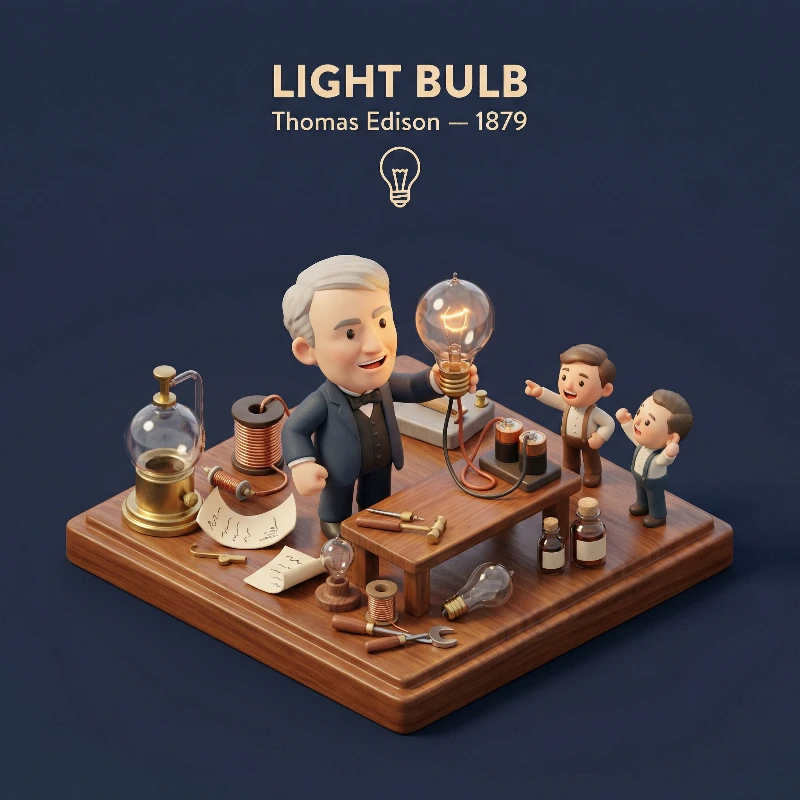
Edison's Light Bulb Invention Diorama
Create a miniature 3D isometric diorama showing the invention of [Light Bulb] at the moment of [Edison successfully testing the first long-lasting carbon filament bulb]. Camera angle around 40° from above. Textures feel soft and polished. Materials follow realistic PBR rules. Lighting feels natural and balanced. The raised base includes tools, workshop elements, notes, and early prototypes. Tiny stylized inventors interact with objects. Faces are visible and recognizable with clean shapes and expressions. Background stays solid [warm dark navy blue]. Top center text shows [Light Bulb] in bold. Second line shows [Thomas Edison — 1879]. A simple line icon of the invention sits below. Text color adapts to background contrast.