
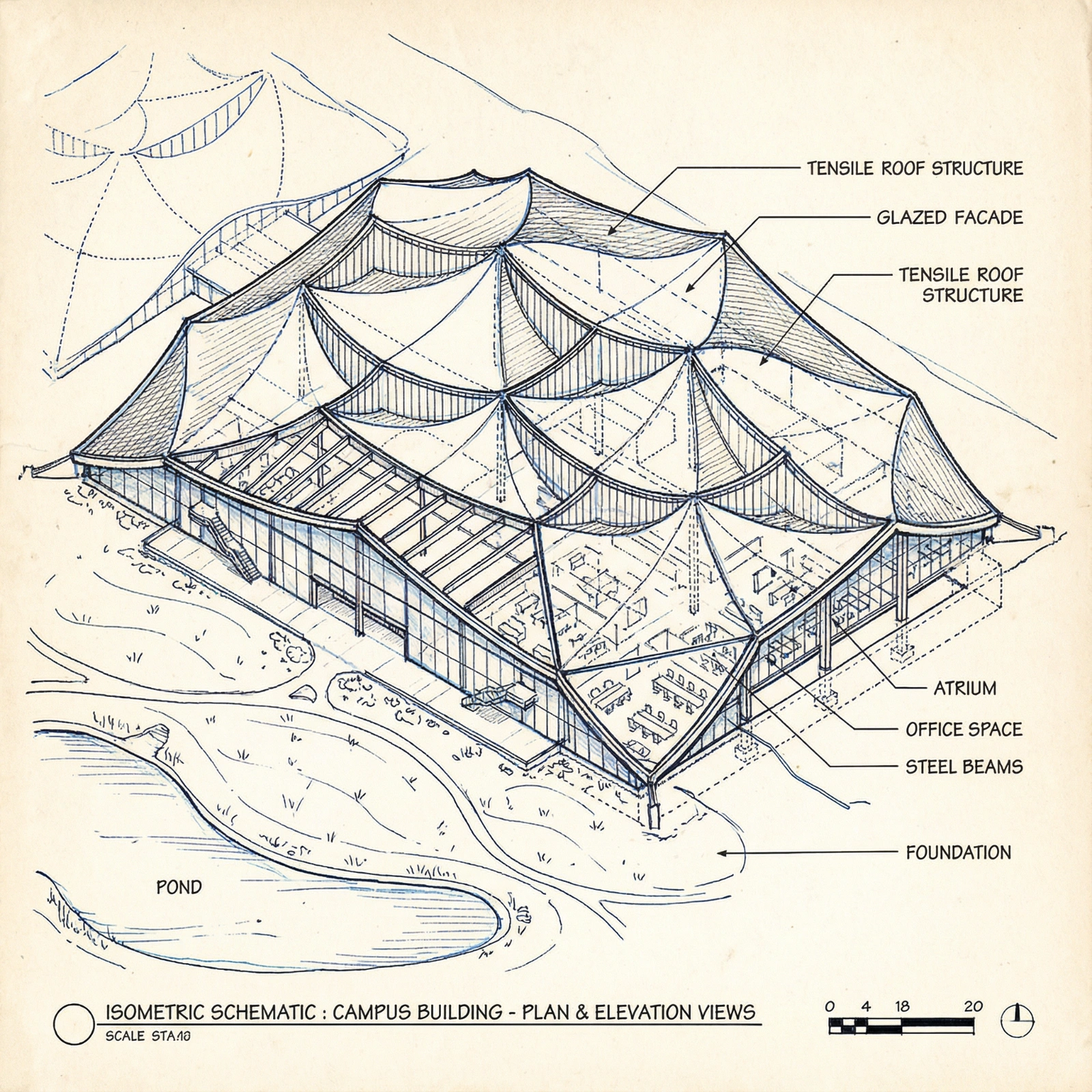
Reference Images:
Isometric Building Sketch
Prompt
Create a hand drawn isometric schematic diagram image of the building in this photo
Aspect Ratio
Model
Nano Banana ProYou might also like
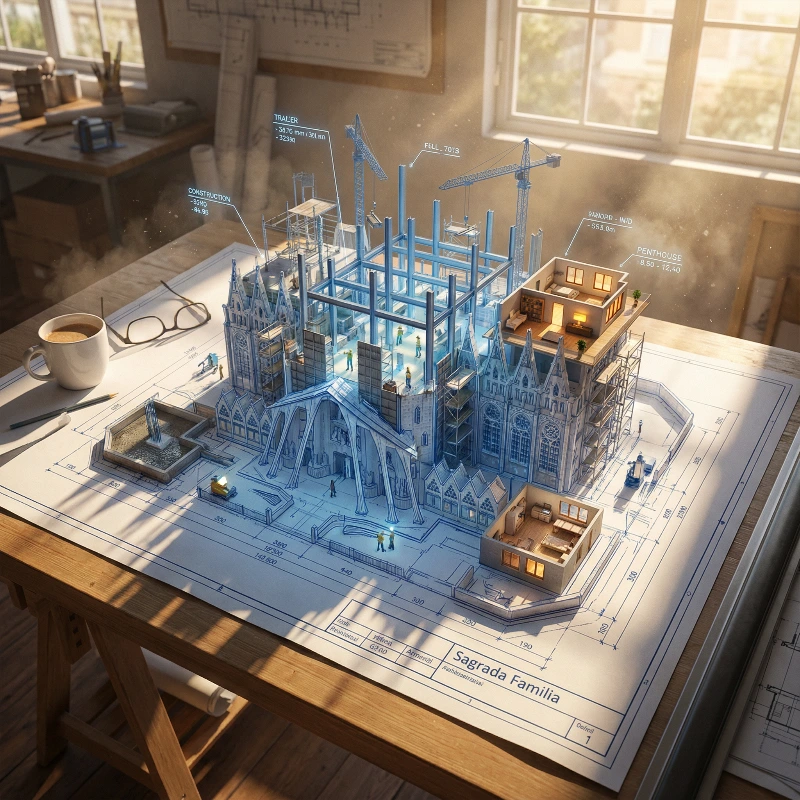
Sagrada Blueprint Transformation
Epic 3D scene: a massive architectural blueprint of [Sagrada Familia] pinned to a drafting table, its ink lines rising off the paper into fully realized construction. Blue lines become steel beams mid-weld, floor plans inflate into furnished rooms, elevation drawings push outward into facades with working windows. Construction phases coexist simultaneously: foundation being poured in one corner while the penthouse is already inhabited in another. Tiny workers, cranes, and scaffolding swarm the rising structure. The flat drawing and the living building merge at impossible angles. Technical annotations float as dimensional signage. Architect's coffee cup sits at the edge, casting shadow across unbuilt sections. Extreme scale contrast, construction dust catching afternoon light, 8K, photorealistic.
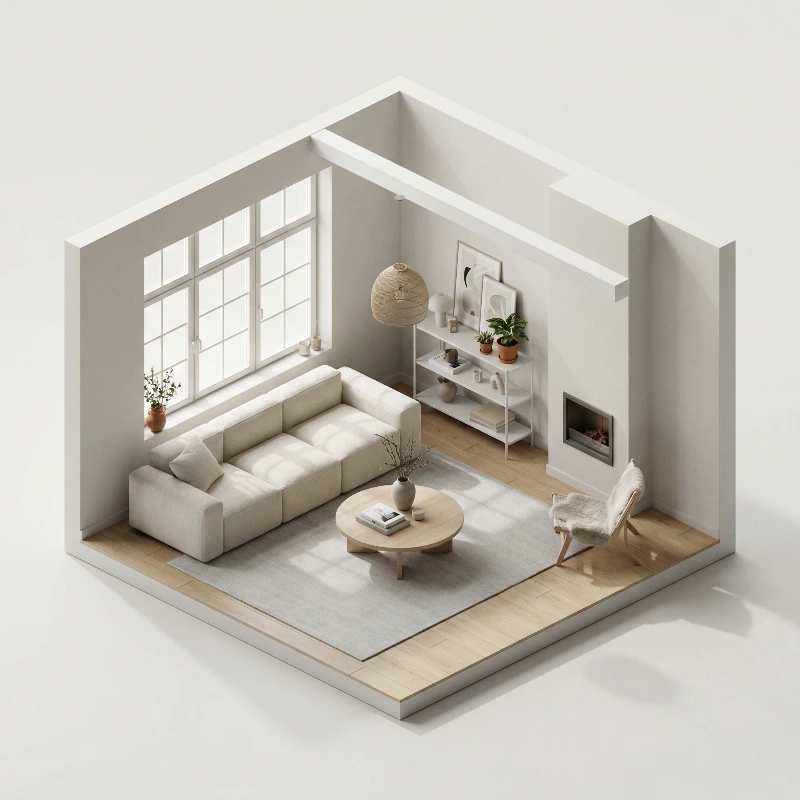
Scandi Urban Living Diorama
Create a highly detailed isometric 3D interior diorama of a (Scandinavian minimal) (urban apartment living room) Design the space with coherent architecture, furniture, lighting, materials, and decoration that naturally match the chosen concept. Use realistic textures, soft natural daylight, gentle shadows, and a calm minimal white background. Perspective: isometric cutaway diorama. Ultra high detail, premium interior visualization, soft global illumination.
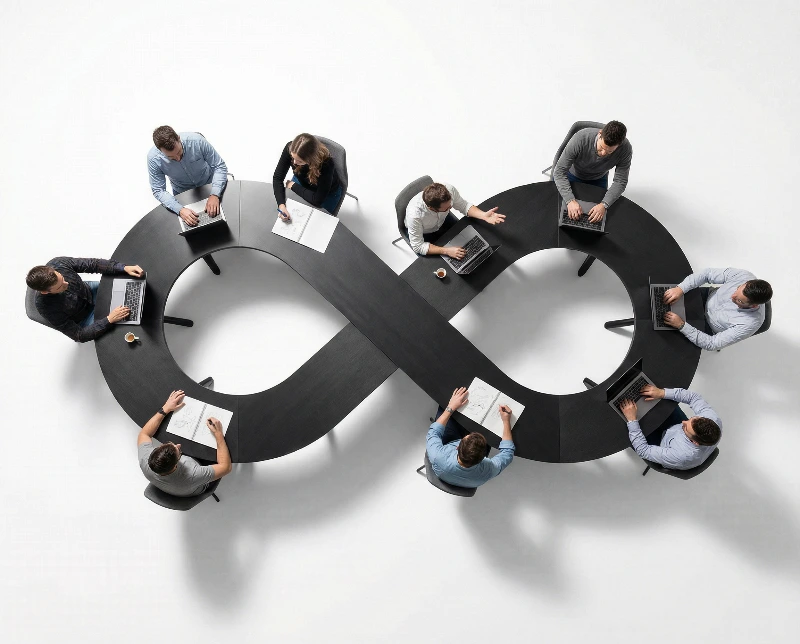
Infinity Table Collaborative Peak
Ultra-wide-angle hyper-realistic top-down flat lay photography. The central focus is a custom physical conference table meticulously shaped like [a perfect infinity symbol ∞]. The table features [brushed matte black carbon fiber with subtle graphite texture and soft satin highlights] and placed on a [pure snow-white] floor, creating significant negative space around it for a clean, minimalist composition. A group of [8] real people are sitting around the edges of this [infinity]-shaped table. [2 on each loop curve, 2 at the inner crossover, 1 at each far end] Actions: [half the group intensely working on ultra-thin laptops, others sketching ideas on paper, one person mid-gesture explaining a concept, another casually sipping espresso—captured as a frozen moment of peak collaboration]. Lighting & Quality: Professional studio lighting with crisp, distinct drop shadows that define the [infinity] silhouette on the floor. 8k resolution, sharp focus, cinematic commercial aesthetic.
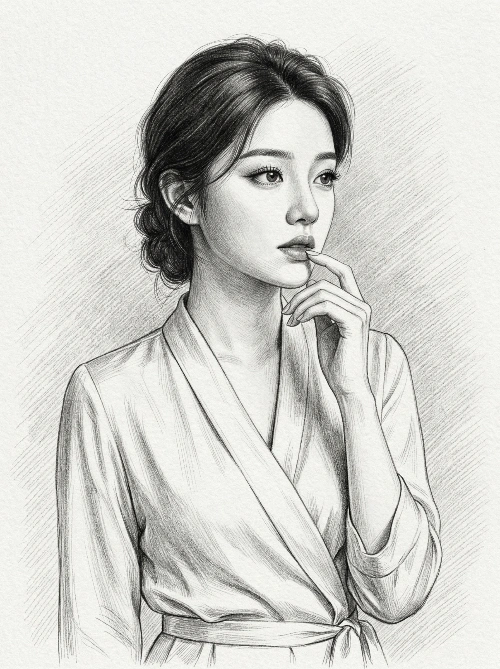
Melancholic B&W Graphite Portrait
Using the uploaded subject as the reference, create an ultra-photorealistic black-and-white graphite pencil portrait. Strictly adhere to her facial proportions, bone structure, jawline, eye shape and spacing, nasal structure, lip shape and fullness, original hairstyle, hairline, and natural parting. Composition and Pose Framing: 3:4 vertical portrait, waist-up composition, including down to the shirt’s waist tie area. Layout: The subject is positioned slightly off-center, leaving open space in the direction of her gaze (to the right). The head is placed roughly in the upper third of the frame. The pose should feel elegant and balanced, using the folds of the shirt and the arm lines to guide visual focus toward the face. Posture: The torso leans slightly to the left, shoulders relaxed and natural, head gently turned to the right. Expression: Soft gaze directed off-frame to the right, with a gentle, distant, and contemplative expression. Hands: The right hand is raised gracefully, wrist slightly bent, index fingertip lightly touching the lower lip, thumb resting beneath the chin, other fingers naturally curled inward. Hand structure must be anatomically accurate, with clearly defined joints and natural nails, conveying a relaxed, introspective feeling. Detail Rendering Face: Use refined graphite shading to emphasize smooth cheekbones, a delicately sculpted nose, and a well-defined jawline. Lips should appear full, with subtle blending along the lip centerline to enhance dimensionality. Eyes must be highly detailed, including delicate eyelid shadows, clear long eyelashes, and naturally full arched eyebrows. Skin should be rendered through seamless blending and smooth tonal gradients. Hair: Dark hair rendered with fine, controlled ხაზwork. Styled in a slightly loose low bun or tied back at the nape, suggesting soft volume. Include loose strands at the temples, forehead, and around the ears, with a single fine strand falling along the left cheek. Use layered strokes to create realistic hair texture and depth. Clothing: An elegant wrap-style V-neck blouse with a soft silk or satin drape. Include the overlapping deep V neckline, waist tie, naturally radiating folds from the knot, and the smooth tension across the torso fabric. Sleeves are slightly loose, with gathered fabric around the forearms and natural deep folds at the inner elbows due to the pose. Cuffs are cleanly structured, featuring a single round button and a vertical slit. The material should convey soft sheen and natural tension lines of the wrapped structure. Background and Lighting Background: Textured sketch paper with extremely subtle diagonal cross-hatching, softly faded edges to enhance depth. Lighting: Soft, diffused studio lighting with smooth tonal transitions, realistically shaping facial volume. Light gently illuminates the face, casting subtle shadows beneath the chin, fingers, and shirt folds. Overall Style Museum-quality classical realism with a romantic and melancholic tone. Technique requires extremely precise linework, controlled hatching, and subtle visibility of paper texture. The image should be rendered in monochrome graphite, with the lower portion of the portrait softly fading into the paper, creating an unfinished artistic effect. Final output should be in 8K ultra-high resolution, 3:4 vertical format.

Sunrise Bridge Calm
A cinematic outdoor photograph shows the person attached in the uploaded reference image (keep the face 100% accurate) standing on a quiet railway bridge during sunrise. Soft orange light hits their face. Fog moves slowly over the tracks below. They rest one hand on the railing and smile calmly at the camera while birds fly past in the distance. Aspect ratio 4:5
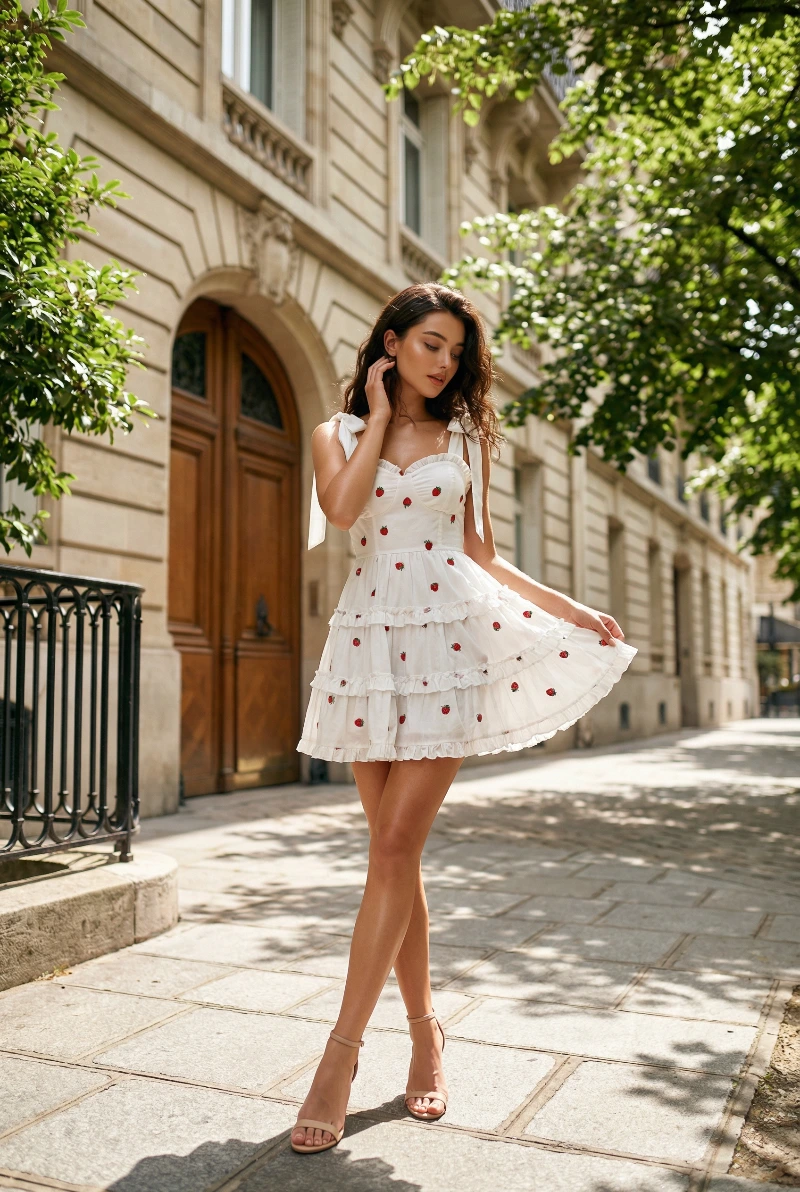
Elegant Urban Fashion Portrait
{ "prompt_structure": { "subject": { "description": "Young woman with a slim, elegant figure", "skin": "Faired skinned tone", "hair": "Long, dark brown, voluminous wavy hair, falling over shoulders", "outfit": { "dress": "White tiered mini dress with ruffled layers, adorned with small red embroidered strawberries or floral patterns, wide shoulder straps with ribbon tie details", "footwear": "Nude beige strappy high-heeled sandals", "accessories": "Subtle earrings" }, "pose": "Standing gracefully, body slightly angled, one hand gently touching hair near the neck, the other hand holding the edge of the dress skirt, looking down and to the side with a soft expression", "skin_tone": "Sun-kissed, glowing skin" }, "environment": { "location": "European-style urban streetscape during the day", "architecture": "Classic beige stone building facade with a large arched wooden door, ornate molding, and rectangular windows reflecting greenery", "foliage": "Lush green trees framing the scene, casting dappled shadows on the subject and building", "foreground": "Paved sidewalk, black metal decorative fence or railing on the left", "lighting": "Bright natural sunlight, dappled light filtering through tree leaves creating high-contrast shadows on the ground and building" }, "technical_specs": { "resolution": "4k, 8k, Ultra HD", "quality": "Photorealistic, hyper-detailed, sharp focus, high fidelity", "style": "Fashion photography, lifestyle portrait, cinematic lighting", "camera_settings": "Depth of field, crisp details, vibrant but natural colors, high dynamic range (HDR)" } } }
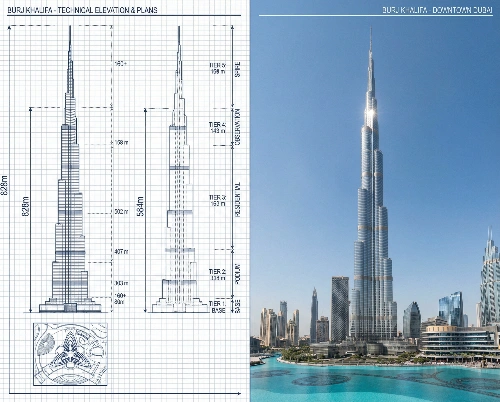
Burj Khalifa Sketch vs Photo
{ "objective": "Create a side-by-side comparison image featuring a technical sketch and real photograph of the [Burj Khalifa]", "image_specifications": { "style": "Mixed media (Technical drawing + Real photograph)", "layout": "Horizontal split - Left side: Sketch with measurements, Right side: Real photo", "aspect_ratio": "3:2" }, "left_side": { "content_type": "Technical sketch of the building", "features": [ "Detailed architectural lines showing tiered setbacks", "Numerical height and width measurements", "Elevation labels for different tower sections", "Side and front elevation views (top-down projection if space allows)" ], "text_annotations": { "units": "Metric (meters)", "language": "English", "font_style": "Blueprint or engineering-style typography" }, "positioning": "Take up the left half of the image" }, "right_side": { "content_type": "High-resolution real photo of the building", "features": [ "Full view of the tower from base to spire", "Natural daylight with clear sky", "Color image with Dubai skyline or Downtown Dubai context" ], "positioning": "Take up the right half of the image" }, "visual_elements": { "border_division": "Vertical line or subtle transition between left (sketch) and right (photo)", "color_palette": { "left": "Monochrome or blueprint blue for sketch", "right": "Natural realistic colors" } }, "output_format": { "type": "Image", "use_case": ["Educational poster", "Architectural comparison", "Engineering visualization", "Tourism visual aid"], "high_resolution": true } }
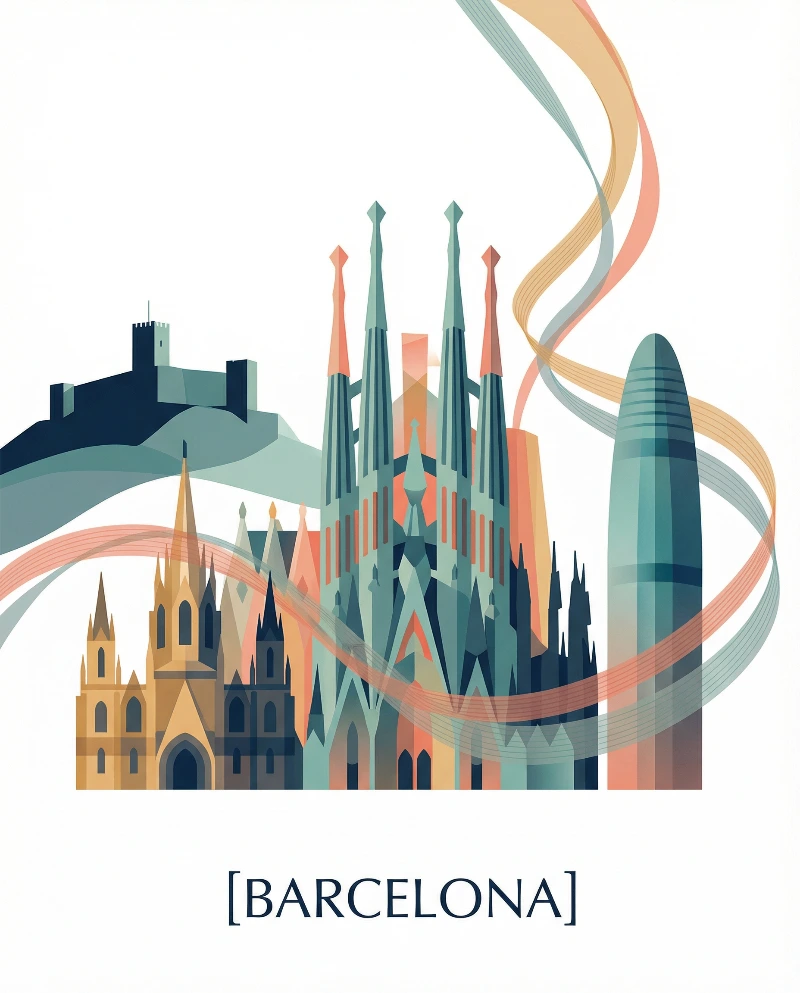
Minimalist Barcelona Skyline
Style & Subject: A high-end minimalist vector illustration of [Barcelona] skyline, featuring the distinct silhouettes of [Sagrada Família, Torre Glòries, Montjuïc Castle, Barcelona Cathedral]. The architectural forms are deconstructed into sharp geometric facets and clean vertical layers, emphasizing a sense of rational order and modern rhythmic beauty. Artistic Elements: Integrate flowing, translucent abstract ribbon-like curves in the background that weave gracefully through the skyscrapers. These curves should be thin and elegant, providing a dynamic contrast to the solid, static buildings. No messy details; focus on pure form and "breathing" negative space. Color Palette: A sophisticated, curated palette of muted teals, soft corals, warm ochre, and deep midnight blue. Use subtle tonal gradients and overlapping translucent layers to create depth and volume without using realistic shadows or 3D textures. Typography & Layout: Centered at the very bottom of the canvas, place the text "[Barcelona]", elegant uppercase sans-serif font. The text must be situated in a clean, generous white margin at the bottom 15% of the image, completely isolated from the architectural graphics. --ar 4:5