

Mini Paris Material Diorama
Prompt
(Paris, PC) Anchor: [Location] :: [Material Concept]::4 Morphology: Miniature architectural cityscape of [Location], entire skyline constructed via the assemblage of [Material Concept] components, skyscrapers and structures formed from the constituent parts of [Material Concept], thematic structural engineering, hyper-detailed diorama::3 Material Physics: Physical properties of [Material Concept] applied to architecture, [Material Concept] textures replacing concrete and glass, innate material logic of [Material Concept], high-fidelity surface details::3 Illumination: Lighting exhibiting the surface properties of [Material Concept], ambient occlusion, volumetric atmosphere matching the material theme::2 Render Stack: Tilt-shift photography, macro lens, f/2.8, 8k, scale model aesthetic, detailed texture mapping, Unreal Engine 5 render::1 Negative: [Human presence, massive scale, blurry, low resolution, bad geometry, distortions, flat 2D, text, watermark]:: -1
Aspect Ratio
Source
@GdgtifyModel
Nano Banana ProYou might also like
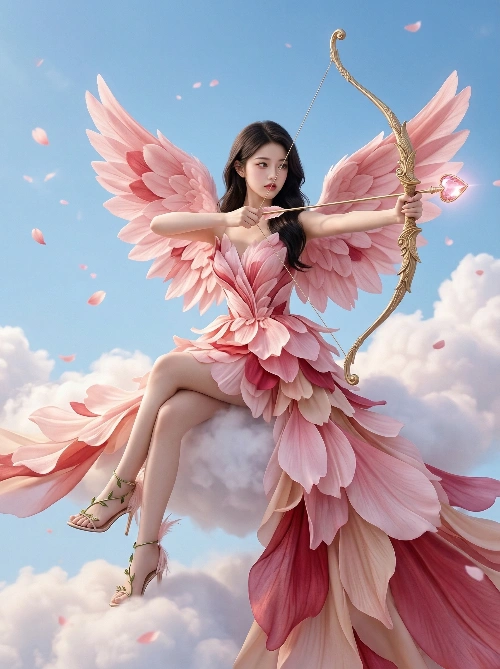
Ethereal Cupid Fashion Port
Using the real female subject you uploaded as the visual baseline, generate an ultra-high-precision photorealistic portrait that blends fantasy storytelling with high-fashion aesthetics. The character is reimagined as a modern Cupid, poised elegantly among the clouds, creating a visual spectacle that is ethereal, dramatic, and fashion-forward. Character Baseline and Styling Baseline: Strictly follow the facial contours, proportions, skin texture, and overall aura from the reference image. Age and ethnic characteristics must remain consistent with the original. Expression: Enhanced soft-glow makeup that remains faithful to her natural features. Expression is focused, with sharp, intent eyes suggesting precise aim. Hairstyle: Fully replicate the hair color, length, texture, and natural form from the reference image. Wardrobe, Accessories, and Pose Main Dress: A fantasy-inspired haute couture gown. Design: Structured, intricately detailed strapless bodice with a long, flowing train. Material: Constructed from layered, realistic soft pink cherry blossom petals, creating a light, semi-transparent, airy effect with clearly defined petal textures. Color: Dominated by soft sakura pink, blended with crimson and nude pink in a natural gradient. Wings: Large petal wings composed of countless cherry blossom petals arranged in a dimensional collage, transitioning naturally from pale pink to near-white. Each petal must exhibit realistic texture and light transmission. Footwear: Ultra-thin high-heeled decorative sandals, wrapped with vines and petals, accented with white feathers. Weapon Accessory: Holding an ornate gilded longbow with intricate engravings. The arrow tip is set with a heart-shaped gemstone, emitting a soft pink-gold glow. Pose and Composition Pose: The subject sits gracefully atop a fluffy cloud. The right leg is bent for support, while the left leg extends forward. The upper body leans slightly forward as she draws the bow, combining elegance with controlled strength. Composition: Medium shot with the subject centered in the frame, wings fully extended. Eye-level perspective. Sharp focus on the face and bow, with the surrounding clouds slightly softened. Environment and Lighting Environment: Suspended in a bright sky, seated on voluminous clouds. The background features a vivid blue sky with scattered floating cherry blossom petals, creating a dreamy, weightless atmosphere. Lighting: Soft directional diffused lighting. The key light from above at an angle defines the silhouette, complemented by fill light to maintain clean shadows. Light creates crystalline highlights on gemstones, metal surfaces, and petals, resulting in an airy yet dimensional tonal quality. Style and Texture Visual: Photography-grade hyperrealism with cinematic impact and extreme detail fidelity. Detail: Supports 8K-level rendering. All materials—skin, petals, metal—must achieve high physical realism. Fusion: Seamlessly combines high-fashion aesthetics, mythological drama, and romantic fantasy imagination. Quality: Achieves the clarity, color depth, and visual impact of top-tier commercial fashion campaigns.
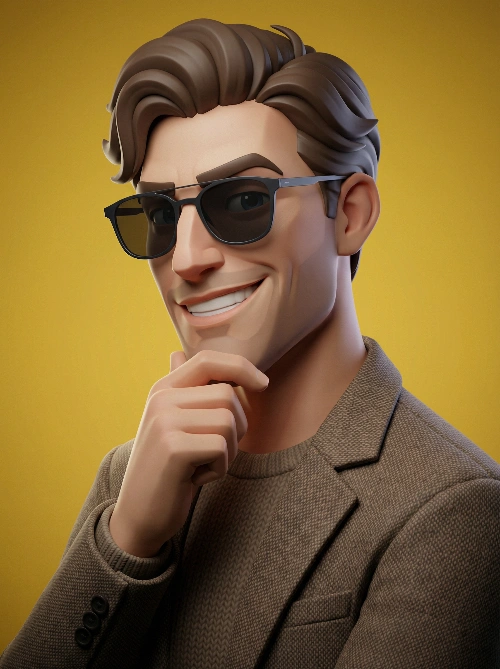
Cinematic 3D Stylized Portrait
High-end stylized 3D character portrait with a cinematic game-inspired aesthetic, transforming the reference person into a refined 3D character with clean angular facial anatomy, simplified yet realistic proportions, defined jawline, expressive eyes and subtle stylization, wearing dark sunglasses with a minimal modern design, shown from the bust up in a three-quarter diagonal angle while striking a thoughtful pose with a relaxed yet intentional posture, one hand subtly raised near the chin as if thinking, combined with a wide exaggerated confident smile that contrasts playfully with the contemplative gesture, set against a solid yellow background, rendered with a professional virtual 3D camera using a medium portrait focal length, dramatic yet controlled studio lighting with a soft key light and subtle rim light creating depth and contrast, strong centered composition with cinematic balance, smooth sculpted surfaces, clean material definition, minimal texture noise and a polished modern stylized 3D render
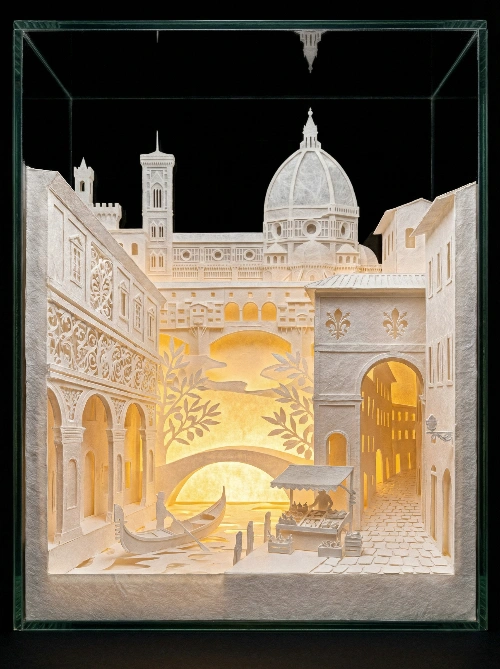
Florence Paper Cut Diorama
CITY_NAME: Florence -- A hyper-detailed 3D layered paper cutting art diorama of [CITY_NAME]. The cityscape features iconic landmarks and recognizable architecture of the city looming in the background, rendered in pure white paper. Buildings and layers are adorned with intricate culturally relevant filigree pattern cutouts and traditional motifs suitable for the location. Characteristic local elements are in the foreground. The entire scene is illuminated by a **radiant, intense warm amber light source from within** the layers. The pure white paper acts as a diffuser, becoming **translucent and glowing brightly**, revealing all intricate details. **Subsurface scattering effect**, **golden hour atmosphere** against a pitch-black background. Miniature world, exquisite texture, 8k resolution. --ar 3:4
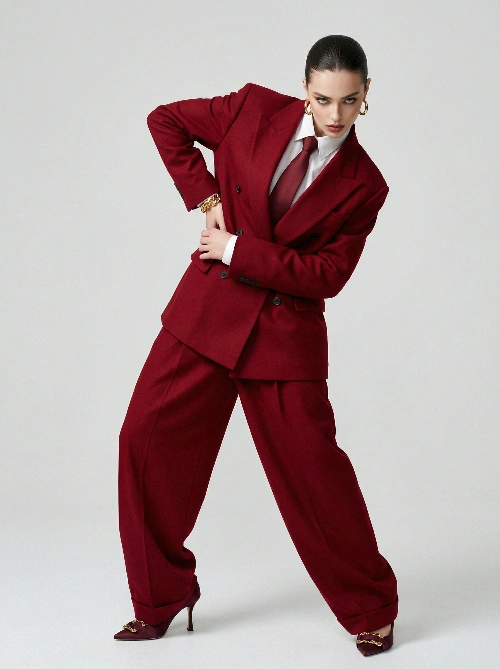
Fierce Burgundy Fashion Editorial
{ "subject": { "identity_reference": "uploaded face reference", "identity_accuracy": "100% match in facial structure, eyes, lips, nose, jawline, hairline, natural skin texture; do not alter identity", "age_range": "adult woman", "pose": { "body_orientation": "standing, torso twisted, body turned at sharp angle", "shoulders": { "front_shoulder": "thrust forward prominently toward camera", "rear_shoulder": "pulled back" }, "head": { "tilt": "chin down, head slightly lowered", "gaze": "eyes looking up from under brows, predatory intense gaze" }, "arms": "hanging naturally or one hand in pocket", "hands": "bare, realistic fingers" }, "expression": "fierce, predatory, intense, theatrical, smoldering gaze", "hair": "tight sleek bun" }, "wardrobe": { "suit": { "blazer": { "color": "deep cherry red / burgundy", "fit": "oversized, exaggerated dropped-shoulder, structured broad shoulders, sharp shoulder pads, mid-thigh length", "front": "double-breasted, wide peak lapels, slightly boxy silhouette, sleeves slightly long" }, "trousers": { "style": "high-waisted, ultra-wide-leg, deep front pleats, long hem pooling over heels" }, "fabric": { "material": "premium heavy wool gabardine / wool twill", "texture": "dense, matte, slightly dry, visible diagonal twill weave, subtle creases, realistic drape", "finish": "no shine, no polyester look" } }, "shirt": { "color": "crisp white poplin", "collar": "stiff, clean texture" }, "tie": { "color": "deep cherry red", "material": "matte silk twill" }, "accessories": { "earrings": "large gold hoop", "bracelet": "chunky gold on bare wrist" }, "shoes": { "color": "burgundy", "style": "stiletto heels with ornate gold buckles" } }, "environment": { "background": "seamless light-grey studio cyclorama", "studio": "clean, minimal, no props" }, "camera": { "equipment": "Phase One XF, Schneider Kreuznach 80mm f/2.8 LS", "settings": { "aperture": "f/8", "ISO": 100, "shutter_speed": "1/160s" }, "perspective": "vertical 3:4 full-body medium-to-long shot", "focus": "tack sharp face and fabric details" }, "lighting": { "type": "soft diffused butterfly lighting", "fill": "subtle studio fill", "effect": "high-fashion clean illumination, emphasizes texture and drape" }, "composition": { "framing": "full body, dramatic diagonal lines from torso twist, exaggerated theatrical stance", "balance": "centered subject with high-fashion editorial energy" }, "aesthetic": { "style": "ultra-realistic high-fashion editorial", "mood": "theatrical, fierce, hunter energy, intense predatory attitude", "color_palette": ["deep cherry red", "burgundy", "gold accents", "white poplin"], "texture_focus": "hyper-realistic fabric, jewelry, skin, and hair textures" }, "render_quality": { "resolution": "8K", "retouching": "clean, high-end studio retouch, pro color grading", "realism": "hyper-realistic, no extra limbs, no artifacts", "clarity": "tack sharp, accurate anatomical details" }, "negative_prompts": [ "glasses", "gloves", "motion blur", "low resolution", "extra limbs", "text or watermark", "plastic skin", "fabric shine", "incorrect anatomy", "cropped extremities" ] }
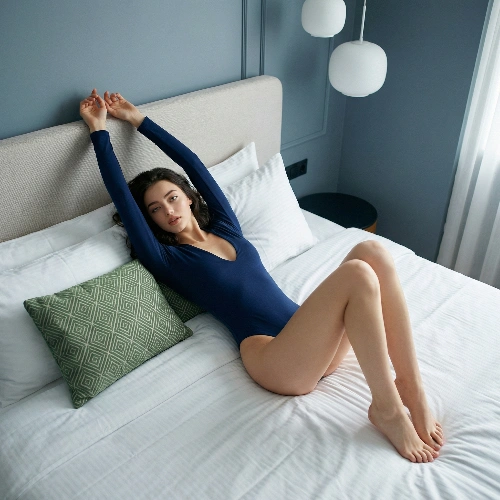
Ultra-Real Fashion Overhead
{ "prompt": "Ultra-realistic overhead fashion editorial photograph of attached celebrity in a modern bedroom setting, exactly replicating the reference pose and composition: lying on her back on a white quilted bed, arms extended straight upward holding the headboard, legs bent at the knees with feet flat on the mattress and soles clearly visible facing upward toward the camera, knees comfortably apart, head tilted back looking up at the camera with relaxed expression, wearing a deep navy blue long-sleeve stretch bodysuit with high leg cut and deep front neckline, barefoot, dark hair with loose waves spread on the pillow, natural daytime makeup with soft lips and defined eyes, contemporary luxury hotel room with blue-gray walls, green geometric-patterned cushion nearby, white rounded pendant lights above, soft natural light from the side, clean minimalist interior, captured directly from overhead with wide-angle lens style, shallow depth of field, highly detailed fabric texture and realistic lighting, photorealistic, 8K resolution, strictly identical body position, foot placement showing soles, arm position, camera angle, room elements, lighting and overall editorial mood as the reference image" }
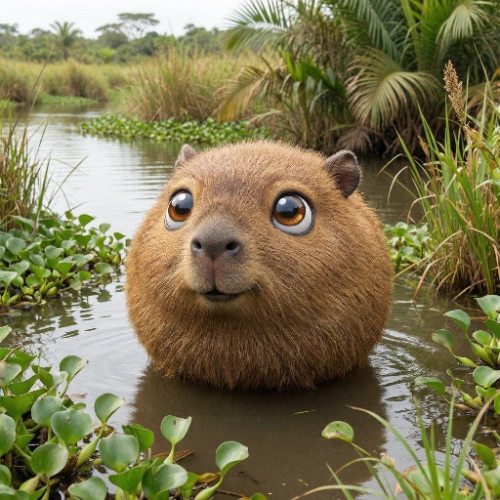
Spherical Cute Animal
Make a photo of a cute ball-shaped version of a [animal: Capybara], with big adorable over-sized eyes, it has no head, instead its face is part of the ball, its head and body are one. They are in their usual habitat. Must be almost spherical and cartoonishly cute. Its eyes are looking up in the most adorable cheeky fashion.
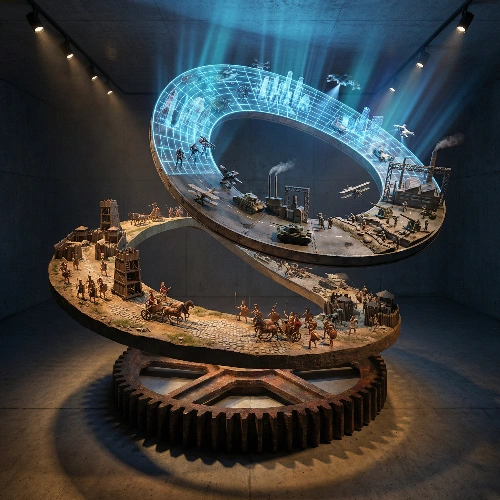
Chrono Warfare Mobius
Do this for Warfare: <instruction> Input A is a Topic with a clear technological or cultural progression (e.g., Transportation, Warfare, Medicine, Architecture). Deconstruct the history into 3 Chronological Eras : Era 1 (The Origin - Bottom): Identify the pre-industrial state. (e.g., Transportation -> Horses & Carts on Cobblestone. Medicine -> Herbalists in a Village). Era 2 (The Industry - Middle): Identify the mechanical/modern state. (e.g., Transportation -> Early Cars & Steel Bridges. Medicine -> Victorian Surgery & Iron Beds). Era 3 (The Future - Top): Identify the sci-fi state. (e.g., Transportation -> Hovercars on Neon Roads. Medicine -> Med-Pods & Holograms). 2. Container Goal: "Chronological Loop" Museum Installation. The Form: A massive, continuous Mobius Strip or Twisted Ribbon rising from the floor. The Base: The structure is anchored by a giant Industrial Gear or Stone Foundation. The Setting: A dark, expansive concrete museum hall with overhead track lighting. 3. The Metamorphosis The Path: The surface of the ribbon acts as a road or floor that physically transforms as it ascends. Transition: It morphs from Rough Stone/Dirt (Bottom) to Asphalt/Steel (Middle) to Glowing Glass/Grid (Top). The Connectivity: A bridge or ramp connects the lower loop to the upper loop, implying a continuous journey. 4. The Narrative Scale Scale: 1:50 Scale Figures and Props populate the ribbon. Action: Bottom: Figures walking or using animals. Wooden market stalls. Middle: Factory workers, steel trusses, and combustion engines. Top: Futuristic figures in suits, floating vehicles, and Holographic Cityscapes projecting upwards from the glass surface. 5. Lighting & Atmosphere: Lighting: Gradient Temperature. Base: Warm, earthy halogen spots. Top: Cool, electric blue LED glow from the future section. Shadows: The twisting ribbon casts complex, dramatic shadows on the museum floor. Output: ONE image, 1:1 Aspect Ratio, 3D Render, "Installation Art" aesthetic, High Geometric Complexity. </instruction>
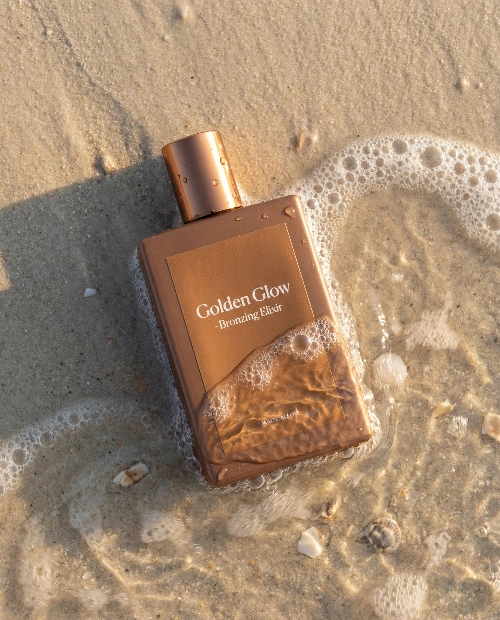
Golden Glow Beach Elixir
Ultra-realistic summer skincare product photography of a bronzing drop bottle named "Golden Glow - Bronzing Elixir", rectangular matte bottle in warm sun-kissed bronze tone with a clean white cap, placed diagonally on wet beach sand as a gentle ocean wave washes over it, delicate sea foam and tiny bubbles surrounding the base, water partially flowing across the label, fine sand texture visible beneath shallow clear water, golden sunlight casting natural highlights and soft shadows, high-detail water ripples and realistic foam patterns, fresh summer aesthetic, minimal clean branding centered and sharp, warm golden-hour beach lighting, cinematic top-down flat lay composition, natural reflections on wet surface, editorial beauty campaign style, ultra-detailed, photorealistic 8K, soft warm color grading, luxury skincare advertisement Aspect ratio 4.5